The reaction may begin with an itching or prickling sensation before visible bumps appear.
Another important consideration is that exercise can occasionally be associated with a serious allergic reaction.
Some people experience exercise-induced anaphylaxis, a rare but potentially life-threatening condition. In certain cases, physical activity may combine with another factor, such as eating a particular food beforehand, to trigger a reaction.
Warning signs may include widespread hives, swelling, breathing difficulty, dizziness, or fainting.
These symptoms should never be treated as an ordinary exercise-related skin irritation.
Can emotional stress cause hives?
Stress is another factor worth considering.
Emotional stress can influence immune activity, nervous-system signaling, and inflammatory responses. In people who already experience chronic urticaria, stressful periods may make symptoms more frequent or intense.
For example, someone may notice that their hives become worse during a demanding work period, after several nights of poor sleep, or during a particularly stressful personal situation.
However, stress should not automatically be considered the underlying cause.
Hives can occur for many reasons, and the relationship between stress and skin reactions is complex. Stress may aggravate an existing condition without being the original trigger.
It is also important not to blame people for their symptoms. Telling someone that their hives are simply caused by worrying can delay appropriate medical evaluation.
If outbreaks repeatedly occur around periods of emotional strain, keeping a symptom diary may help reveal whether stress is one of several contributing factors.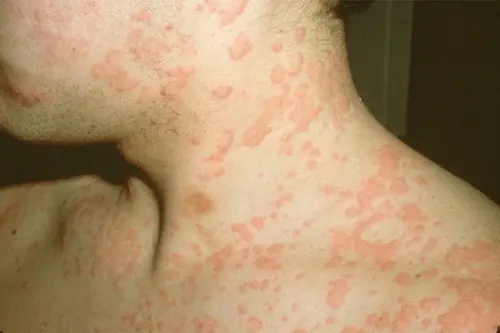
Chapter 4: Medications May Trigger Hives Even When They Seem Harmless
Another unexpected source of hives is medication.
People sometimes assume that a drug prescribed by a healthcare professional cannot cause an allergic reaction. However, medications can trigger skin reactions through several different mechanisms.
Some reactions involve the immune system recognizing a substance as an allergen. Others occur through non-allergic pathways that can still activate mast cells or increase histamine-related symptoms.
Antibiotics
Certain antibiotics, including penicillin-related medications and some other antibiotic classes, can cause hives in susceptible individuals.
The reaction may develop shortly after taking a dose, although the timing can vary depending on the medication and the type of reaction.
One important complication is that infections themselves can also cause hives.
For example, a person may develop a respiratory infection, begin taking an antibiotic, and then notice an itchy rash. The rash might be related to the infection rather than the medication.
This is why doctors need to evaluate the timing, appearance, medical history, and other symptoms before determining whether a drug allergy is present.
People should not independently label themselves allergic to an entire group of medications based on an unexplained rash.
Pain relievers and anti-inflammatory drugs
Some pain relievers can also trigger or worsen hives.
Nonsteroidal anti-inflammatory drugs, commonly known as NSAIDs, include medications such as ibuprofen, aspirin, and naproxen.
In certain individuals, these drugs can cause hives or angioedema, which is deeper swelling beneath the skin.
People who already have chronic urticaria may also find that NSAIDs aggravate their existing symptoms.
This does not mean everyone who takes these medications will develop a reaction. Most people use them without experiencing hives.
However, if outbreaks repeatedly occur after taking a particular pain reliever, discuss the pattern with a healthcare professional.
Do not deliberately take another dose to test whether the reaction happens again.
Other medication-related reactions
Some people can develop hives after receiving injectable medications, contrast agents used during medical imaging, or other treatments.
The important lesson is that medication reactions are not always obvious.
If you develop a new rash after starting a medication, contact a healthcare professional for guidance. Seek emergency assistance immediately if the reaction includes difficulty breathing, throat tightness, faintness, or swelling of the tongue or throat.
Chapter 5: Infections Can Cause Hives Without You Realizing It
Many people associate hives with something they ate or touched. Yet infections are another important cause, particularly in cases of acute urticaria.
Viral infections are commonly associated with hives. Respiratory illnesses, including the common cold, can sometimes trigger skin reactions during the illness or while the body is recovering.
Children may develop hives during or after viral infections, even when they otherwise appear to be feeling better.
Bacterial infections can also be associated with urticaria in some circumstances.
Why does this happen?
When the body fights an infection, the immune system releases a variety of chemical signals to help coordinate its response.
These immune changes can sometimes activate mast cells or contribute to inflammation in the skin.
As a result, itchy welts may appear even though the person has not eaten a new food or used a different skincare product.