This can lead to a condition commonly called knee effusion.
Possible causes include:
-
Osteoarthritis.
-
Rheumatoid arthritis.
-
Meniscus injuries.
-
Ligament injuries.
-
Bursitis.
-
Gout.
-
Joint infections.
The appearance and timing of swelling can provide useful clues.
For example, swelling that develops after twisting the knee during exercise may indicate an injury. Swelling that develops gradually over several days may be associated with arthritis or another inflammatory condition.
A swollen knee may feel heavy, tight, warm, or difficult to bend. Some people also notice that the skin around the joint looks stretched.
However, not all swelling is harmless.
A suddenly swollen, hot, red, and extremely painful knee, particularly when accompanied by fever or feeling unwell, may indicate a joint infection. This requires urgent medical assessment because an infected joint can be seriously damaged without prompt treatment.
Do not assume that unexplained swelling is simply part of getting older.
4. Pain When Climbing Stairs or Getting Up From a Chair
Some people experience little discomfort while walking on flat ground but notice significant pain when climbing stairs, squatting, or standing up from a low chair.
This pattern can sometimes be associated with patellofemoral pain, which refers to pain around or behind the kneecap.
The kneecap, also known as the patella, moves along a groove at the lower end of the thigh bone when the knee bends and straightens.
If the tissues around this joint become irritated or the kneecap does not move comfortably, activities that increase pressure in this area may trigger pain.
Common symptoms include:
-
Pain around or behind the kneecap.
-
Discomfort when walking up or down stairs.
-
Pain during squatting or lunging.
-
Discomfort after sitting with bent knees for a long time.
-
Pain during running or jumping.
This condition can affect teenagers, young adults, and older adults. It is not exclusively associated with aging.
Muscle weakness, changes in training intensity, repetitive loading, and movement patterns can all contribute.
Treatment often focuses on modifying activities temporarily and strengthening the muscles around the hip and knee.
A physical therapist can assess how the knee moves and develop an exercise program suited to the individual's needs.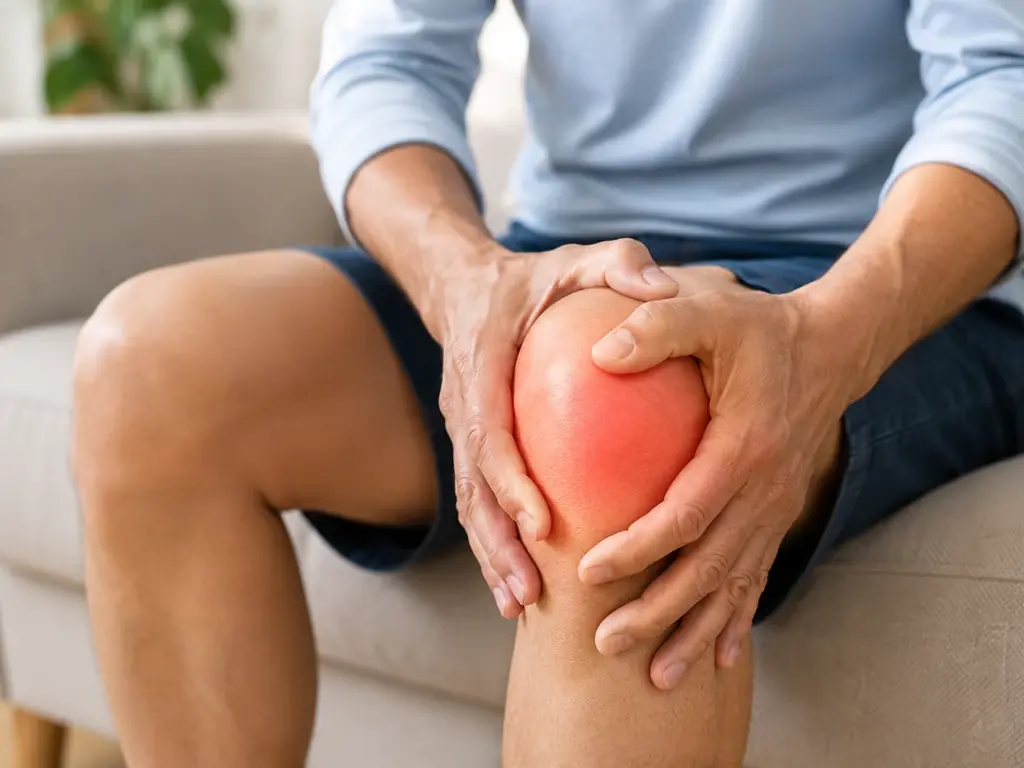
5. Clicking, Popping, or Grinding Sounds
Many people become concerned when they hear clicking or popping sounds in their knees.
However, not every knee noise indicates damage.
Some healthy joints produce harmless sounds during movement. These sounds may result from gas bubbles in the joint fluid, tendons moving over nearby structures, or normal movement within the joint.
The important distinction is whether the sound is accompanied by other symptoms.
Occasional painless clicking is usually less concerning than clicking accompanied by pain, swelling, instability, or difficulty moving the knee.
A grinding sensation, sometimes called crepitus, can occur in people with osteoarthritis or other changes around the kneecap.
A loud popping sensation during an injury is different. If it occurs while twisting, landing, or changing direction, it may be associated with ligament or meniscus damage.
Watch for these accompanying signs:
-
Pain that becomes worse with movement.
-
Swelling after the sound occurs.
-
A feeling that the knee is giving way.
-
Difficulty fully straightening the leg.
-
A sensation that something is catching inside the joint.
If your knee repeatedly locks or you cannot move it normally, seek medical evaluation rather than trying to force it into position.
6. The Knee Feels Unstable or Gives Way
A knee that suddenly feels weak, unstable, or unable to support your weight should not be dismissed.
Some people describe the sensation as though their knee might collapse while walking. Others notice that they have difficulty turning, changing direction, or standing on one leg.
This instability can have several causes.
Ligaments help stabilize the knee by connecting bones and controlling excessive movement. Injuries to the anterior cruciate ligament, posterior cruciate ligament, medial collateral ligament, or lateral collateral ligament can interfere with this stability.
A torn or damaged meniscus may also cause pain, catching, or a feeling that the knee is not moving normally.
In older adults, muscle weakness can contribute to instability. The quadriceps, hamstrings, and hip muscles all help control the movement of the knee.
When these muscles become weaker, the joint may feel less secure during everyday activities.
Osteoarthritis can also contribute to instability because pain, joint changes, and reduced muscle strength may alter the way a person walks.
Repeated episodes of the knee giving way increase the risk of falls.
If instability is new, persistent, or associated with swelling or an injury, arrange an assessment with a healthcare professional.
7. Pain Behind the Knee
Not all knee problems cause pain at the front or sides of the joint.
Some people experience discomfort behind the knee, particularly when bending the leg or walking.