This method has been used by food authorities to investigate honey containing undeclared sweeteners. However, it does not detect every possible form of adulteration. Its effectiveness depends on the type of sweetener involved and the characteristics of the sample.
Sugar Profile Analysis
Another approach is to examine the types and proportions of sugars in honey.
Natural honey contains a characteristic mixture of fructose, glucose, sucrose and smaller amounts of other sugars. The exact proportions vary according to floral source and other conditions.
Laboratories can use chromatographic techniques to separate and measure individual compounds. This helps analysts identify unusual sugar patterns that may indicate that a product has been altered.
However, natural variation must be considered. A result that differs from an expected pattern does not automatically establish fraud. The sample must be interpreted in the context of its claimed origin and other relevant characteristics.
Nuclear Magnetic Resonance
Nuclear magnetic resonance, often called NMR, is another technique used in honey-authentication research.
It can produce a broader chemical fingerprint of a sample. Analysts can compare that fingerprint with reference information from known honeys to identify unusual characteristics.
This method may help investigate claims about floral or geographical origin and detect certain forms of adulteration.
Its usefulness depends partly on the quality of the reference database. A database needs to represent the natural diversity of honey from different regions and floral sources. Without suitable reference samples, interpretation becomes more difficult.
Why Do Laboratories Use More Than One Method?
Different forms of adulteration can leave different kinds of evidence. A method that detects one type of added syrup may not identify another.
For this reason, professional testing may combine several analytical approaches. Scientists consider the composition of the honey, its natural variation and the specific question they are trying to answer.
This is also why a single household experiment cannot provide the same level of confidence. A water test measures how honey behaves in water. A bubble test observes viscosity. Neither examines the complete chemical composition of the product.
For ordinary shoppers, professional laboratory analysis is usually unnecessary for every jar they buy. But when a product is suspected of being misrepresented, proper testing is far more appropriate than relying on a viral trick.
Chapter 8: How to Choose Honey More Carefully When Shopping
Consumers may not have access to laboratory equipment, but they can still make more informed decisions before buying honey.
The most useful approach is to look beyond the color and thickness. A beautiful amber appearance does not guarantee authenticity, and a cloudy jar is not necessarily inferior. Information about the product, its producer and its supply chain can be more useful.
Read the Label Carefully
Look for a clear product name and an ingredient declaration that identifies what is being sold.
If you are purchasing honey, check whether the product is described as honey alone or as a blend, spread or sweetened product. A product containing added sweeteners should not be confused with pure honey.
Pay attention to the manufacturer or packer information as well. A recognizable company name, contact details and clear product information make it easier to ask questions if something seems unusual.
A label filled with attractive descriptions but offering little meaningful information should encourage caution.
Check the Claimed Origin
Some products identify a country, region or floral source. Such information can help consumers understand what they are buying.
However, a geographical or floral claim printed on a label is not automatically proof that the claim is correct.
Look for producers who explain their sourcing and supply chain. A beekeeper or supplier who can describe where the honey comes from, when it was harvested and how it was handled may provide more transparency than a seller who offers only vague descriptions.
Be particularly careful with claims involving rare floral varieties or premium geographical origins. Such claims can influence the price, making them attractive targets for misleading marketing.
Buy From Reputable Producers
When possible, purchase honey from established beekeepers, reputable retailers or suppliers who provide clear information about their products.
A local beekeeper may be able to explain which flowers the bees forage on, when the honey is harvested and how it is stored.
Buying directly from a producer can make it easier to ask questions, although a small producer is not automatically more trustworthy than a larger company. The important factor is transparency and responsible handling.
Be Careful With Exaggerated Health Claims
Honey is often promoted with attractive descriptions about wellness. It is important to distinguish between its role as a food and claims that suggest it can prevent or treat specific diseases.
A product advertised as unusually powerful, medicinal or capable of solving several unrelated health problems deserves careful scrutiny.
A high price and impressive packaging do not establish either authenticity or special health benefits.
Keep the Packaging and Purchase Information
If you suspect that a product has been misrepresented, keep the jar, label, batch number and purchase receipt.
These details may help the retailer or relevant food-safety authority identify the product. They are more useful than relying on memory about the brand or where the honey was purchased.
If you experience a problem with a product, contact the seller and follow the appropriate local food-safety reporting process.
Chapter 9: Six Common Honey Myths That Can Mislead Consumers
The internet is full of short videos promising to reveal fake honey with a glass of water, a piece of paper or a match. These demonstrations attract attention because they appear to offer a quick answer to a complicated question.
Unfortunately, many turn a simple physical observation into a claim about purity that the evidence does not support.
Myth 1: Pure Honey Never Dissolves Quickly in Water
Honey dissolves in water because its sugars are soluble. The speed depends on temperature, concentration, the quantity of honey and whether the water is moving.
A thick sample may remain together briefly before dispersing. That behavior does not prove that the honey is pure.
Myth 2: Real Honey Must Always Sink
Honey is generally denser than water, so it may sink when dropped into a glass. But concentrated sugar syrups can also be dense.
The fact that a sample sinks is not enough to identify its origin.
Myth 3: Genuine Honey Must Never Crystallize
Crystallization is a natural process in many honeys. It is influenced by glucose content, moisture, temperature and tiny particles in the product.
A jar becoming cloudy or grainy does not automatically mean that sugar has been added. Many genuine honeys crystallize during storage.
Myth 4: Ants Will Avoid Pure Honey
Another popular claim says that ants will avoid genuine honey but gather around fake honey.
There is no dependable basis for using ant behavior as an authenticity test. Ants may be attracted to accessible sugary substances, and their behavior depends on environmental conditions.
Their presence or absence cannot establish the composition of a jar.
Myth 5: A Match Test Can Prove Honey Is Pure
Some demonstrations suggest dipping a matchstick into honey and attempting to light it. The claim is that pure honey allows the match to ignite, while diluted honey does not.
This method is unreliable and potentially unsafe. Moisture, the condition of the match and the amount of honey can influence the result.
There is no reason to bring an open flame near a food product to test its authenticity.
Myth 6: Real Honey Must Have a Particular Color
Honey can be pale, golden, amber or dark brown. Its color depends partly on floral source and other natural factors.
A darker product is not automatically more authentic, and a pale product is not automatically diluted.
Color should be understood as one natural characteristic among many, not a purity certificate.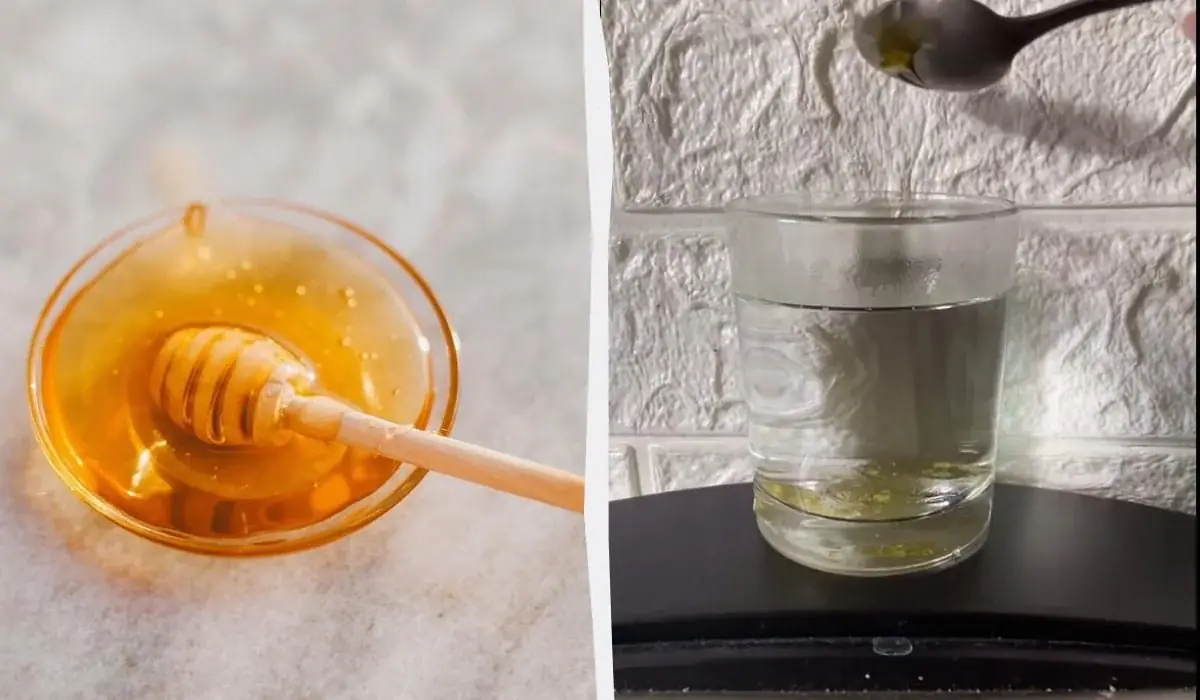
Chapter 10: How to Store Honey Properly After Buying It
Once you have chosen a product, proper storage helps maintain its quality.
Honey is relatively stable when handled and stored correctly, but it is not completely immune to moisture, contamination or changes caused by heat.
Keep the Jar Tightly Closed
Honey can absorb moisture from the surrounding air. Unnecessary moisture entering the jar may affect its consistency and, under certain conditions, increase the risk of fermentation.