This is largely an anatomical characteristic rather than something that can always be prevented through personal hygiene.
2. Repeated episodes of tonsillitis
Tonsillitis refers to inflammation of the tonsils.
It may be caused by viruses or bacteria and can produce symptoms such as throat pain, fever, swollen tonsils, and difficulty swallowing.
Repeated inflammation can change the surface of the tonsils.
Over time, the crypts may become more pronounced, creating additional spaces where debris can collect.
People with a history of frequent tonsil infections may consequently be more likely to develop tonsil stones.
However, tonsil stones themselves are not the same as tonsillitis.
A person can have tonsil stones without having an active infection.
3. Accumulation of bacteria in the mouth
The mouth naturally contains many different types of bacteria.
Most are part of the normal oral microbiome and do not cause illness.
However, bacteria can accumulate alongside food particles and dead cells inside tonsillar crypts.
As these materials break down, they contribute to the formation and unpleasant odor associated with tonsil stones.
Maintaining good oral hygiene can help reduce the amount of debris and bacteria available to collect in the tonsils.
4. Inadequate oral hygiene
Not brushing regularly, neglecting the tongue, and failing to clean between the teeth can allow more food debris and bacteria to accumulate in the mouth.
This does not mean every person with tonsil stones has poor oral hygiene.
People with naturally deep tonsillar crypts can develop stones despite careful dental care.
Nevertheless, brushing twice daily, flossing, and cleaning the tongue can help reduce the overall amount of debris in the oral cavity.
5. Dry mouth and dehydration
Saliva plays an important role in maintaining oral health.
It helps wash away food particles, supports the balance of oral bacteria, and keeps the mouth moist.
When saliva production decreases, debris may remain in the mouth for longer.
Dry mouth can be associated with dehydration, certain medications, mouth breathing, and some medical conditions.
Drinking sufficient water throughout the day may help maintain normal saliva production and reduce the accumulation of debris.
However, hydration alone cannot prevent every tonsil stone.
6. Mouth breathing
People who frequently breathe through their mouths, especially while sleeping, may experience dryness in the oral cavity.
This can occur because of nasal congestion, allergies, or certain anatomical problems.
When the mouth becomes dry, saliva may be less effective at clearing food particles and maintaining a healthy oral environment.
If someone regularly wakes up with a dry mouth, persistent nasal blockage, or unpleasant breath, discussing the problem with a healthcare professional may be helpful.
7. Individual anatomical differences
Some people simply have tonsils that are more prone to collecting debris.
The size, shape, and depth of tonsillar crypts vary from person to person.
Age and previous inflammation may also influence their appearance.
This explains why two people with almost identical eating and hygiene habits can have very different experiences.
One person may never develop a tonsil stone, while another may experience them repeatedly.
Cleveland Clinic and Mayo Clinic both describe the relationship between tonsillar crypts, trapped debris, and the formation of these hardened deposits.
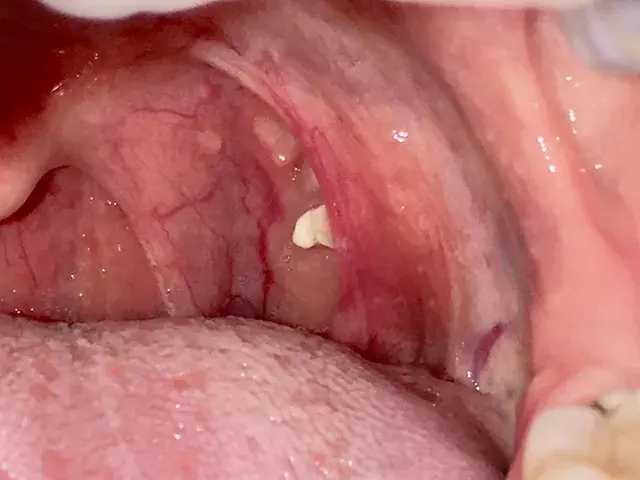
Can eating certain foods directly cause tonsil stones?
There is no single food that has been proven to cause tonsil stones.
However, food particles can become trapped inside the tonsillar crypts, particularly when the tonsils have deep pockets.
Some people notice that the sensation becomes more apparent after eating foods with small particles or a crumbly texture.
This does not mean they must eliminate particular foods from their diet.
Rinsing the mouth with water after meals and maintaining regular oral hygiene are generally more practical approaches.
The formation of tonsil stones is influenced by several factors working together.
Rather than blaming one food or one habit, it is more useful to understand the anatomy of the tonsils and the role of oral bacteria.
Chapter 3: Five Warning Signs That a Tonsil Stone May Be Causing Problems
Many tonsil stones are so small that they produce no symptoms.
A person may have several tiny deposits without knowing they are present.
However, when the stones become larger or repeatedly accumulate, they may cause symptoms that interfere with daily life.
Recognizing these signs can help people understand when home care may be sufficient and when professional evaluation is necessary.
1. Persistent bad breath
Bad breath, medically known as halitosis, is one of the most common symptoms associated with tonsil stones.
The bacteria trapped inside the deposits can produce unpleasant-smelling sulfur compounds.
A person may brush their teeth, clean their tongue, and use mouthwash but still notice that the odor returns.
This can be particularly frustrating because the source of the smell may be hidden inside the tonsils.
However, persistent bad breath has many possible causes, including gum disease, dental decay, dry mouth, and sinus problems.
A tonsil stone should not automatically be assumed to be responsible.
A dentist or doctor can help identify the actual cause.
2. A persistent sensation of something stuck in the throat
Some people describe a small lump or object that seems to remain at the back of their throat.
The sensation may become more noticeable when swallowing saliva or speaking.
A larger stone protruding from a tonsillar crypt can irritate the surrounding tissue.
In other cases, the sensation may be related to inflammation rather than the stone itself.
If the feeling persists after a visible stone has disappeared, medical evaluation may be appropriate.
3. Mild throat irritation or soreness
A tonsil stone can rub against nearby tissue and produce localized discomfort.
Some people experience mild soreness on one side of the throat.
Others notice irritation when swallowing.
However, severe pain, fever, or rapidly increasing swelling should not be attributed to a simple tonsil stone without examination.