Follow the manufacturer's safety instructions or have the equipment professionally assessed if necessary.
15. Don't Cover a Charger While It's Operating
Chargers produce some heat during normal operation.
Placing one under:
-
A pillow
-
Clothing
-
A blanket
-
A mattress
-
Thick upholstery
can interfere with heat dissipation.
Keep charging equipment on a hard, stable surface with adequate airflow.
This is a particularly useful habit when charging overnight.
16. Your Phone May Be Charging Slowly for a Reason
Suppose you've connected your phone to a charger and noticed that charging seems unusually slow.
Don't immediately assume that the battery is failing.
Possible explanations include:
-
Low-power adapter
-
Incompatible charging protocol
-
Poor-quality cable
-
Damaged cable
-
Dirt or debris in the charging port
-
High device temperature
-
Heavy device usage while charging
-
Battery-management settings
-
Aging battery
Trying another known-compatible, reputable charger and cable can help determine whether the problem is related to the charging equipment.
If the device continues to behave unusually, professional inspection may be appropriate.
17. Don't Keep Using a Charger That Has Been Dropped or Damaged
An adapter can sustain internal damage without obvious external signs.
If you've dropped a charger from significant height, stepped on it, crushed it, or exposed it to water, don't assume it's safe simply because it still powers your device.
Electrical safety isn't just about whether electricity can flow.
It's also about whether insulation, protection circuits, and other internal components remain intact.
18. What About Fast Charging?
Fast charging is not inherently dangerous.
Modern fast-charging systems are designed to deliver higher power under controlled conditions.
However, higher power can mean more heat.
A compatible system should manage charging based on the device's requirements and thermal conditions.
If you're using fast charging, choose:
-
A compatible charger
-
A compatible cable
-
A reputable manufacturer
-
Products with appropriate safety certifications
Avoid combining random adapters, cables, and devices simply because the connectors fit.
19. Why Certification Matters
Safety markings and certifications can provide useful information about whether a product has been evaluated against relevant standards.
The exact certification requirements differ by country and product category.
In the United States, consumers may encounter marks such as UL.
In Europe, products may carry the CE marking, although CE is primarily a manufacturer's declaration of conformity to applicable European requirements rather than a universal guarantee of product quality.
Other countries have their own regulatory systems and standards.
The important lesson is:
Don't rely solely on a logo printed on the packaging.
Counterfeit products can carry misleading markings.
Buy from reputable sellers and check manufacturer information and product specifications.
20. Why “Universal Charger” Can Be Misleading
The word universal can create a false sense of security.
Some universal charging systems are legitimately designed to work with multiple devices.
Others may simply include a collection of connectors without properly matching the electrical requirements of every device.
Before using a universal adapter, check:
-
Output voltage
-
Maximum current
-
Power rating
-
Supported charging standards
-
Connector type
-
Device compatibility
A connector that fits is only one piece of the puzzle.
21. Don't Mix Random Charging Accessories
Imagine this setup:
Device A → Cable B → Adapter C → Extension D
Every component introduces another potential compatibility or safety issue.
This doesn't mean you must always use a cable from the same manufacturer as your device.
A reputable third-party cable can work perfectly well.
But the components should be appropriately rated and compatible with the system.
If you're uncertain, the safest approach is to follow the device manufacturer's charging specifications.
22. Watch for Battery Warning Signs Too
Sometimes the charger isn't the underlying problem.
Your device's battery may be deteriorating.
Signs can include:
-
Rapid battery drain
-
Unexpected shutdowns
-
Significant heating
-
Swelling
-
Physical deformation
-
Charging problems
A swollen lithium-ion battery is a serious warning sign.
Don't continue charging or using a device with a visibly swollen or damaged battery.
Don't puncture, crush, or attempt to open the battery.
Follow the manufacturer's guidance for safe repair or disposal.
23. What About Chargers Left Plugged In?
A charger that isn't actively charging a device generally consumes little power, although the exact amount varies by design.
Leaving modern, reputable chargers plugged in isn't automatically an immediate hazard.
However, unplugging equipment when it isn't needed can reduce unnecessary standby consumption and removes the charger from the electrical system when you're away.
More importantly, damaged or defective chargers should never be left plugged in unattended.
If an adapter is hot, cracked, discolored, buzzing, or producing an unusual smell, replace it.
24. A Simple Charger Safety Checklist
Before plugging in a charger, ask yourself:
Is it compatible?
Check the device's required charging standard and power specifications.
Is the charger from a reputable manufacturer?
Avoid unknown or counterfeit products.
Is the cable intact?
Look for cracks, fraying, exposed wires, or damaged connectors.
Is anything unusually hot?
Mild warmth can be normal, but excessive heat is a warning.
Does anything smell burnt?
If yes, stop using it.
Is the outlet in good condition?
Avoid loose, damaged, discolored, or hot outlets.
Is the charger being used in a dry, ventilated area?
Keep electricity away from water and avoid covering charging equipment.
Is the battery itself damaged?
Swelling or physical deformation requires immediate attention.
What You Should Do If a Charger Starts Smoking or Sparks
If an electrical charger begins smoking, sparking, melting, or burning, stop using it immediately.
If it is safe to do so, disconnect the power source.
Don't touch a damaged electrical component with bare hands if there is a risk of electric shock.
If there is an active fire, use the appropriate emergency response for an electrical fire and contact emergency services when necessary.
Never pour water onto an energized electrical fire.
Once the immediate danger has passed, replace the damaged equipment rather than attempting to continue using it.
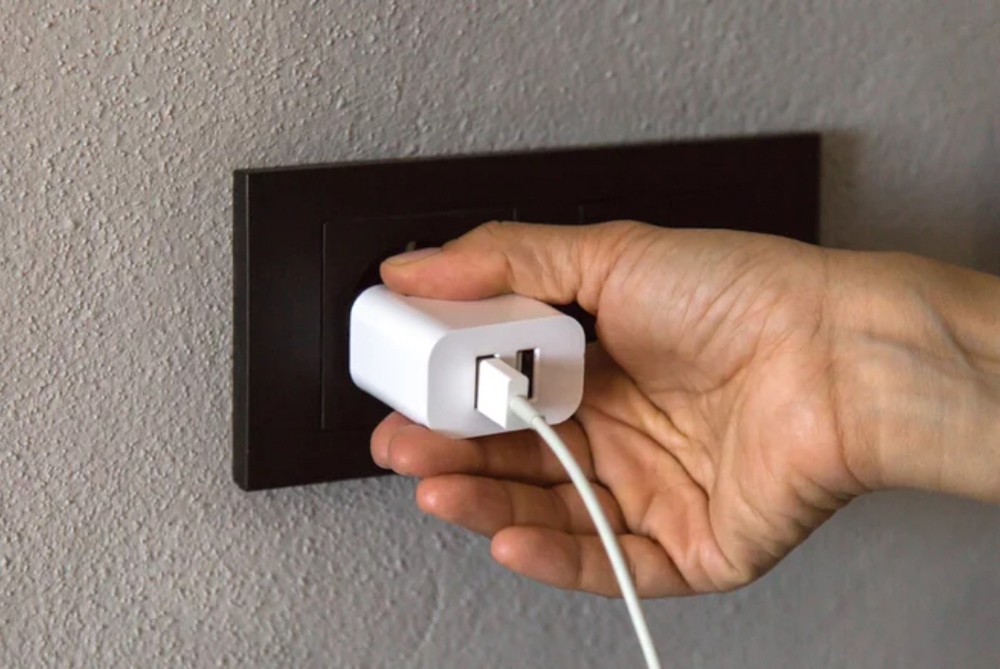
The Biggest Mistake: Choosing a Charger Based Only on the Plug
This is perhaps the most important takeaway.
People often choose chargers by asking:
“Does this plug fit?”
But a safer approach is:
“Is this charger designed and rated for my device?”
Those are two completely different questions.
The connector tells you whether the charger can physically connect.
The specifications tell you whether it is electrically appropriate.
A Safer Charging Routine
You don't need to become an electrical engineer to charge your devices safely.
A few habits go a long way:
Use reputable chargers and cables.
Follow the manufacturer's specifications.
Replace damaged cables.
Don't ignore excessive heat, smoke, sparks, or burning smells.
Keep charging equipment away from water.
Don't cover chargers while they're operating.
Avoid overloaded power strips and unsuitable extension cords.
Don't use visibly swollen or damaged batteries.
Don't assume every USB-C accessory has identical capabilities.
When in doubt, consult the manufacturer or a qualified professional.
Final Takeaway
The charger you use every day may seem like a simple accessory, but it's actually part of an electrical system that connects your device and battery to the power coming from your home.
Using a charger that is incompatible, damaged, counterfeit, poorly manufactured, or incorrectly matched to the device can create unnecessary risks.
At the same time, it's important not to believe the opposite extreme: not every third-party charger is dangerous, and a higher-rated compatible charger does not automatically force excessive current into your device.
The safest approach is to focus on compatibility, reputable quality, proper ratings, and physical condition.
And don't ignore warning signs.
A charger that becomes extremely hot, smells burnt, sparks, melts, or shows visible damage isn't something to “keep using until it dies.”
When it comes to electricity, a few seconds spent checking the charger can be far more valuable than discovering a problem after something goes wrong.