Nails may seem like a small detail, but they can provide useful information about overall health. Their appearance can be influenced by age, genetics, nutrition, daily habits, medications, and certain medical conditions. Changes in nail color, thickness, shape, and texture sometimes offer clues that deserve attention.
One of the most common changes is the appearance of vertical ridges, also called longitudinal ridges. These are lines that extend from the cuticle area toward the free edge of the nail. They may appear on one fingernail or several, and their depth can range from almost invisible to noticeably raised.
In many cases, vertical nail ridges are harmless and become more common with age. However, changes that appear suddenly, affect only certain nails, or occur alongside discoloration, pain, brittleness, or other symptoms may deserve a closer look.
So what do vertical ridges actually mean? Are they simply a natural part of aging, or could they be connected to nutritional deficiencies, skin conditions, or other health concerns?
Understanding the different causes can help you recognize which changes are usually harmless and when it may be worth consulting a healthcare professional.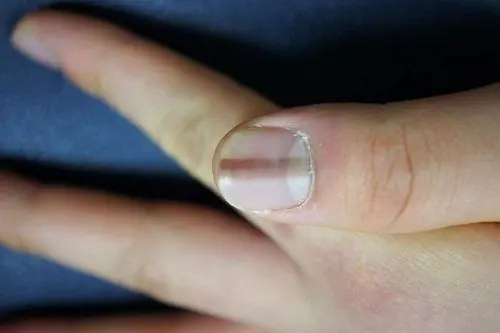
1. What Are Vertical Nail Ridges?
Vertical nail ridges are raised or recessed lines that run lengthwise along the nail plate, generally from the cuticle toward the fingertip.
The medical term for this pattern is longitudinal ridging.
To understand why these lines appear, it helps to know how fingernails grow.
Your nails are produced by a structure called the nail matrix, which is located beneath the skin at the base of the nail. Cells in this area multiply, gradually harden, and move forward to form the visible nail plate.
As the nail grows, its surface reflects the activity of the nail matrix. If the nail-producing tissue changes with age, experiences repeated minor trauma, or is affected by certain skin or medical conditions, the nail surface may develop ridges.
Vertical ridges can look different from one person to another.
Some people have very fine lines that are visible only under bright lighting. Others develop deeper grooves that can be felt when running a finger across the nail.
They may affect all fingernails relatively evenly or appear more prominently on individual nails.
The distinction between ordinary ridges and other nail abnormalities is important. Vertical ridges generally run in the direction of nail growth. Horizontal grooves, by contrast, extend across the nail and may reflect a temporary interruption in nail production.
Although the appearance of nail ridges can sometimes provide useful clues, no single nail feature can reliably diagnose a specific disease.
2. Aging Is One of the Most Common Reasons for Vertical Nail Ridges
One of the most frequent explanations for vertical ridges is the natural aging process.
As people get older, the nail matrix and surrounding tissues undergo gradual changes. Nail growth may become slower, the nail plate may become more brittle, and its surface may develop more noticeable irregularities.
This is similar to other age-related changes in the body. Skin may become thinner and drier, hair may change texture, and nails may lose some of their previous smoothness.
Vertical ridges can therefore become more noticeable during middle age and later adulthood.
Some people develop them gradually over many years, while others notice a change more suddenly.
Age-related ridges are generally:
-
Fine or moderately pronounced.
-
Present on several fingernails.
-
Similar in appearance from one nail to another.
-
Not accompanied by significant pain or inflammation.
-
Not associated with major changes in nail color.
However, not every ridge in an older adult should automatically be attributed to aging.
A new dark line, a rapidly changing nail, significant nail separation, or a single deeply grooved nail may have another explanation.
The key is to consider the overall appearance of the nails rather than focusing on the presence of ridges alone.
3. Dry Nails Can Make Vertical Ridges More Noticeable
Dryness is another common factor that can affect nail texture.
Although nails are made primarily of keratin rather than living skin cells, they can still become brittle and develop surface irregularities.
Repeated exposure to water, detergents, cleaning products, and harsh chemicals can weaken the nail plate.
For example, people who frequently wash their hands, work with cleaning products, or use nail polish remover may notice that their nails become dry and fragile.
When nails lose flexibility, existing ridges may become more visible. The nail surface may also begin to split or peel.
Common signs of dry or brittle nails include:
-
Rough nail surfaces.
-
Fine vertical lines.
-
Peeling at the tips.
-
Nails that break easily.
-
Increased sensitivity around the nail edges.
Frequent wetting and drying can contribute to this problem because the nail plate expands slightly when exposed to water and contracts as it dries.
Repeated cycles may weaken the nail structure over time.
What can help?
Use a moisturizer regularly on your hands, nails, and cuticles. Products containing glycerin, petrolatum, or other moisturizing ingredients can help protect the surrounding skin.