VERY CAREFUL: A Woman Dies Agonizing in Her Home After Washing — What Really Happened, and What Everyone Should Know
An alarming headline has left readers asking what the woman washed, what happened inside her home, and whether the tragedy could have been prevented.
A quiet day at home can turn into a nightmare in a matter of minutes. A woman goes about an ordinary household task, expecting nothing more than to finish her chores and continue with her day. Then something goes terribly wrong. Emergency responders arrive, a medical crisis unfolds, and a family is left facing a loss that no one expected.
That is the disturbing impression created by the image and the headline fragment supplied here: “VERY CAREFUL: A Woman Dies Agonizing in Her Home After Washing…” The accompanying photograph shows a woman's portrait above a nighttime emergency response scene, while the text below acknowledges that the headline has been deliberately alarming and that crucial details are missing.
But there is a problem: the screenshot does not reveal what the woman was washing, what substance or equipment was involved, where the incident occurred, when it happened, or what medical findings confirmed the cause of death. It does not provide a complete report or identify an official source. Those missing facts are not minor details. They are essential to understanding the event.
Rather than inventing a cause of death or presenting an unverified social-media claim as established news, this article examines what the image actually tells us, why household incidents can become emergencies, and what safety lessons readers can take away. The next sections look at the possible risks associated with common washing and cleaning activities—but clearly distinguish general safety information from the unknown circumstances of this particular case.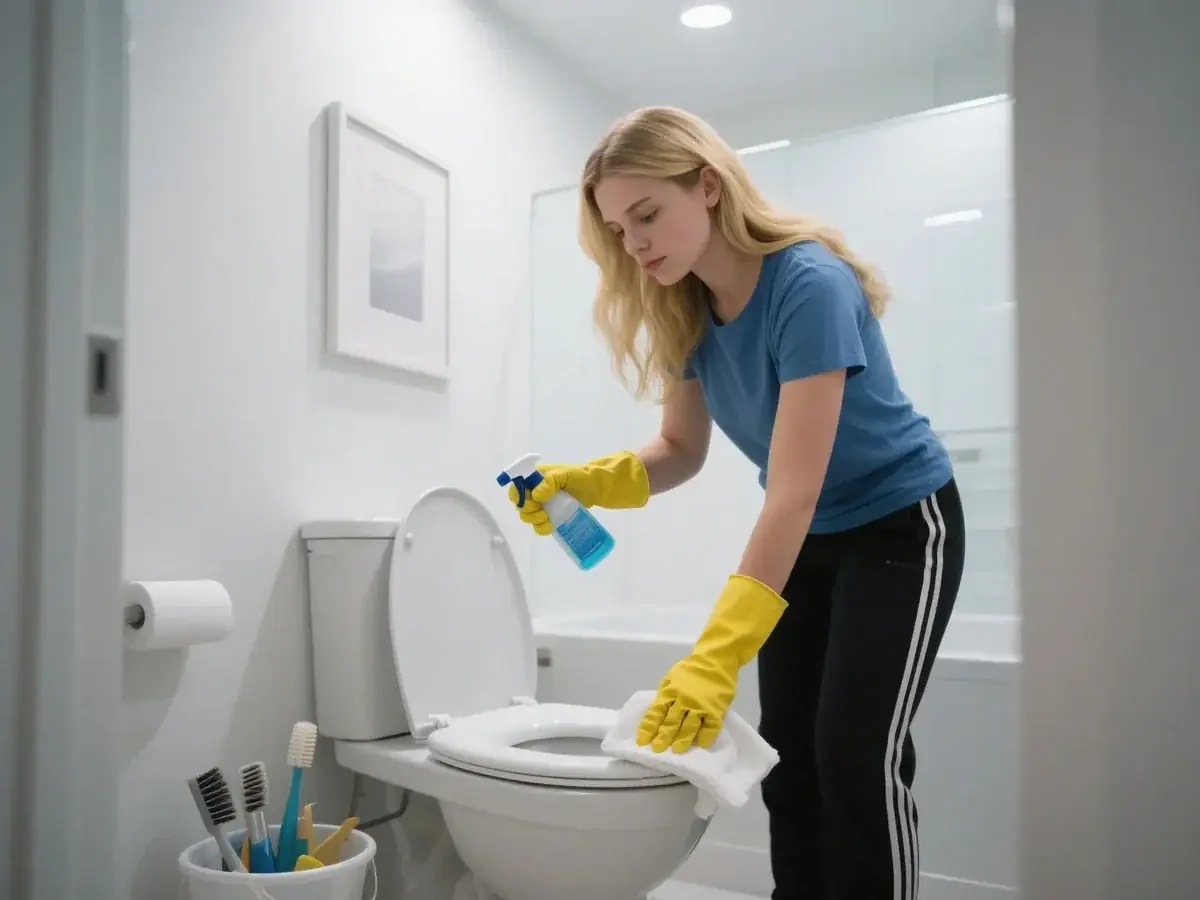
Chapter 1: The Frightening Headline That Leaves Out the Most Important Detail
The image is disturbing because it places two very different scenes together. At the top is a portrait of a young woman, accompanied by the letters “R.I.P.” Below it is a nighttime emergency scene showing several responders gathered around a person on a stretcher. The combination immediately suggests a tragedy, and the headline fragment makes the situation appear even more frightening.
Yet the most important information is missing.
The words “after washing…” do not explain whether the woman was washing clothes, cleaning a bathroom, washing a floor, handling a chemical product or doing something entirely different. The screenshot also does not establish whether the emergency scene is connected to the woman in the portrait. It may be an illustrative photograph rather than an image from the incident itself.
That distinction matters. Photographs used in online articles are not always documentary evidence. A portrait may be taken from an unrelated social-media account, while an emergency photograph may come from a stock-image collection or a separate news event. Without a verified caption, location, date and source, readers cannot safely assume that every image belongs to the same incident.
A search for the distinctive headline wording leads to a page repeating the same alarming claim. However, that page does not provide independently confirmed details identifying the woman, establishing the exact washing activity or documenting an official cause of death. It even acknowledges that the central circumstances remain unverified. Consequently, the headline should not be treated as proof that a specific household product caused a woman's death.
This does not mean household safety concerns should be ignored. Cleaning products, electrical appliances and ordinary domestic equipment can all create hazards when used incorrectly. Some risks are serious, and certain chemical exposures can become medical emergencies.
The responsible way to approach this story is to separate two issues.
The first is the alleged incident. The available screenshot does not provide enough evidence to establish exactly what happened to the woman.
The second is the broader household warning. There are genuine dangers associated with mixing cleaning chemicals, using electrical appliances near water, working in poorly ventilated rooms and ignoring product instructions. These risks are supported by established safety guidance.
The following sections examine those hazards so readers can understand what deserves attention without being misled into believing that an unverified story has been confirmed.
Chapter 2: What Could “After Washing” Actually Mean?
The phrase “after washing” is unusually vague. It can describe several everyday activities, each involving different equipment and potential risks.
A person might be washing clothes in a machine, hand-washing garments in a basin, cleaning a bathroom, scrubbing a floor, washing windows or using a strong product to remove stains. Some people also use specialized cleaning agents for kitchens, drains, tiles and outdoor surfaces.
These activities should not be treated as though they carry the same risks.
For example, washing clothes in a washing machine involves electricity, water, moving parts and sometimes detergent. Cleaning a bathroom may involve disinfectants, acidic products, bleach-based cleaners and limited ventilation. Washing a floor can create slipping hazards, while cleaning windows may involve ladders or unstable surfaces.
The first question should therefore be: what exactly was being washed?
The screenshot does not answer that question. It would be irresponsible to choose one possibility and write as if it were the confirmed explanation.
Some readers may assume the story concerns household chemicals because the headline uses a warning format commonly associated with cleaning products. Others may interpret it as a washing-machine accident. Neither interpretation is established by the image.
There are documented cases in which ordinary household activities have ended in tragedy. In one reported incident in Madrid in 2018, a woman died after prolonged exposure to ammonia while cleaning her home. Reporting at the time said she had used a strong industrial cleaner without adequate protection and had inhaled the substance for an extended period. That was a separately reported incident, not proof of what happened in the screenshot.