Trying unverified home remedies
Lemon juice, vinegar, baking soda, and other household substances are not established treatments for white spots. Some can cause irritation or chemical burns.
Stopping treatment too early
Certain conditions, particularly tinea versicolor, may take time to show visible improvement. Pigmentation can remain uneven even after the underlying infection has been treated.
The safest approach is to identify the cause before starting treatment.
16. Can White Spots Be Prevented?
Prevention depends on the underlying condition.
Some pigment changes, particularly those associated with aging, cannot always be prevented. However, several habits can reduce avoidable skin irritation and sun damage.
Protect your skin from ultraviolet radiation.
Use sunscreen, wear protective clothing, and avoid excessive tanning.
Keep the skin moisturized.
Regular moisturizing can support the skin barrier, especially for people prone to dryness or eczema.
Choose gentle skincare products.
Fragrance-free cleansers and moisturizers may be useful for people with sensitive skin.
Avoid unnecessary skin irritation.
Harsh scrubs, strong acids, and aggressive cosmetic treatments can trigger inflammation.
Use appropriate protection around chemicals.
People who work with industrial substances should follow safety instructions and use suitable protective equipment.
Treat skin conditions appropriately.
If a dermatologist identifies eczema, fungal infection, or another underlying problem, following the recommended treatment can help reduce further irritation.
Pay attention to persistent changes.
If a pale patch appears and continues to change, document its progression and seek medical advice.
These habits cannot prevent every pigmentation disorder, but they can help maintain healthier skin.
17. Does Every White Spot Need Treatment?
No.
One of the most important things to understand is that treatment depends on the underlying diagnosis.
Idiopathic guttate hypomelanosis is generally harmless, and many people choose not to treat it.
Pityriasis alba often improves with gentle skin care and time.
Post-inflammatory hypopigmentation may gradually resolve as the skin recovers from the original inflammation.
Tinea versicolor usually responds to antifungal treatment, although pigment differences can remain for some time afterward.
Vitiligo may benefit from specialist treatment, particularly when patches are spreading or affecting areas that are important to the individual.
Chemical leukoderma requires identifying and avoiding the responsible exposure.
Using the same cream for every type of white spot is therefore unlikely to be effective.
In some cases, unnecessary treatment can cause more irritation than the original condition.
A dermatologist can help determine whether treatment is necessary and which approach is most appropriate.
18. What You Can Do to Support Overall Skin Health
Although no daily routine can prevent every pigmentation disorder, maintaining healthy skin habits can reduce certain problems.
A practical routine does not need to be complicated.
Cleanse gently.
Use a mild cleanser that does not leave the skin feeling excessively dry or tight.
Moisturize regularly.
Choose a product suitable for your skin type. People with dry or sensitive skin may benefit from fragrance-free formulas.
Apply sunscreen.
Broad-spectrum sunscreen with SPF 30 or higher can help protect against ultraviolet damage.
Avoid excessive exfoliation.
Using strong exfoliating products too frequently may irritate the skin and worsen inflammation.
Eat a balanced diet.
A varied diet provides nutrients needed for normal skin function and general health.
Stay hydrated.
Adequate fluid intake supports normal body function, although drinking extra water alone will not reverse pigmentation disorders.
Get enough sleep.
Healthy sleep supports overall well-being and helps maintain normal body processes.
Seek medical advice when changes persist.
Do not rely on online photographs or descriptions to diagnose a condition with certainty.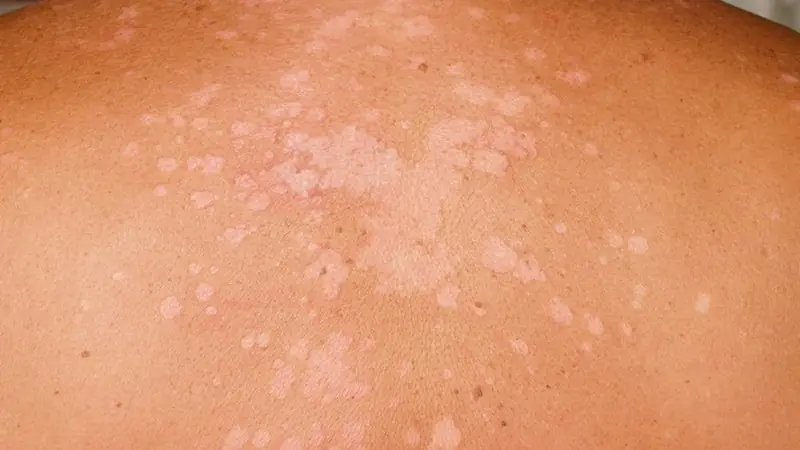
Final Thoughts: White Spots on Your Skin May Have More Than One Explanation
White spots on the skin can develop for many different reasons, and vitiligo is only one possibility.
Common explanations include tinea versicolor, idiopathic guttate hypomelanosis, pityriasis alba, post-inflammatory hypopigmentation, and other pigment-related conditions.
Some are associated with fungal overgrowth, others with aging or previous inflammation, and some involve changes in the way melanocytes produce melanin.
The appearance of the spots can provide useful clues, but color alone is not enough to identify the cause.
Pay attention to their size, shape, location, texture, and whether they are spreading. Consider whether they appeared after a rash, injury, sun exposure, or contact with a new product.
Avoid aggressive home remedies and unverified skin-lightening treatments. If the patches persist, become more noticeable, or continue spreading, a dermatologist can help establish the diagnosis and recommend appropriate care.
Most importantly, do not assume that every white mark is dangerous. Many are harmless, and some require little more than observation and basic skin care.
The goal is not to worry about every small change. It is to understand what your skin may be telling you and recognize when professional advice can make a difference.