The more accurate conclusion is that the object resembles a possible insect nest and that the situation highlights a genuine household safety issue.
When to Seek Medical Help After a Sting
If someone is stung while investigating a suspected nest, the reaction should be taken seriously.
A typical local reaction may include pain, redness, swelling, and itching around the sting site.
However, some people experience a severe allergic reaction that affects more than the area of the sting.
Warning signs can include difficulty breathing, swelling of the tongue or throat, dizziness, fainting, widespread hives, or a sudden feeling of weakness.
These symptoms require emergency medical attention.
A person who knows they have a serious allergy to insect stings should follow their prescribed emergency plan and seek medical care promptly after a sting.
Even when symptoms initially appear mild, people should pay attention to changes in their condition.
The best way to avoid this risk is not to approach or disturb a suspected nest.
If a nest is located inside a frequently used room, professional assistance can help make the area safe before normal use resumes.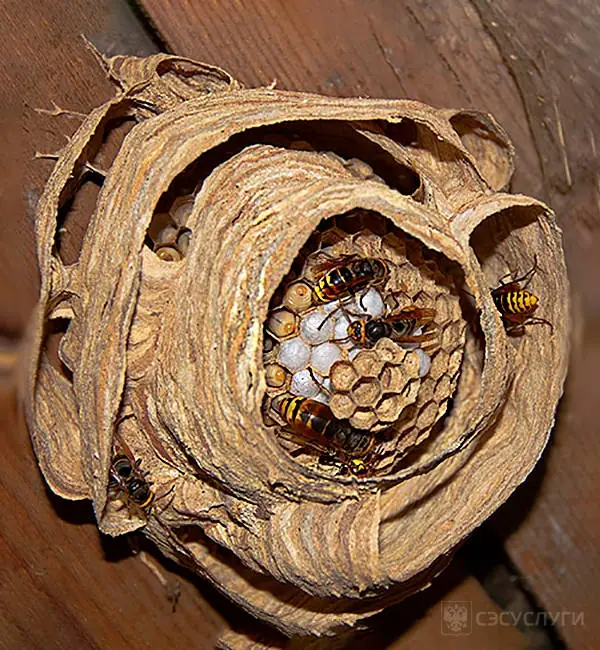
The Mystery Is a Reminder to Look Before Acting
The discovery described in the supplied story begins with an ordinary moment: returning home after a vacation.
The family expects to find the same bathroom they left behind.
Instead, an unfamiliar object appears in a corner, prompting questions about its origin and purpose.
The object looks strange enough to invite speculation, but its appearance alone cannot establish what it is.
A possible insect nest is one explanation, especially because some social wasps and hornets construct layered paper-like structures in sheltered locations.
The broader lesson is not that every unusual object in a bathroom is a nest.
It is that an unfamiliar structure should be identified before anyone attempts to remove it.
A calm response, a safe distance, and professional advice can prevent a surprising discovery from becoming a dangerous incident.
The image may show a remarkable example of nature entering an ordinary household space. It may also be an unusual object whose identity has not been confirmed.
Either way, it reminds us that the most unexpected discoveries are often the ones that reward patience and careful observation.
Sometimes the safest answer to a mystery is not to touch it, but to step back and find out what it really is.
What Makes a Nest Strong Enough to Stay Attached?
One question that naturally arises from the photograph is how such a delicate-looking structure can remain attached to a wall.
The material used by many social wasps is lightweight, but the way it is arranged can provide considerable strength.
The insects do not simply collect loose fibers and pile them together. They build gradually, adding material to specific parts of the structure and allowing it to dry.
The resulting paper-like surface can contain numerous overlapping layers.
The attachment point is also important. A nest must remain supported while workers move around it and while the colony expands.
If the structure is exposed to wind or vibration, its shape and attachment become even more significant.
Inside a building, a sheltered location may protect the nest from many of the environmental conditions that would otherwise affect it.
This can help explain why an insect-built structure may remain intact even when it appears fragile.
The nest's unusual surface is therefore not necessarily a sign of damage. It may be part of the way the structure was constructed.
Why a Photograph Cannot Tell the Whole Story
The supplied image is visually striking, but it leaves several important questions unanswered.
There is no clear measurement showing the object's actual size. The photograph does not show the entrance to the structure, and it does not clearly establish whether any insects are present.
The surrounding bathroom also provides limited information about the object's origin.
A photograph can help identify possible materials and shapes, but it cannot always establish the history of an object.
For example, a nest-like structure could have been moved from another location before being photographed. It could be inactive, newly formed, or unrelated to insects altogether.
The screenshot accompanying the story also contains a written account describing a discovery after a vacation. That account provides a possible narrative, but it does not independently verify the location, the people involved, or the precise sequence of events.
For a factual news report, additional evidence would be necessary.
This might include an original photograph with clear context, confirmation from the homeowner, an identification by an insect specialist, or a statement from a pest-control professional who examined the structure.
Without that evidence, it is better to describe the object as a possible nest rather than present a definite identification.
That does not make the story less interesting. In fact, the uncertainty makes the central question more meaningful: how can something so unusual appear in a place where people expect everything to be familiar?
The answer begins with understanding the hidden spaces in our homes and the remarkable ways insects use them.
The Unexpected Guest That Changed an Ordinary Return Home
Returning from a vacation is usually a pleasant experience.
People unpack their bags, open the windows, put away souvenirs, and settle back into familiar routines.
The bathroom is often one of the first rooms they visit after arriving home. It is a place associated with comfort, cleanliness, and privacy.
Finding an unfamiliar structure attached to the wall can therefore feel especially unsettling.
The discovery interrupts the sense of familiarity that makes a home comfortable.
Yet the most useful response is not panic.
A strange object may have a simple explanation, even if that explanation is not immediately obvious.
The family in the supplied story appears to have followed a sensible sequence: they noticed the object, examined it from different angles, considered possible explanations, and sought more information before attempting to remove it.
That is a valuable approach to any unexpected household discovery.
If the object is a nest, the next step is to determine whether it is active and whether it presents a risk to people or pets.
If it is something else, a careful examination can still help prevent unnecessary damage.
The most important lesson is that curiosity should be balanced with caution.
A mystery inside the home can be fascinating, but identifying it safely is always more important than solving it immediately.
The bathroom may have seemed ordinary when the family left. By the time they returned, it had become the setting for a surprising reminder that nature continues to work quietly, even when no one is watching.
And sometimes, the most remarkable thing about an unexpected discovery is not how frightening it looks at first, but how much it teaches us once we understand it.