Blue eyes are often described as one of the most striking features a person can have. Their color can range from pale gray-blue to deep ocean blue, and under different lighting, they may appear to change dramatically. But behind that distinctive appearance is a fascinating genetic story.
For years, scientists have studied why some people have blue eyes while others have brown, green, hazel, or gray eyes. One of the most interesting discoveries is that many blue-eyed people share a particular genetic history.
That does not mean every person with blue eyes is closely related in the ordinary family-tree sense. Instead, the connection involves a genetic change that occurred thousands of years ago and became part of the ancestry of many people who have blue eyes today.
So, what exactly happened?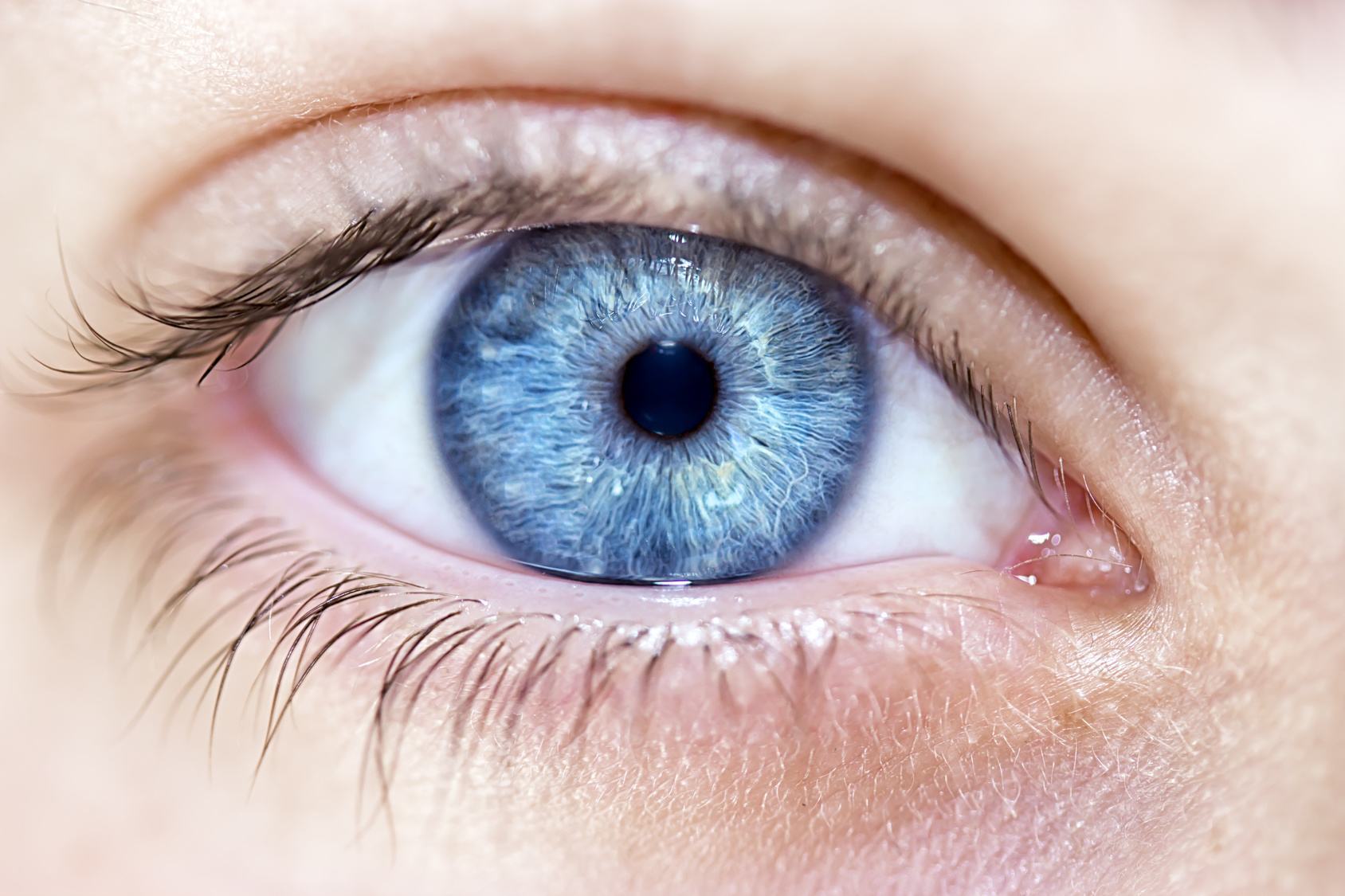
Blue Eyes Are Not Simply “Blue Pigment”
One of the first things to understand about blue eyes is that they are not blue for the same reason that a blue object is blue.
The human iris contains a pigment called melanin. Melanin contributes significantly to eye color, just as it contributes to skin and hair color.
Brown eyes generally contain relatively high amounts of melanin in the iris. Blue eyes contain much less.
But there isn't a special blue pigment sitting inside a blue iris.
Instead, the appearance of blue is largely related to the way light interacts with the relatively low-melanin structure of the iris.
This is somewhat similar to why the sky appears blue. The physical mechanisms are not identical, but in both cases, the way light is scattered and interacts with matter influences what our eyes perceive.
That means two people can have very different-looking blue eyes even though the underlying biological reason for their eye color is related.
The Genetic Connection Behind Blue Eyes
One of the most fascinating findings in eye-color research concerns a region of DNA near a gene called OCA2.
The OCA2 gene plays an important role in melanin production and pigmentation.
Scientists discovered that a particular genetic variation in a nearby regulatory region can influence how much OCA2 is expressed in the iris.
In simplified terms, this variation can reduce the amount of melanin produced in the iris, contributing to blue eyes.
This is where the surprising connection comes in.
Researchers have proposed that the majority of modern blue-eyed people inherited their eye color through a genetic change that occurred in a common ancestral population.
In other words, many blue-eyed people may carry versions of the same ancient genetic variation.
It is a connection through ancestry and genetics—not proof that all blue-eyed people belong to one recent family.
A Genetic Change That Spread Across Generations
Imagine a small population living thousands of years ago.
Most people may have had brown eyes, as darker eye pigmentation was common among early human populations. Then, at some point, a genetic change occurred in one individual or a very small ancestral population.
That change affected the regulation of pigmentation in the iris.
If the individual passed the variant to children, and those children passed it to their descendants, the genetic variant could gradually spread through future generations.
Over thousands of years, migration, intermarriage, population growth, and natural selection could carry that variant into many different populations.
Eventually, descendants carrying the relevant combination of genetic variants could be found across large parts of the world.
This is one reason why a person living in one country can have blue eyes even if their recent family history appears completely different from that of another blue-eyed person living thousands of kilometers away.
Their families may not have shared a recent ancestor.
But far deeper in the past, their genetic histories may converge.
Does This Mean There Was One “First Blue-Eyed Person”?
This idea is often simplified online into the claim that there was definitely one specific person who was “the first blue-eyed human.”
Science is more complicated.
Eye color is influenced by multiple genes, and genetic variation does not always appear in a simple, single-step fashion.
Researchers have identified important roles for OCA2 and HERC2, among other genes, in determining eye pigmentation.
Therefore, saying that every blue-eyed person is descended from one clearly identifiable individual oversimplifies the evidence.
A more accurate way to describe the discovery is that a particular ancient genetic variant associated with blue eyes appears to have a common ancestral origin and is shared by many blue-eyed people today.
That distinction matters.
Genetics is rarely as simple as a single gene producing a single visible characteristic.

Why Are Brown Eyes More Common?
Brown eyes are the most common eye color worldwide.
One major reason is that higher melanin levels in the iris are genetically common across many populations.
Melanin does more than influence appearance. It also absorbs certain wavelengths of light and provides some protection against ultraviolet radiation.
Blue eyes contain less melanin, which is why they can appear lighter.
The global distribution of eye colors has been influenced by human migration, population history, geography, genetic variation, and reproduction over thousands of years.
As human populations moved and mixed, genetic variants associated with different eye colors traveled with them.
That is why eye color today can vary dramatically within families and populations.
Can Two Blue-Eyed Parents Have a Brown-Eyed Child?
The old explanation taught to many people was that brown eyes are dominant and blue eyes are recessive.
While that model is useful for introducing basic genetics, it is far too simple to describe real human eye color.
Eye color is a polygenic trait, meaning that multiple genes contribute to the final appearance.
As a result, inheritance isn't always predictable using a simple dominant-versus-recessive chart.
Two blue-eyed parents will often have blue-eyed children, but real genetic inheritance can be more complicated than the basic schoolroom model suggests.
Similarly, relatives can have different shades of blue, green, hazel, or brown.
Small differences in genetic variants can influence how much melanin is produced and distributed in the iris.
Why Blue Eyes Can Look Different From Person to Person
Not all blue eyes look the same.
Some appear almost gray. Others are pale blue, turquoise, icy blue, or deep blue.