Other benign growths may also be removed if they cause symptoms or if tissue examination is needed to establish the diagnosis.
Surgery carries potential risks, including infection, scarring, stiffness, nerve irritation, and recurrence. The balance of benefits and risks depends on the location and type of growth.
A specialist can explain whether surgery is appropriate or whether observation and other treatments are preferable.
6. Treatment for other causes
The approach changes when the lump is related to a different condition.
For trigger finger, treatment may include activity modification, splinting, medication, injection, or a procedure if symptoms persist.
For Dupuytren's disease, treatment depends on how much the condition limits finger movement. Mild nodules may simply be monitored, while significant contracture may require specialist intervention.
Arthritis-related lumps may be managed by addressing pain, stiffness, and the underlying joint condition. Treatment can include exercises, activity modification, medication, or other measures recommended by a clinician.
If a lump is caused by infection, treatment may involve antibiotics or a procedure, depending on the source and severity. Suspected infection should not be treated by squeezing the lump or applying unverified remedies.
7. What you should never do to a hand lump
There are several common mistakes worth avoiding.
Do not hit it with an object. A traditional method of treating a ganglion cyst involves striking it to rupture the fluid-filled sac. This is unsafe and can cause injury, inflammation, or damage to surrounding structures.
Do not puncture it at home. A needle can introduce bacteria and injure nerves or blood vessels.
Do not squeeze it repeatedly. Manipulation may irritate the tissues and make the area more painful.
Do not assume that every lump is a cyst. A solid growth, joint enlargement, infection, or another condition may look similar.
Do not ignore changes. A lump that grows, becomes painful, or affects movement deserves reassessment, even if it was previously considered harmless.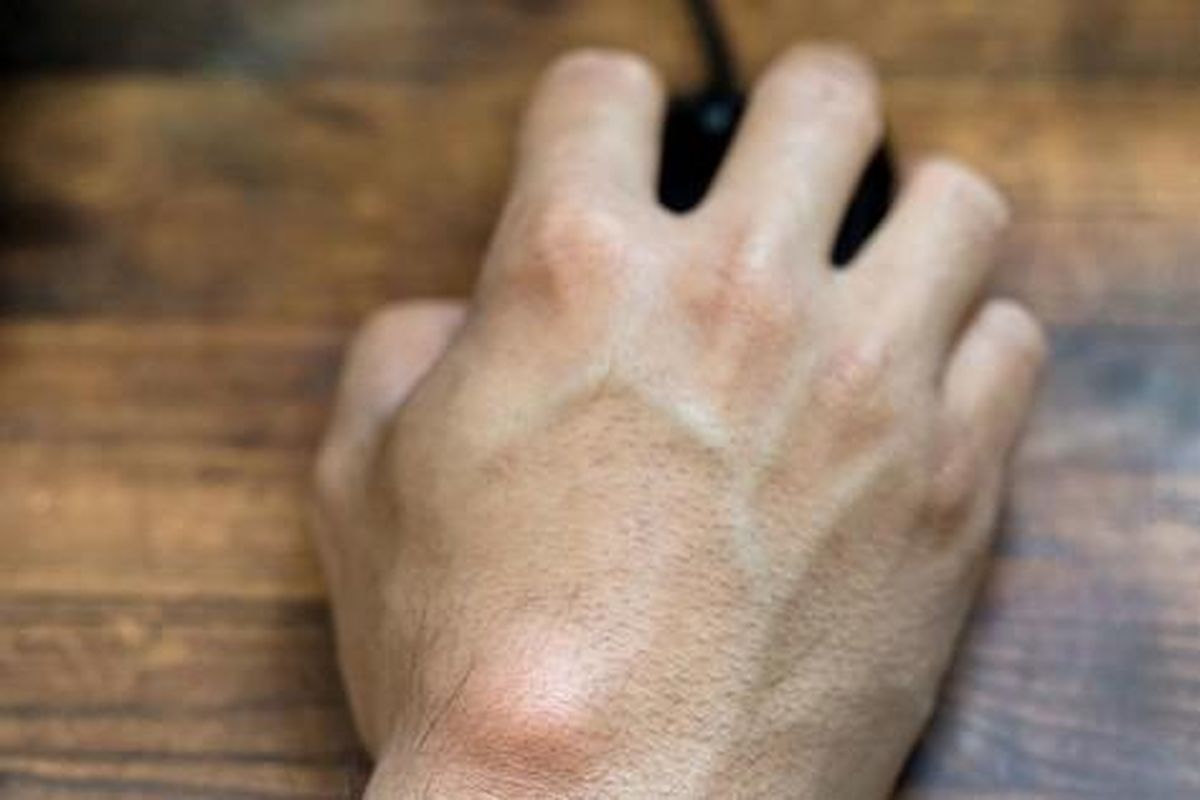
8. Can you prevent lumps from developing?
Not every lump can be prevented. Ganglion cysts, lipomas, arthritis-related changes, and several other conditions may develop without an obvious preventable cause.
However, general hand care can reduce certain risks and help protect function.
Use appropriate technique when performing repetitive activities. Take breaks when tasks involve prolonged gripping or wrist movement. Use protective equipment during activities that carry a risk of injury. Seek appropriate treatment for wounds and signs of infection.
If you have a condition that causes joint pain or swelling, following your clinician's recommendations may help manage symptoms and preserve movement.
Remember that a lump does not necessarily mean you have done something wrong. Many develop despite careful habits and normal daily activity.
Final Thoughts: Don't Panic, but Don't Ignore It
Discovering a lump on your hand can be unsettling, particularly when it appears unexpectedly or changes over time.
In many cases, the cause is benign. A ganglion cyst is a common possibility, especially when a smooth, rounded bump appears near the wrist. Other explanations include lipomas, arthritis-related changes, tendon disorders, skin cysts, and other growths.
The important point is that a lump's appearance alone cannot establish its cause.
Pay attention to when it appeared, whether it is growing, whether it hurts, and whether it affects your ability to use your hand. Arrange a medical examination for a new or unexplained lump, particularly if it persists, enlarges, or interferes with movement. Seek urgent care if you experience severe pain, rapidly spreading redness, fever, major injury, or sudden changes in sensation or circulation.
Many hand lumps can be managed successfully, and some require little or no treatment once their nature has been established.
The best response is neither panic nor prolonged uncertainty. It is to seek an appropriate assessment, understand the diagnosis, and make an informed decision about treatment.
Frequently Asked Questions
1. Can a ganglion cyst disappear on its own?
Yes. Some ganglion cysts shrink or disappear without treatment, although others remain or return. A clinician can help determine whether observation is appropriate.
2. Is a hard lump on the hand always serious?
No. Arthritis-related bony enlargements and certain benign growths can feel hard. However, hardness alone cannot determine whether a lump is harmless. A new, persistent, growing, or unexplained hard lump should be examined.
3. Should I worry if a lump does not hurt?
Not necessarily. Many benign lumps are painless. However, painless growths should not automatically be ignored, especially if they enlarge or change.
4. Can typing or using a computer cause a ganglion cyst?
Ganglion cysts are associated with structures around joints and tendons, but their precise cause is often unclear. Repetitive activity may make an existing cyst more noticeable or uncomfortable, but typing alone cannot be assumed to be the cause.
5. Can a lump on the hand be cancerous?
Cancerous growths in the hand are uncommon, and many lumps have benign explanations. Nevertheless, an enlarging or unexplained mass needs appropriate assessment to establish the diagnosis.
6. When should I see a doctor?
Arrange an appointment for a new or unexplained lump, especially if it grows, persists, becomes painful, or affects hand movement. Seek urgent care if it is accompanied by severe pain, rapidly spreading redness, fever, major injury, or sudden numbness, weakness, or changes in circulation.
7. Can I massage a lump to make it disappear?
Do not rely on massage to eliminate a lump of unknown cause. Repeated pressure may irritate the area, and some growths should not be manipulated. Establish the diagnosis before attempting treatment.
8. Will every hand lump need surgery?
No. Many lumps can be monitored or managed without surgery. The decision depends on the diagnosis, symptoms, effect on hand function, and whether further examination is needed.