But there is a major difference between an interesting personality description and a scientifically established relationship.
Current scientific evidence does not support using a person's sleeping position as a dependable personality test.
There is no validated method that allows someone to look at a photograph of a sleeper and accurately determine whether that person is lazy, confident, shy, generous, sensitive or outgoing.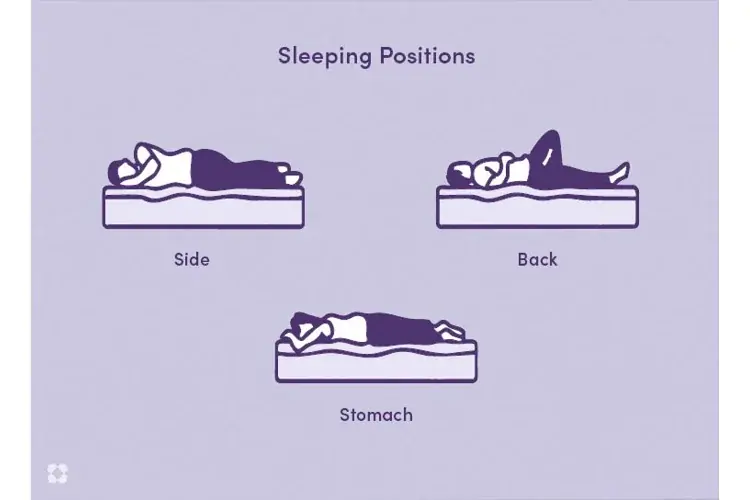
Why personality descriptions can feel surprisingly accurate
Have you ever read a personality description online and felt that it described you perfectly?
This experience can be explained partly by a psychological phenomenon known as the Barnum effect, sometimes called the Forer effect.
It describes the tendency for people to perceive broad, general descriptions as highly personal, especially when those descriptions are presented as if they were written specifically for them.
For example, a statement such as "You enjoy being around people but sometimes need time alone" can apply to a large number of individuals.
Likewise, a description such as "You are sensitive but stronger than others realize" may feel meaningful to many readers.
Sleep-position charts often use similar descriptions. They attach positive or relatable personality characteristics to a posture, encouraging readers to recognize themselves in the explanation.
That does not mean the description is necessarily true.
Why the word "lazy" is especially misleading
The illustration uses the phrase "Your Sleeping Position Determines How Lazy You Are."
This wording is attention-grabbing, but it is not a scientific conclusion.
Laziness is a subjective social label, not a medical measurement that can be determined from body posture during sleep.
A person who sleeps with their arms and legs stretched out is not necessarily lazy. Someone who curls tightly into a ball is not automatically hardworking. A person who hugs a pillow does not necessarily need more emotional reassurance than someone who sleeps without one.
Sleep position is a physical behavior. It does not provide enough information to judge someone's motivation, work ethic or character.
Even the amount of time someone spends in bed cannot, by itself, establish whether they are lazy. Sleep duration varies with age, health, activity, medication, stress and individual biological needs.
Someone who sleeps longer may be recovering from illness, managing a demanding schedule or experiencing a sleep disorder. Another person may spend fewer hours in bed but still feel exhausted because their sleep is repeatedly interrupted.
The label tells us very little about what is actually happening.
What sleep research studies instead
Sleep scientists investigate measurable aspects of sleep, including:
-
Total sleep duration.
-
Time needed to fall asleep.
-
Number and length of nighttime awakenings.
-
Sleep stages and sleep architecture.
-
Breathing patterns.
-
Oxygen levels.
-
Body movements.
-
Heart rate and other physiological signals.
-
Daytime alertness and functioning.
These measures provide more meaningful information about sleep health than a personality label attached to a posture.
A sleep study, for example, can help identify obstructive sleep apnea by monitoring breathing, oxygen levels, sleep stages and other relevant signals.
It cannot determine whether a person is generous or lazy.
Can sleep habits reflect lifestyle?
Although sleeping posture cannot reveal personality reliably, sleep habits may sometimes reflect aspects of a person's daily life.
Someone who works night shifts may sleep at unusual times. A person with chronic pain may change positions frequently. A parent caring for a young child may experience interrupted sleep. Someone under stress may find it difficult to fall asleep or return to sleep after waking.
These patterns can provide useful information about lifestyle and health.
But they should not be confused with a personality diagnosis.
Which Sleeping Position Is Best for Your Body?
There is no single sleeping position that is best for everyone.
The most suitable position depends on a person's physical condition, breathing, comfort, age, pregnancy status and other factors.
For many healthy adults, side sleeping and back sleeping can both be comfortable options. Stomach sleeping may be comfortable for some people, but it can place additional strain on the neck and lower back.
The important question is not whether your posture matches an online chart. It is whether you sleep comfortably and wake feeling reasonably rested.
Side sleeping: A popular choice for comfort
Side sleeping is common and may provide several advantages.
For people who snore or have certain forms of position-dependent obstructive sleep apnea, sleeping on the side may help reduce airway obstruction compared with sleeping on the back.
It can also be a comfortable position for people who prefer not to put direct pressure on the lower back.
However, side sleeping may place pressure on the shoulder and hip closest to the mattress. Someone with shoulder pain, hip arthritis or certain joint conditions may need additional support.
A pillow that keeps the neck aligned with the spine is important. If it is too high or too low, the neck may bend sideways for hours.
Some people find it helpful to place a pillow between their knees. This may reduce twisting around the hips and make the position feel more comfortable.
Back sleeping: Comfortable for some, unsuitable for others
Back sleeping distributes body weight across the mattress and avoids direct pressure on either shoulder.
For some people, it may help maintain a relatively neutral position of the spine, particularly when the pillow and mattress provide appropriate support.
However, back sleeping can worsen snoring and obstructive sleep apnea in some individuals.
It may also aggravate discomfort for people with certain lower-back conditions.
If you feel comfortable sleeping on your back and do not experience breathing problems, pain or repeated awakenings, there may be no reason to change.
If you have been diagnosed with sleep apnea, follow the treatment advice provided by your healthcare professional. Changing position alone may not be sufficient.
Stomach sleeping: Why it can strain the neck
Stomach sleeping involves lying face-down, usually with the head turned to one side so that the person can breathe.
This means the neck remains rotated for an extended period.
Depending on the individual and the mattress, this may contribute to neck stiffness, shoulder discomfort or lower-back strain.
Some stomach sleepers feel more comfortable with a thin pillow or without a head pillow, but the best arrangement varies.
If you frequently wake with neck pain, it may be worth experimenting with side sleeping or back sleeping instead.
A gradual transition may be easier than trying to change your posture in one night.
The fetal position: Comfortable when not too tightly curled
The fetal position is a variation of side sleeping.
A gentle bend in the knees may feel comfortable and help some people relax.
The main concern is curling too tightly. An extreme position can make the hips, knees and back feel stiff, especially if the person remains in the same posture for long periods.
A comfortable pillow between the knees may help maintain a more relaxed alignment.
Pregnant people often find side sleeping more comfortable as pregnancy progresses. They should follow the advice of their maternity care team regarding the safest and most comfortable sleeping arrangements for their individual circumstances.
What Your Sleeping Position May Tell You About Your Health
Although posture cannot reveal whether someone is lazy or confident, it may provide useful clues about physical comfort.
A person who repeatedly changes position may be responding to pain, pressure, heat or breathing difficulties.
Someone who always sleeps on one side may simply find that posture comfortable, but it can also be influenced by a medical condition.
The important thing is to look at patterns alongside symptoms rather than treating posture as a diagnosis.
Frequent turning may indicate discomfort
People naturally move during sleep.
Changing position helps redistribute pressure and can prevent the body from remaining in one posture throughout the night.
However, frequent turning accompanied by repeated awakenings may suggest that something is interfering with comfort.
Possible contributors include:
-
An unsuitable mattress.
-
Neck or back discomfort.
-
Joint pain.
-
Room temperature.
-
Restless legs symptoms.
-
Stress or anxiety.
-
Certain medications.
-
Breathing disturbances.
-
Noise or light.
If the problem occurs regularly and affects daytime functioning, it may be worth discussing with a healthcare professional.
Waking with numbness or tingling
A hand or arm that feels temporarily numb after sleeping may have been compressed during the night.
This can happen when someone lies directly on an arm or keeps a joint in an awkward position.
Changing posture may relieve the sensation.
However, repeated numbness, persistent tingling, weakness or pain should not automatically be blamed on sleeping position. These symptoms can have other causes, including nerve compression and medical conditions that require assessment.
Sudden weakness or numbness affecting one side of the body, particularly with facial drooping, difficulty speaking or severe dizziness, requires emergency medical attention.
Snoring may be more noticeable in certain positions
Snoring happens when airflow causes tissues in the upper airway to vibrate.
The sound may become louder when someone sleeps on their back because the tongue and soft tissues can move backward and narrow the airway.
Not everyone who snores has obstructive sleep apnea, but loud, persistent snoring accompanied by gasping, choking or witnessed breathing pauses deserves medical attention.
Other possible warning signs include morning headaches, unrefreshing sleep and excessive daytime sleepiness.
A person who experiences these symptoms should speak with a healthcare professional rather than assuming that changing sleeping position will solve the problem.