Lower-back discomfort
Some people notice that their lower back feels stiff after sleeping.
The cause may involve mattress support, muscle tension, underlying back problems or the way the hips and knees are positioned.
Back sleepers sometimes find relief by placing a pillow beneath their knees. Side sleepers may prefer a pillow between their knees.
These adjustments can improve comfort for some individuals, but they are not universal treatments.
If pain is persistent, severe or associated with leg weakness, numbness, fever, unexplained weight loss or bladder or bowel changes, medical assessment is important.
How Your Pillow and Mattress Affect Your Sleeping Position
A sleeping posture cannot be considered separately from the surface supporting the body.
A position that feels comfortable on one mattress may become uncomfortable on another. The same is true of pillows.
The goal is to support the body without forcing it into an unnatural angle.
Choosing a pillow for side sleeping
Side sleepers generally need enough pillow height to fill the space between the mattress and the side of the head.
The exact height depends on shoulder width, body shape, mattress firmness and personal comfort.
If the pillow is too low, the head may tilt toward the mattress. If it is too high, the head may tilt away from it.
Either situation can make the neck uncomfortable.
A supportive pillow should keep the head and neck reasonably aligned with the rest of the spine.
Choosing a pillow for back sleeping
Back sleepers often need a pillow that supports the natural curve of the neck without lifting the head too far forward.
A very thick pillow may push the chin toward the chest. A very thin pillow may fail to provide adequate support.
Some people prefer pillows with a shaped neck-support area, while others are comfortable with a conventional pillow.
The best choice is the one that supports a relaxed, neutral posture.
Mattress firmness and body pressure
A mattress that is too firm may create pressure around the shoulders and hips, particularly for side sleepers.
A mattress that is too soft may allow some body areas to sink more deeply than others.
There is no universal firmness level that suits everyone. Body weight, sleeping position, personal preference and existing pain conditions all influence comfort.
It is useful to evaluate a mattress over time rather than judging it only during a brief showroom visit.
Why a body pillow may help
Body pillows can provide support along several parts of the body.
A side sleeper may hug one while placing part of it between the knees. This can help prevent the upper shoulder from rolling forward and may make the hips feel more comfortable.
Pregnancy pillows are designed to provide additional support as the abdomen grows and the body's weight distribution changes.
However, a pillow should not be so large that it forces the body into a twisted position.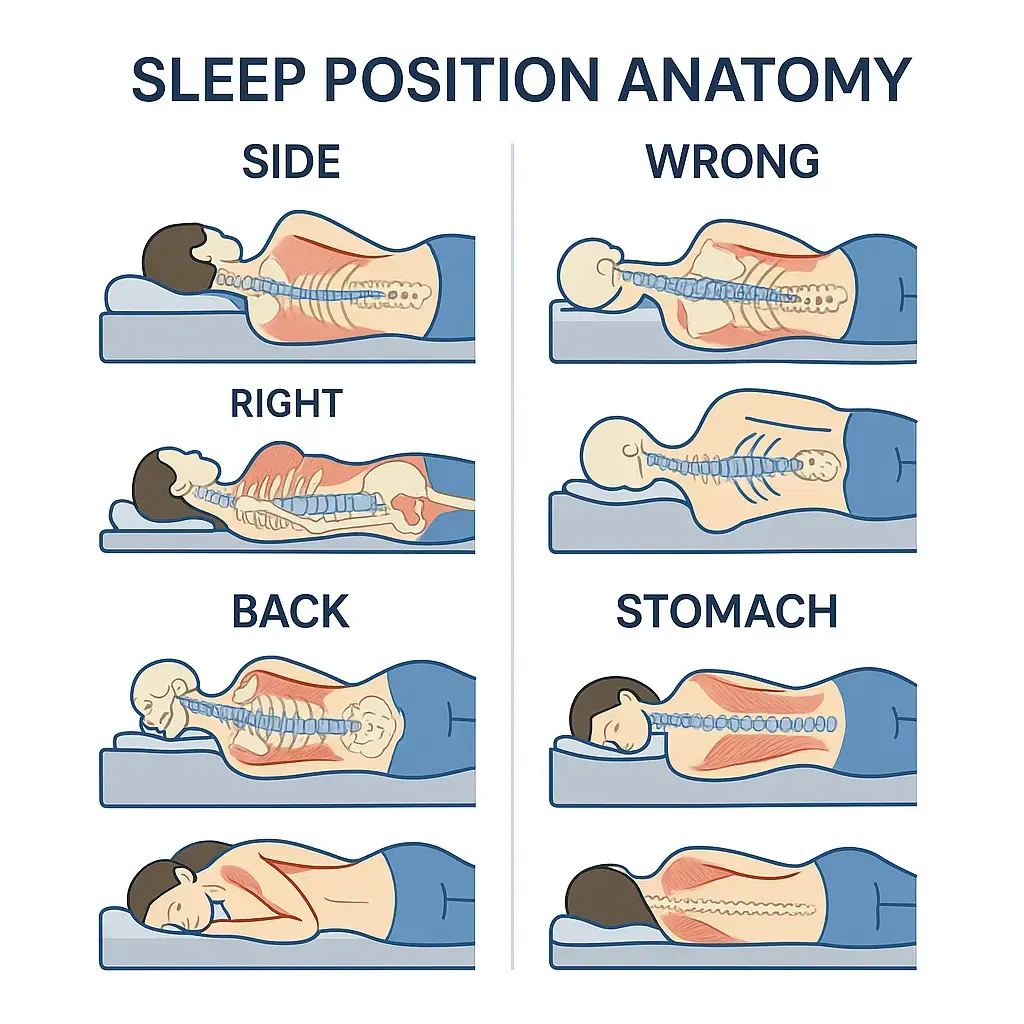
Can You Change Your Sleeping Position?
Yes, but it is usually better to make gradual adjustments rather than forcing a completely new posture.
If you have slept on your stomach for many years, switching immediately to back sleeping may feel unfamiliar. You may find yourself returning to your preferred position without realizing it.
That is normal.
Start with small changes
If you want to try side sleeping, begin by making the position more comfortable.
Use a pillow that supports your neck and consider placing another between your knees.
If you want to reduce pressure on one shoulder, experiment with the opposite side when comfortable.
If you prefer back sleeping but notice lower-back discomfort, try a small pillow beneath your knees.
The objective is to find a posture that feels sustainable.
Do not force a position that causes pain
Some online advice suggests that everyone should sleep in one particular position.
This is too simplistic.
If a position causes pain, numbness, breathing discomfort or repeated awakenings, it may not be suitable for you.
People with medical conditions should seek individualized advice rather than following a general sleep chart.
Give your body time to adapt
Changing a familiar sleeping habit may take time.
You might begin by spending part of the night in a different posture and allowing yourself to move naturally.
The goal is not to remain perfectly still. Healthy sleepers normally change position during the night.
If the new posture consistently makes you less comfortable, reassess the pillow, mattress and overall sleeping environment.
Pregnancy and Sleeping Positions
Pregnancy changes the body's shape, weight distribution and comfort needs. A position that felt natural before pregnancy may become uncomfortable later.
Side sleeping is often recommended during later pregnancy. Guidance commonly advises going to sleep on the side rather than deliberately settling on the back after the relevant stage of pregnancy.
The exact advice should follow local maternity guidance and the recommendations of the person's healthcare team.
Why side sleeping may be more comfortable
As pregnancy progresses, the growing uterus can place pressure on surrounding structures.
Some people find that lying on the side feels more comfortable than lying flat on the back.
A pillow between the knees, beneath the abdomen or behind the back may provide additional support.
There are also specially designed pregnancy pillows that can support several areas at once.
What if you wake up on your back?
People often change position without remembering it.
If someone wakes up on their back after initially going to sleep on their side, they should not panic. They can simply turn back onto their side and settle again.
For personal guidance, especially when there are pregnancy complications or additional health conditions, speak with a maternity professional.
Sleep Position and Sleep Apnea: An Important Connection
One of the strongest medical reasons to pay attention to sleeping position involves breathing.
Obstructive sleep apnea is a sleep-related breathing disorder in which the upper airway repeatedly becomes partially or completely blocked during sleep.
These interruptions can reduce oxygen levels and fragment sleep.
Some people experience more breathing events when lying on their backs. This is known as positional obstructive sleep apnea.
Why back sleeping can worsen breathing
When someone lies on their back, gravity can encourage the tongue and soft tissues in the throat to move backward.
For people with a narrow or easily collapsible airway, this may make obstruction more likely.
Side sleeping may help reduce these events in some individuals.
However, sleep apnea has several possible contributing factors, including airway anatomy, age, body weight, alcohol use, certain medications and other medical conditions.
It is not simply a matter of choosing the correct sleeping position.
Warning signs that should not be ignored
Consider seeking medical assessment if you or someone who sleeps nearby notices:
-
Loud, frequent snoring.
-
Repeated pauses in breathing.
-
Gasping or choking during sleep.
-
Excessive daytime sleepiness.
-
Morning headaches.
-
Difficulty concentrating.
-
Waking with a dry mouth.
-
Sleep that feels unrefreshing despite spending enough time in bed.
A healthcare professional may recommend a sleep assessment or sleep study.
Treatment can include positive airway pressure therapy, oral appliances, positional approaches or other interventions depending on the individual.
Changing position may help some people, but it should not replace prescribed treatment.
Why You May Change Positions Without Knowing It
The illustration shows eight separate sleeping postures, but real sleep is not a collection of fixed poses.
Most people move throughout the night.
They may begin on their side, roll onto their back, bend one knee, move an arm above the pillow and then return to their original position.
These movements are usually automatic.
Sleep stages influence movement
Sleep is made up of different stages, including non-rapid eye movement sleep and rapid eye movement sleep.
The body and brain behave differently across these stages.
During some stages, people may make small movements or adjust their posture. During REM sleep, the body experiences a form of muscle atonia, which helps prevent most dream-related movements from being physically acted out.
However, ordinary posture changes still occur across the night.
Your waking position may not be your favorite position
You might believe that you always sleep on your right side because that is how you remember waking up.
But you may have spent several hours in another posture before turning.
The position you wake in is only a snapshot of the final part of the night.
This is why a photograph or a single observation cannot tell someone how they sleep throughout the entire night.
Sleep trackers have limitations
Some watches, rings and other sleep-tracking devices estimate sleep duration, movement and other signals.
These tools can be useful for observing general patterns, but they are not equivalent to a clinical sleep study.
A consumer device may not accurately identify every sleeping position or diagnose a sleep disorder.
If you have persistent symptoms, a medical assessment is more useful than relying on a device's personality-style interpretation or sleep score alone.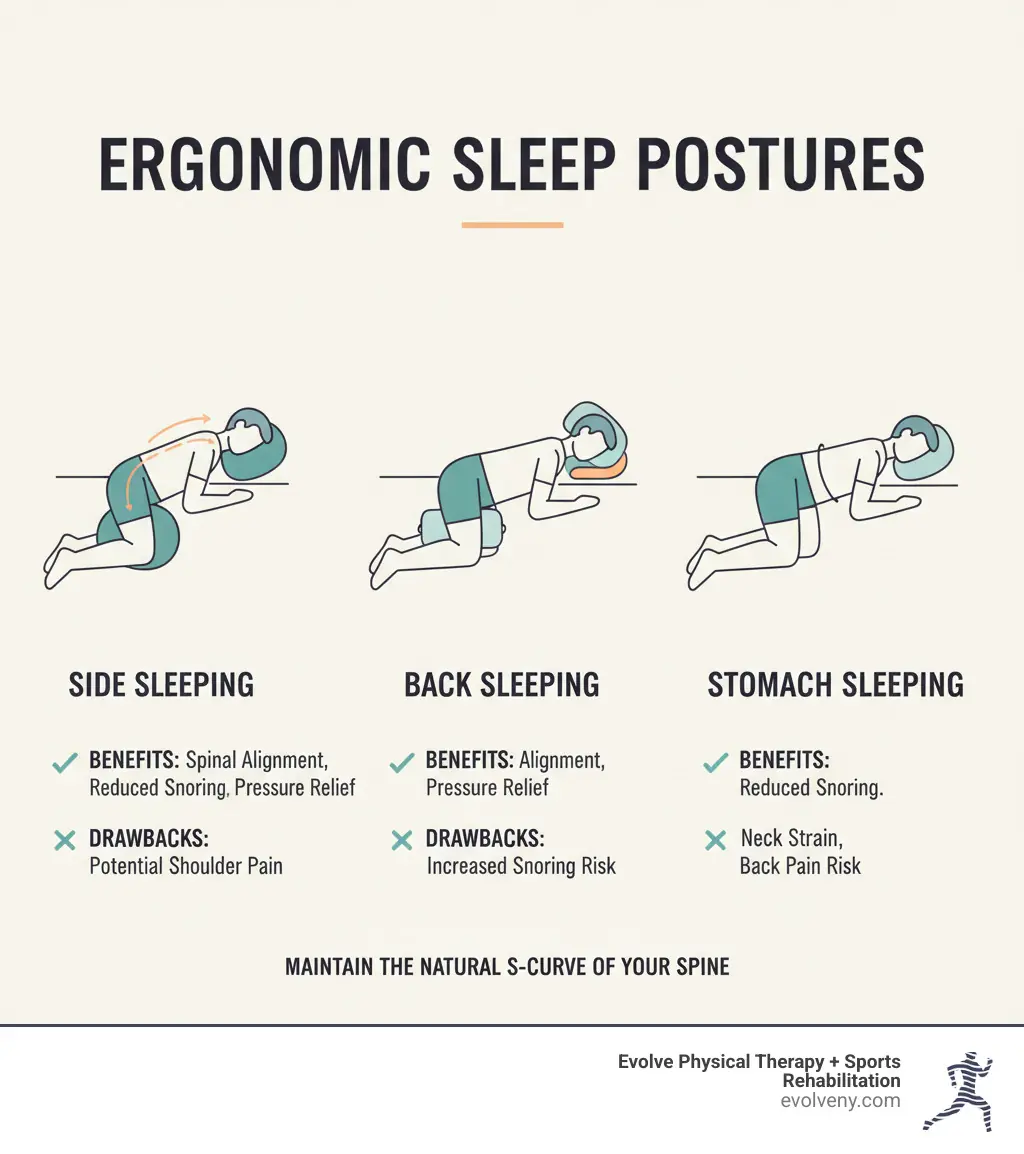
Seven Everyday Habits That Can Improve Sleep Quality
Your sleeping position is only one part of a healthy night. The conditions surrounding sleep may have a much greater influence on how rested you feel.
A person can sleep on the theoretically ideal mattress and still experience poor sleep because of irregular schedules, stress, caffeine, noise or an underlying health problem.