Psychological research on prosocial behavior has explored how helping others can be associated with positive emotions and a sense of meaning.
One commonly discussed concept is the helper's high, which describes the positive feelings some people experience after performing helpful or generous actions.
This experience is not universal, and helping does not always produce immediate happiness. Sometimes people help because they believe it is the right thing to do, even when the action requires effort.
Still, small acts of kindness can contribute to positive social interactions.
A customer who helps clear the table may feel that they have participated in a pleasant exchange rather than simply receiving a service.
The server may appreciate the gesture, and the interaction may end on a warmer note.
Importantly, kindness does not need to be dramatic to matter.
A simple action performed without expecting praise can be just as meaningful as a larger gesture.
9. It May Be Connected to Gratitude
Gratitude involves recognizing and appreciating benefits received from other people or circumstances.
In a restaurant, customers receive more than the food itself.
Someone prepares the meal, another person brings it to the table, and other employees maintain the dining environment.
A customer who helps organize the dishes may be expressing appreciation for the work involved.
They might think, consciously or unconsciously, that the server has been looking after them throughout the meal and that making the cleanup easier is a small way to show consideration.
Gratitude can influence how people interact with others.
People who regularly recognize what others contribute may be more likely to express thanks, acknowledge assistance, and reciprocate kindness.
In everyday life, gratitude might appear when someone remembers to thank a colleague, appreciates a partner's household work, or recognizes the effort involved in helping them through a difficult period.
However, gratitude is not measured by whether someone clears a plate.
A person can be genuinely grateful while allowing restaurant employees to handle the dishes. Saying thank you, treating staff respectfully, and paying appropriately are also meaningful expressions of appreciation.
10. You May Have a Strong Preference for Order and Organization
There is another possible explanation that is less directly connected to kindness: some people simply prefer organized environments.
An untidy table filled with empty plates, napkins, and glasses may make them uncomfortable.
They may instinctively begin arranging everything because they prefer clear surfaces and orderly surroundings.
This behavior could be related to individual differences in organization and conscientiousness.
In personality psychology, conscientiousness is one of the major dimensions of the widely used Big Five personality framework.
It generally involves characteristics such as organization, reliability, responsibility, and self-discipline.
Someone with strong organizational tendencies may prefer putting objects in their proper places and keeping shared spaces tidy.
At a restaurant, this could mean stacking empty plates, arranging utensils, or moving used napkins into one area.
However, it is important not to confuse one tidy habit with a reliable personality assessment.
A person might organize the table because they want to help, because they dislike clutter, or simply because they learned the habit from their family.
Several motivations can produce the same visible behavior.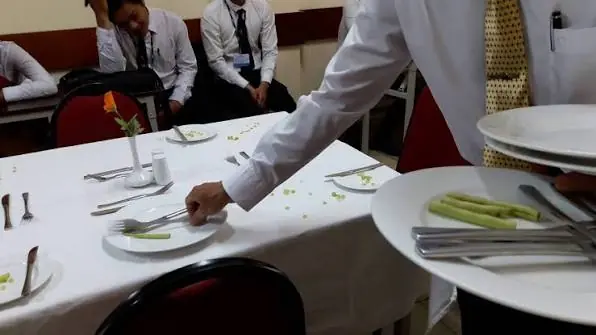
11. You May Have Learned This Behavior From Your Family
Personality is influenced by many factors, including temperament, experience, culture, family environment, and social learning.
Sometimes, helping clear a table has little to do with a person's conscious psychological motivations.
It may simply be a habit learned during childhood.
Perhaps their parents always asked family members to clear dishes after meals. Maybe everyone in the household participated in cleaning up, regardless of age or social position.
Over time, the behavior became automatic.
When they visit a restaurant, they continue following the same pattern because it feels natural.
Social learning theory helps explain how people acquire behaviors by observing others and experiencing the consequences of actions.
Children who repeatedly see adults treating service workers respectfully may learn to behave similarly.
They may internalize the idea that everyone deserves consideration and that cleaning up after a meal is a normal contribution.
Cultural expectations can also influence this behavior.
In some families and communities, helping with dishes is considered basic politeness. In others, customers are generally expected to leave all clearing tasks to restaurant staff.
Neither custom automatically reveals someone's character.
Understanding the influence of upbringing helps explain why people may approach the same restaurant situation differently.
12. You May Be Sensitive to Other People's Workload
Some people are particularly attentive to how much work others are doing.
They may notice when a server is carrying multiple trays, serving several tables, or moving quickly during a busy period.
This awareness can lead them to offer small forms of assistance.
Such sensitivity may be related to perspective-taking: the ability to imagine what another person might be experiencing in a particular situation.
For example, a customer may realize that a server is handling several tables at once. They may decide to move their empty glasses together to reduce the number of separate items the server needs to collect.
This does not require the customer to know everything about the employee's workload.
It simply involves recognizing that another person may appreciate a little consideration.
People who are attentive to others' workloads may also be helpful in professional settings.
They might avoid sending unnecessary messages to an already overwhelmed colleague, offer assistance during busy periods, or recognize when someone needs a break.