A tracker may help you understand the approximate location of your belongings, but it does not replace the airline's official baggage tracing process.
Consider a Luggage Cover
A luggage cover can provide both visual identification and a degree of protection against surface scratches.
Choose one that fits the suitcase properly and does not obstruct the handle, wheels, zippers, or baggage tag.
A loose or poorly fitted cover may create its own handling problems, so it is important to select an appropriate design.
What Should You Do If Your Checked Suitcase Goes Missing?
Even when travelers follow all the recommended precautions, luggage problems can still happen.
Bags may be delayed because of tight connections, operational disruptions, loading errors, or other circumstances.
If your suitcase does not appear on the baggage carousel, avoid leaving the airport without first contacting the airline or its baggage service desk.
Here are several useful steps to follow.
1. Report the missing luggage immediately.
Visit the airline's baggage service desk or use its official baggage reporting process.
Provide your boarding information, baggage receipt, and a description of the suitcase.
2. Show photographs of your luggage.
A photograph can help staff distinguish your suitcase from other bags with similar designs.
Mention its color, size, brand, shape, and any distinctive features.
3. Keep your baggage claim reference number.
The airline should provide a reference or tracking number for your report.
Keep this information so you can follow up on the status of your luggage.
4. Provide accurate contact information.
Make sure the airline has a reliable telephone number, email address, and delivery address if the suitcase needs to be returned.
5. Keep receipts for essential purchases.
If your baggage is delayed, the airline's policy and applicable passenger rights may determine whether reasonable expenses for essential items can be reimbursed.
Check the airline's conditions and the regulations that apply to your journey.
Taking these steps can make the process more organized and help reduce the stress of dealing with delayed luggage.
A Few More Mistakes Travelers Should Avoid
Ribbons are not the only small luggage-related issue that can create problems at an airport.
There are several other habits worth reconsidering before checking in a suitcase.
Leaving Old Baggage Tags Attached
Old baggage tags may contain outdated destination information.
If an old tag remains attached, it could potentially create confusion during handling.
Remove previous airline tags and destination stickers before checking in for a new flight.
Overpacking Your Suitcase
An excessively full suitcase can place additional pressure on zippers, seams, and handles.
If a zipper breaks during handling, belongings may become exposed or fall out.
Use a suitcase that can close securely without excessive force.
Leaving Loose Straps Hanging
Long shoulder straps, cords, and decorative attachments can become caught or damaged during transportation.
Remove unnecessary straps or secure them properly before checking in your bag.
Forgetting to Check the Baggage Tag
After the airline attaches the baggage tag, check that the destination information is correct.
This is particularly important when traveling with multiple connections or when an itinerary includes different airlines.
A correctly attached and readable tag is essential for proper baggage routing.
Packing Important Items in Checked Luggage
Travel documents, medication, valuables, essential electronics, and other items that may be difficult to replace should generally remain in your carry-on bag, subject to airline security and baggage rules.
Checked luggage can be delayed, damaged, or misplaced, so travelers should plan accordingly.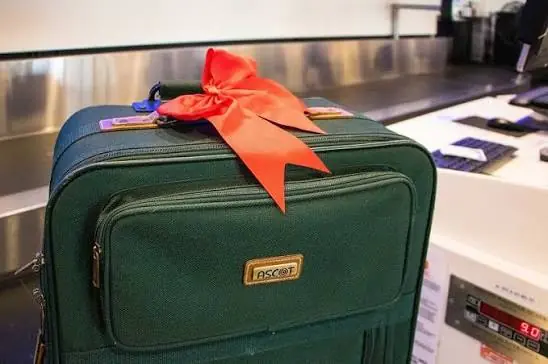
Final Thoughts: A Small Ribbon May Create More Trouble Than You Expect
Attaching a colorful ribbon to a suitcase may seem like an easy way to make luggage stand out, especially when thousands of similar-looking bags travel through the same airport every day.
However, loose decorations can sometimes become caught in baggage-handling equipment, fall off during transportation, interfere with the placement of baggage tags, or create additional handling complications.
This does not mean that every ribbon will cause a problem or that all airports prohibit decorative luggage accessories. The actual risk depends on the accessory, its placement, and the baggage system being used.
Nevertheless, keeping checked luggage as smooth and secure as possible is a sensible precaution.
Instead of relying entirely on a ribbon, travelers can choose distinctive suitcase colors, use durable luggage tags, photograph their bags before departure, and remove unnecessary loose accessories.
These simple steps can make luggage easier to identify while reducing avoidable complications during handling.
The next time you prepare for a flight, take a moment to inspect your suitcase. Make sure the baggage tag is visible, the zippers are secure, and nothing is hanging loosely from the handles.
A little preparation before leaving home can make the airport experience smoother and help you avoid an unexpected luggage problem at the other end of your journey.