Imagine walking into a room one morning and noticing something unusual on the wall. Thin yellow streaks appear to be running downward from the ceiling, a window frame, or an area near the corner of the room. At first, they may look like ordinary dirt or discoloration. You wipe them away, expecting the problem to disappear.
But a few days later, the yellow marks return.
Sometimes the stains become darker, spread across a larger section of the wall, or develop into noticeable brownish trails. In other cases, the paint begins to bubble, peel, or develop an unpleasant smell.
Although yellow streaks on walls may seem like a minor cosmetic problem, they can sometimes indicate something happening beneath the surface. Moisture entering through the roof, plumbing leaks, condensation, old paint, smoke residue, and other household conditions can all contribute to unusual wall discoloration.
The challenge is determining what is actually causing the stains.
Simply painting over the affected area may temporarily hide the discoloration without addressing the underlying problem. If moisture continues entering the wall or contaminated materials remain untreated, the marks may eventually return.
Understanding the possible causes is therefore essential before attempting any repair.
Here are the most common reasons yellow stains may appear to drip down your walls, what they could indicate, and how to respond safely.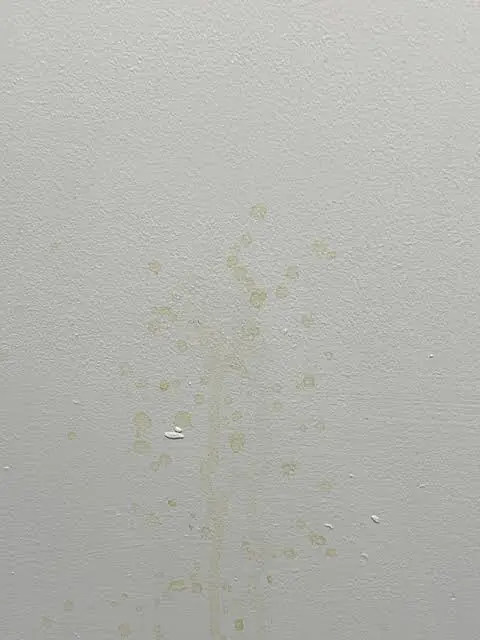
1. Water Leaking From the Roof or Ceiling
One of the first things homeowners should investigate when yellow or brown streaks appear on walls is the possibility of a water leak.
Roof leaks are especially common after periods of heavy rain, strong winds, or severe weather. Damaged shingles, deteriorating flashing, cracked roof tiles, blocked drainage systems, and weakened seals can allow water to enter the building.
Once water gets beneath the roof covering, it may travel along structural materials before becoming visible inside the home.
This means the yellow stain may not appear directly beneath the actual point where water enters.
For example, a roof leak could allow moisture to travel along a wooden beam before eventually reaching the ceiling or an upper section of a wall. The resulting discoloration may look like a series of yellow drips running downward.
Why does leaking water create yellow stains?
Water moving through a roof or ceiling cavity can collect substances from the materials it contacts.
These may include:
-
Dust and accumulated dirt.
-
Wood tannins and natural compounds.
-
Rust from metal components.
-
Residues from insulation materials.
-
Degraded building materials.
-
Previous paint or ceiling treatments.
As the moisture moves through these materials, it can carry dissolved substances toward the interior surface.
When the water evaporates, some of these substances remain behind, producing yellow, tan, or brown discoloration.
Repeated exposure can make the stains darker and more noticeable.
Warning signs of a roof leak
Look for additional clues around the affected area:
-
Yellow or brown marks that become darker after rainfall.
-
Paint that bubbles, cracks, or begins peeling.
-
Damp patches near the ceiling.
-
Water dripping during or after storms.
-
Soft or damaged plasterboard.
-
A musty smell around the affected area.
If the stains repeatedly appear after rain, the roof and surrounding drainage systems should be inspected.
Do not simply cover the marks with fresh paint. The source of the water must be identified and repaired first.
2. Plumbing Leaks Hidden Behind the Walls
Another common explanation for yellow streaks is a leaking water pipe concealed inside a wall or ceiling.
Many homes contain plumbing systems running behind plasterboard, drywall, tiles, and other interior finishes. These pipes are not normally visible, so a small leak can continue for some time before anyone notices a problem.
A damaged pipe connection, deteriorating seal, corroded fitting, or cracked pipe can allow water to escape slowly.
Over time, moisture may spread through the surrounding building materials and eventually appear as a yellow or brown stain.
How can you recognize a hidden plumbing leak?
Unlike roof leaks, plumbing leaks may continue regardless of the weather.
You might notice discoloration in a wall near a bathroom, kitchen, laundry area, or another location where water pipes are installed.
Other possible warning signs include:
-
A persistent damp patch.
-
Paint that feels soft or begins separating.
-
A musty smell.
-
Unexplained increases in water consumption.
-
Reduced water pressure in certain circumstances.
-
Moisture appearing around pipe connections or fixtures.
Sometimes, the stain remains small for weeks before suddenly becoming more noticeable.
A slow leak can gradually damage insulation, wooden structures, flooring, and wall finishes.
Why should you investigate quickly?
Persistent moisture inside a wall can create conditions that support mold growth.
It may also weaken certain building materials and cause repairs to become more expensive.
If you suspect a hidden plumbing leak, contact a qualified plumber. A professional may use moisture meters, pressure testing, or other suitable inspection methods to locate the source without unnecessarily damaging large sections of the wall.
The earlier a leak is identified, the easier it may be to limit the damage.
3. Condensation Caused by Poor Ventilation
Not every yellow stain is caused by a leaking roof or broken pipe.