6. Rust From Metal Pipes, Nails, or Structural Components
Yellow, orange, and reddish-brown streaks can sometimes indicate corrosion.
Metal components inside walls and ceilings may become exposed to moisture over time.
When iron or steel reacts with oxygen and water, rust develops.
If water travels across a corroding metal surface, it may carry rust particles or dissolved iron compounds toward the interior wall finish.
Once the moisture dries, orange or brown staining can remain.
Where might rust-related stains originate?
Potential sources include:
-
Corroded plumbing pipes.
-
Metal fasteners.
-
Nails or screws.
-
Damaged metal framing.
-
Roof flashing.
-
Corroded heating system components.
-
Metal fittings near leaking plumbing connections.
The stains may appear as narrow vertical streaks, small spots, or irregular patches.
Their location can sometimes provide clues about the metal component responsible.
For example, discoloration near a ceiling joint may be associated with a metal fastener or another component located behind the surface.
Is rust staining a serious problem?
The stain itself may be primarily cosmetic, but the underlying cause could be more significant.
If corrosion is associated with an active water leak, both the plumbing and surrounding building materials may require attention.
Corroded structural components can also require professional assessment, particularly when they form part of a load-bearing or safety-critical system.
Do not assume that cleaning the visible rust will resolve the problem.
The source of moisture and the condition of the metal should be investigated.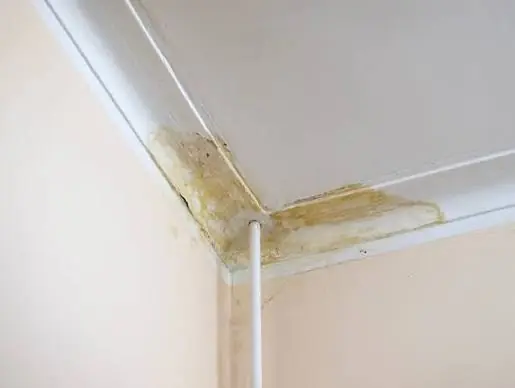
7. Mold and Microbial Growth Associated With Moisture
Yellow discoloration can sometimes appear in areas where moisture-related biological growth is developing.
Many people associate mold exclusively with black or green spots, but mold and other microbial growth can appear in a variety of colors.
Depending on the species, surface, and environmental conditions, discoloration may be white, gray, green, brown, or yellowish.
However, color alone cannot establish whether a mark is mold.
Why does mold develop on walls?
Mold spores are naturally present in indoor and outdoor air.
They become a problem when they land on surfaces that remain sufficiently damp and have suitable organic material available.
Common sources of persistent moisture include:
-
Leaking roofs.
-
Plumbing failures.
-
Condensation.
-
Flooding.
-
Poorly ventilated bathrooms.
-
Water entering through exterior walls.
When dampness continues, mold may grow on wallpaper, paint, plasterboard, wood, dust, and other materials.
Signs that mold may be present
Possible warning signs include:
-
Musty or earthy odors.
-
Discoloration that continues spreading.
-
Visible fuzzy or powdery growth.
-
Damp or peeling wallpaper.
-
Persistent moisture.
-
Repeated staining after cleaning.
Some people exposed to indoor mold may experience allergy-like symptoms, including sneezing, nasal congestion, coughing, eye irritation, or worsening asthma.
The presence of a yellow stain alone does not prove that mold is responsible.
If mold is suspected, the underlying moisture problem must be addressed.
Large affected areas, recurring growth, contamination involving heating or ventilation systems, or mold associated with sewage or significant water damage should be evaluated by qualified professionals.
Avoid dry brushing or sanding suspected mold because these activities may release particles into the air.
8. Old Paint and Chemical Reactions
Sometimes, yellow marks develop even when there is no active water leak.
Certain paints and surface coatings naturally change color as they age.
White and light-colored paint can gradually become yellowish due to chemical changes, environmental exposure, heat, and the materials used in the original coating.
Some older oil-based paints and alkyd coatings are particularly prone to yellowing under certain conditions.
Why does paint change color?
Paint contains several components, including pigments, binders, solvents, and additives.
As coatings age, chemical reactions and environmental conditions may alter their appearance.
For example, some oil-based paints can yellow in areas that receive limited natural light.
Heat from radiators, cooking appliances, and other sources may also influence the appearance of certain coatings.
In addition, incompatible paint products or insufficient surface preparation can contribute to uneven discoloration.
How can you recognize paint-related yellowing?
The discoloration may:
-
Appear relatively evenly across a painted surface.
-
Be more noticeable in areas with limited sunlight.
-
Develop around heat sources.
-
Occur without obvious dampness.
-
Affect old painted woodwork or trim.
However, irregular streaks that appear to run downward should still be investigated for moisture or surface contamination before assuming that aging paint is responsible.
If the surface is dry and the original coating is simply yellowing, repainting with a compatible, high-quality product may solve the cosmetic problem.
Proper preparation and primer selection are essential.
9. Cooking Grease and Airborne Household Residue
Yellow stains may also develop from everyday household activities.
Cooking produces airborne grease, smoke, moisture, and tiny food particles that can settle on nearby surfaces.
Over time, these substances may create a sticky film on kitchen walls and ceilings.
This is particularly common in kitchens without effective ventilation or where cooking produces significant amounts of oil and steam.
The discoloration may become more visible near stovetops, extractor fans, cabinets, and ceiling corners.
Why does grease create yellow marks?
When food is fried, grilled, or cooked at high temperatures, small droplets of oil and other airborne particles can spread through the room.
These particles may attach themselves to painted surfaces.