People with diagnosed medical conditions should follow individualized dietary advice rather than making extreme changes to their sodium or fluid intake.
3. Hot Weather
Have you noticed that your feet and ankles sometimes become swollen during hot weather?
This can happen because heat causes blood vessels near the surface of the skin to expand.
The expansion helps the body release heat, but it can also increase fluid movement into surrounding tissues.
Gravity may then contribute to fluid accumulation in the feet and ankles, especially when someone stands or sits for long periods.
Heat-related swelling is often temporary and may improve when the person moves to a cooler environment, rests, and elevates their legs.
However, swelling accompanied by dizziness, fainting, confusion, or other signs of heat illness requires immediate attention.
4. Pregnancy
Swollen feet and ankles are common during pregnancy, particularly in the later stages.
As the uterus grows, it places increasing pressure on veins that return blood from the lower body to the heart.
Pregnancy also causes changes in blood volume, hormones, and fluid regulation.
These changes can make fluid accumulation in the legs more noticeable.
Swelling may become worse toward the end of the day or after standing for extended periods.
Mild, gradual swelling in both feet can be a normal part of pregnancy.
However, sudden swelling of the face, hands, or feet, especially when accompanied by a severe headache, vision changes, pain beneath the ribs, nausea, or high blood pressure, may indicate preeclampsia.
Preeclampsia is a potentially dangerous pregnancy complication that requires prompt medical evaluation.
Pregnant women should contact their healthcare provider immediately if they experience these warning signs.
5. Venous Insufficiency
Chronic venous insufficiency is a condition in which the veins in the legs have difficulty returning blood efficiently toward the heart.
Inside healthy veins, small valves help prevent blood from flowing backward.
When these valves become damaged or weakened, blood may pool in the lower legs.
The increased pressure can cause fluid to move into surrounding tissues.
People with chronic venous insufficiency may experience:
-
Swollen ankles and feet.
-
A heavy or aching sensation in the legs.
-
Visible varicose veins.
-
Itching around the lower legs.
-
Skin discoloration near the ankles.
-
Symptoms that worsen after prolonged standing.
In more advanced cases, the skin may become thickened or develop open sores, particularly around the ankles.
This condition is more common with increasing age, obesity, pregnancy, and a history of blood clots.
Treatment may involve compression therapy, leg elevation, regular walking, and medical procedures depending on the severity.
Compression stockings should be selected with professional guidance, particularly for people with peripheral arterial disease or other circulation problems.
6. Kidney Disease
The kidneys play an essential role in controlling the amount of fluid and sodium in the body.
They filter waste products from the blood and help regulate blood pressure and electrolyte balance.
When kidney function becomes impaired, the body may retain excess sodium and water.
This can contribute to swelling in the feet, ankles, legs, and sometimes around the eyes.
People with kidney disease may also experience:
-
Changes in urination.
-
Foamy urine.
-
Blood in the urine.
-
Increased nighttime urination.
-
Persistent fatigue.
-
High blood pressure.
-
Nausea or reduced appetite.
However, early kidney disease often causes no obvious symptoms.
This is why people with diabetes, high blood pressure, cardiovascular disease, or a family history of kidney disease may benefit from appropriate screening.
Two important tests are the estimated glomerular filtration rate (eGFR), which helps assess kidney function, and the urine albumin-to-creatinine ratio (uACR), which checks for abnormal protein leakage into urine.
Swollen feet alone cannot diagnose kidney disease, but persistent unexplained edema should be investigated.
7. Heart Failure
One of the more important medical causes of swollen feet is heart failure.
Heart failure does not mean that the heart has stopped working. It means that the heart cannot pump blood effectively enough to meet the body's needs, or that it can only do so under increased pressure.
When the heart's pumping function is impaired, blood may back up in the veins.
This can increase pressure in blood vessels and encourage fluid to accumulate in the tissues.
People with heart failure may develop swelling in both feet and ankles.
Other possible symptoms include:
-
Shortness of breath during physical activity.
-
Difficulty breathing when lying flat.
-
Waking up at night feeling breathless.
-
Unusual fatigue.
-
Rapid weight gain caused by fluid retention.
-
Persistent coughing or wheezing.
-
Abdominal swelling.
Some people notice that their shoes become tighter over several days, while others experience a gradual increase in leg swelling.
Heart failure can affect the right side, left side, or both sides of the heart. The pattern of symptoms depends on the type and severity.
New swelling accompanied by breathlessness, particularly at rest or when lying down, requires prompt medical assessment.
Sudden severe breathing difficulty or chest pain is an emergency.
8. Liver Disease
The liver produces albumin, an important protein that helps maintain fluid balance within the bloodstream.
When advanced liver disease reduces albumin production, fluid may move more easily from blood vessels into surrounding tissues.
Cirrhosis can also cause portal hypertension, which changes blood circulation through the liver and contributes to fluid retention.
People with advanced liver disease may develop both swollen legs and ascites, a condition involving fluid accumulation inside the abdominal cavity.
Other possible warning signs include:
-
Yellowing of the skin or eyes.
-
Dark urine.
-
Pale stools.
-
Persistent itching.
-
Easy bruising.
-
Unexplained fatigue.
-
Loss of appetite.
-
Abdominal swelling.
Not everyone with liver disease develops swollen feet. Early-stage liver conditions may cause no noticeable symptoms.
If swelling occurs alongside jaundice, abdominal enlargement, or unexplained weight loss, medical evaluation is important.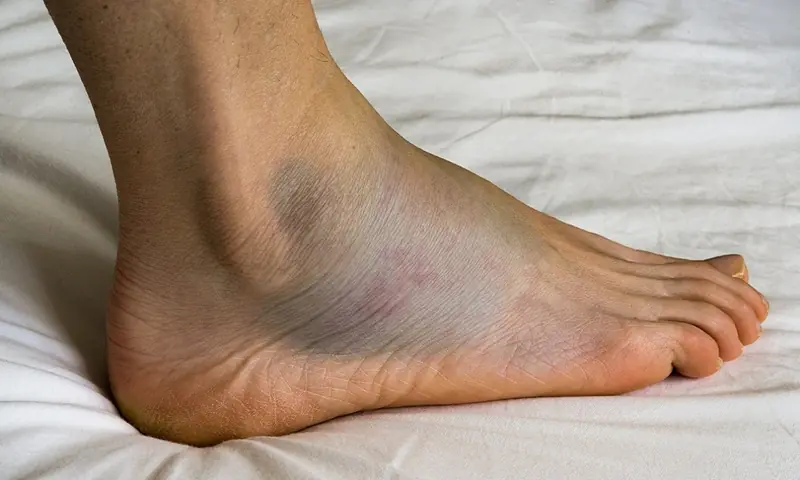
9. Certain Medications
Sometimes, swollen feet are a side effect of medication rather than a direct sign of a new disease.
Several types of medication can contribute to fluid retention or changes in circulation.
Examples include:
Calcium channel blockers: Certain blood pressure medications, particularly amlodipine, can cause swelling around the ankles.
Nonsteroidal anti-inflammatory drugs (NSAIDs): Medications such as ibuprofen and naproxen can contribute to sodium and water retention in some individuals.