4. Use a Firm, Calm Voice
A short, firm command such as "No," "Stay," or "Go home" may interrupt some dogs.
The effectiveness depends on the individual animal and its level of excitement.
Avoid screaming continuously. High-pitched shouting may increase arousal in some dogs.
A controlled voice and deliberate movements are generally preferable.
5. Give the Dog Space
Whenever possible, create distance without making sudden movements.
Move slowly toward a safe location, such as a building, vehicle, fenced area, or another place where you can put a physical barrier between yourself and the dog.
Do not approach the animal to investigate why it is behaving this way.
Do not attempt to pet it, even if it temporarily stops chasing.
An unfamiliar dog may remain frightened or defensive after the initial excitement has passed.
6. Put an Object Between You and the Dog
If the dog continues approaching, use an object as a barrier.
A backpack, handbag, jacket, bicycle, or other item may help keep the animal away from your body.
If the dog attempts to bite the object, allowing it to take hold of the object may help create an opportunity to move away.
Do not place your hands near the dog's mouth.
Your priority is to protect your body and reach a safer location.
7. If You Are Knocked Down
If a dog knocks you to the ground, curl into a protective position if possible.
Protect your face, neck, and head with your arms. Keep your hands closed and avoid putting your fingers near the dog's mouth.
Try to remain as still as possible rather than kicking or struggling unnecessarily.
This position may help protect vulnerable areas of the body.
Once the dog moves away, get to a safe location and seek medical attention if you have been bitten or injured.
8. What If the Dog Is Chasing Your Bicycle?
Cyclists face a particular challenge because rapid movement can stimulate a dog's pursuit instinct.
If a dog begins chasing your bicycle, avoid suddenly accelerating if doing so would increase the dog's excitement.
When safe and practical, slow down and dismount.
Keep the bicycle between yourself and the dog, using it as a physical barrier.
Do not attempt to ride directly toward the animal or provoke it.
If the dog stops pursuing, move away carefully toward a safe location.
These recommendations are general precautions, not a guarantee against an attack. A dog that is actively attacking may require immediate protective action.
Chapter 4: What Should You Do If a Dog Bites You?
Even when someone follows safety precautions, dog bites can still happen.
A bite should never be ignored simply because the wound looks small.
Dog teeth can puncture the skin, introduce bacteria, and damage deeper tissues. Some injuries may be more serious than they initially appear.
Step 1: Move Away From the Dog
Once the dog releases you or moves away, create distance immediately.
Find a safe location where the animal cannot reach you.
Do not return to confront the dog or attempt to capture it yourself.
If the dog continues behaving aggressively, contact local animal control or the appropriate authorities.
Step 2: Control Bleeding
If the wound is bleeding, apply firm, direct pressure using a clean cloth or sterile dressing.
If bleeding is severe, persistent, or spurting, seek emergency medical assistance immediately.
Do not delay medical care while trying to clean a serious wound.
Step 3: Wash the Wound Thoroughly
For a bite that breaks the skin, wash the area promptly with soap and running water.
Thorough washing is particularly important because animal bites can introduce bacteria deep into the tissue.
After cleaning, cover the wound with a clean dressing.
Avoid applying irritating chemicals or attempting to seal a deep puncture wound yourself.
Step 4: Seek Medical Advice
A healthcare professional should assess any bite that breaks the skin, especially when it involves:
-
The face, head, neck, hands, or feet.
-
Deep puncture wounds.
-
Significant bleeding.
-
Severe pain or swelling.
-
Redness, warmth, or discharge.
-
Reduced movement or sensation.
-
A person with a weakened immune system.
A doctor may recommend wound treatment, antibiotics in selected cases, a tetanus booster, or assessment for rabies exposure.
Step 5: Consider Rabies Risk
Rabies is a serious viral disease that affects the nervous system. Once clinical symptoms develop, it is almost always fatal.
However, timely post-exposure treatment can prevent the disease.
If an unfamiliar dog bites you, do not assume it is safe because it appears healthy.
Medical professionals or public health authorities need to assess the animal's vaccination status, availability for observation, local rabies situation, and the nature of the exposure.
Depending on the circumstances, post-exposure prophylaxis may include wound care, rabies vaccination, and rabies immunoglobulin.
Do not wait for symptoms to appear before seeking advice.
This is particularly important in regions where rabies is still present.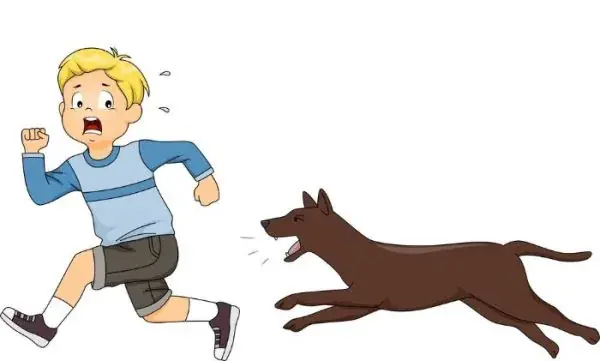
Chapter 5: How Can Dog Owners Prevent Their Pets From Chasing People?
Preventing chasing behavior is not only about protecting strangers. It also protects the dog.
A dog that repeatedly chases pedestrians, cyclists, or children may eventually cause an accident, suffer an injury, or be involved in a serious incident.
Responsible owners should address the behavior before it becomes a persistent habit.
1. Identify the Trigger
The first step is understanding what causes the dog to chase.
Owners should observe when the behavior occurs.
Does the dog chase:
-
People running?
-
Cyclists or motorcyclists?
-
Children playing?
-
Strangers approaching the property?
-
Visitors entering the home?
-
People carrying bags or objects?
-
Anyone who moves quickly?
The trigger can provide valuable information about the motivation behind the behavior.
For example, a dog that reacts mainly to bicycles may need training around moving objects. A dog that reacts to visitors entering the home may require a different behavior-management plan.
If the behavior is intense or difficult to predict, a qualified professional can help assess it.
2. Teach Basic Obedience Commands
Basic training gives owners more control over their dogs.
Useful commands include:
"Sit": Encourages the dog to stop moving and focus on its owner.
"Stay": Teaches the dog to remain in a designated position.