Chapter 7: Why Children Are Especially Vulnerable to Chasing Dogs
Children can be particularly vulnerable during encounters with unfamiliar dogs.
They are often shorter than adults, move unpredictably, and may not recognize signs of canine discomfort.
A child running, screaming, waving their arms, or falling to the ground can trigger an excited or fearful response in some dogs.
Even a dog that does not intend to attack may knock a child over or cause an injury.
Teach Children Not to Run Toward Unfamiliar Dogs
Children should be taught to ask an owner for permission before approaching a dog.
They should never assume that a dog is friendly simply because it is small, appears cute, or is wearing a collar.
They should also avoid approaching dogs that are:
-
Eating.
-
Sleeping.
-
Caring for puppies.
-
Playing with a toy or guarding food.
-
Injured or visibly frightened.
-
Tied up or confined.
-
Alone without their owner.
These situations can increase the likelihood of a defensive reaction.
Teach Children to Recognize Warning Signals
Children do not need to become experts in canine body language, but they should understand a few basic rules.
If a dog is growling, showing its teeth, standing stiffly, or repeatedly moving away, the child should not approach.
A dog that turns its head away, licks its lips repeatedly, or tries to hide may also be uncomfortable.
Adults should intervene before the situation escalates.
Never Leave Young Children Alone With a Dog
Even a familiar family dog should not be left unsupervised with a young child.
A sudden movement, accidental injury, or unexpected interaction can cause a dog to react defensively.
Responsible supervision means an adult is actively watching and able to intervene, not simply being somewhere in the same room.
Chapter 8: Common Mistakes People Make When a Dog Chases Them
Many people unintentionally make a frightening encounter more dangerous because they react instinctively.
Understanding common mistakes can help reduce unnecessary risks.
Mistake 1: Running as Fast as Possible
Running may activate a dog's pursuit instinct.
Although moving away is important, sprinting can sometimes make the dog more interested in chasing.
When possible, slow down, remain controlled, and move toward a safe barrier.
Mistake 2: Screaming and Waving Arms
Loud shouting and sudden gestures can increase excitement or fear.
A calm, firm voice and controlled movements are generally safer.
Mistake 3: Trying to Pet the Dog
Some people assume that approaching a barking dog and offering a hand will calm it down.
This can be dangerous.
An unfamiliar dog may interpret the movement as threatening, particularly if it is frightened or guarding its territory.
Do not attempt to touch a dog that is behaving aggressively or chasing you.
Mistake 4: Turning Your Back Completely
Turning away and running can make it harder to monitor the dog's movements.
When possible, keep the animal within your peripheral vision while gradually creating distance.
Mistake 5: Assuming a Wagging Tail Means the Dog Is Friendly
A wagging tail is not a guarantee of friendliness.
Dogs wag their tails in different emotional states, including excitement, uncertainty, and tension.
Consider the entire body rather than relying on one signal.
Mistake 6: Ignoring a Small Bite
A small puncture wound may still introduce bacteria or create a risk of infection.
Rabies and tetanus considerations also depend on the circumstances.
Any bite that breaks the skin should receive appropriate medical assessment.
Mistake 7: Allowing a Dog to Practice Chasing
Owners sometimes dismiss chasing as harmless because the dog has never bitten anyone.
However, every repeated episode can strengthen the behavior.
A dog that regularly chases people may eventually cause an accident or escalate to biting.
Prevention should begin as soon as the behavior appears.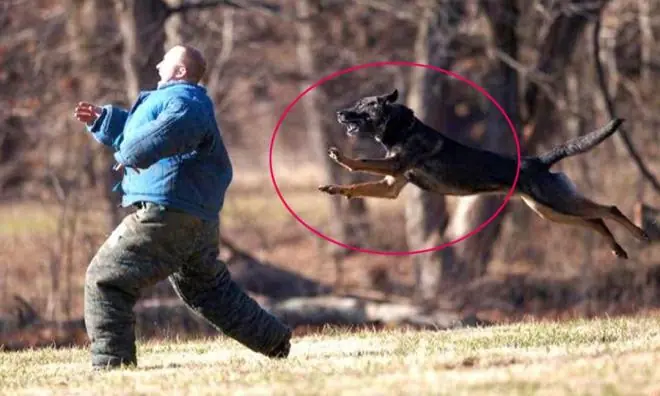
Chapter 9: When Should a Dog Owner Consult a Veterinarian?
Not all chasing behavior requires medical treatment, but sudden or severe changes in behavior should never be ignored.
A dog that was previously calm and friendly but suddenly begins chasing, lunging, or reacting aggressively may be experiencing pain, illness, fear, or another underlying problem.
Pain can reduce a dog's tolerance for physical contact and unfamiliar situations.
Neurological conditions, sensory changes, and certain medical problems may also influence behavior.
A veterinary examination can help determine whether a physical condition is contributing to the change.
Owners should seek professional advice when the behavior is:
-
New and unexplained.
-
Increasing in frequency or intensity.
-
Directed toward children or vulnerable people.
-
Accompanied by biting or attempted biting.
-
Difficult to interrupt.
-
Associated with signs of pain or illness.
-
Occurring alongside other major behavioral changes.
A veterinarian may recommend a medical assessment and refer the dog to a qualified behavior professional.
The earlier the problem is addressed, the easier it may be to prevent repeated incidents.
Chapter 10: The Most Important Lesson About Dogs Chasing People
A dog chasing a person is not always an act of aggression.
It may be responding to movement, following a herding instinct, protecting its territory, expressing excitement, or reacting to fear.
However, understanding the reason does not mean the behavior should be ignored.
A playful dog can still cause injuries. A frightened dog can still bite. A dog that repeatedly chases pedestrians can create serious risks for itself and others.
For people encountering an unfamiliar dog, the safest general approach is to avoid running, keep movements controlled, maintain distance, and use a physical barrier when necessary.
For dog owners, the responsibility is to understand their pet's triggers, provide appropriate supervision, use secure restraints, and teach reliable alternative behaviors.
Dogs do not automatically understand which human behaviors are acceptable in public spaces. They need consistent guidance, appropriate socialization, and training.
Most importantly, chasing should never be treated as a harmless habit simply because the dog has not bitten anyone yet.
A calm, well-managed dog is safer for its family, its community, and itself.
With patience, early intervention, responsible ownership, and professional support when necessary, many dogs can learn to remain calm around unfamiliar people instead of chasing them.
The goal is not to eliminate every natural canine instinct. It is to teach dogs how to express those instincts safely in a world they share with humans.