The bottles may be arranged neatly in a row, placed near a flower bed, or positioned in spots where someone might otherwise put a small garden decoration. They look simple, inexpensive, and almost too ordinary to attract attention.
Yet visitors unfamiliar with the practice often wonder about the same thing: Why would homeowners leave bottles of water outside instead of storing them in the refrigerator?
The answer is more interesting than it first appears. In some cases, the bottles are not intended for drinking at all. They may be part of a traditional household trick meant to discourage cats from entering a property or using a garden as a toilet. In other situations, bottles may serve a practical purpose related to gardening, cleaning, or temporarily storing water.
The most commonly discussed explanation for water-filled bottles placed around Japanese homes is the belief that they can help keep cats away. This practice is sometimes associated with the Japanese expression neko-yoke, meaning something used to deter cats.
However, there is an important distinction between a practice that some people use and a custom followed by an entire country. Not every Japanese household places water bottles outside, and there is no strong scientific evidence that ordinary clear water bottles reliably repel cats.
Understanding the practice requires looking beyond the bottles themselves. It involves the relationship between Japanese homeowners and neighborhood animals, the desire to keep small gardens clean, the appeal of inexpensive household solutions, and the way traditional advice can persist even when its effectiveness remains uncertain.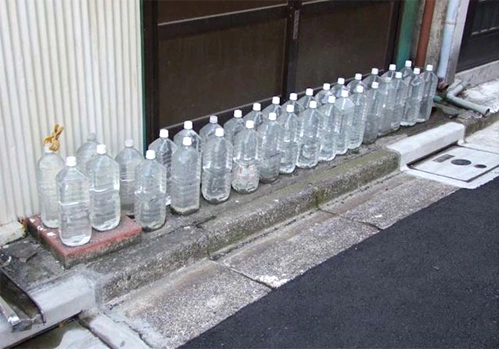
1. The First Surprise: The Water Is Often Not Meant for Drinking
When people see bottles filled with clear water outside a house, the most immediate assumption is that the homeowner is storing drinking water.
In Japan, however, the purpose may be completely different.
Some homeowners place water-filled plastic bottles near entrances, garden borders, fences, or other areas where cats frequently pass. The bottles are intended to act as a visual deterrent, making cats less likely to approach the property or enter a particular part of the garden.
The idea has circulated in Japan for many years, and versions of it have also appeared in other countries. It is commonly associated with efforts to discourage cats from scratching the soil, digging in flower beds, or leaving waste in unwanted places.
For someone who has never encountered the practice, the arrangement can look mysterious. Why would a bottle of water make an animal stay away? Why would the homeowner choose this method instead of using a conventional fence or another type of deterrent?
The explanation usually involves a belief about reflected light.
According to the popular theory, sunlight passing through a clear bottle of water creates reflections or flashes that may startle cats or make them uncomfortable. Some versions of the explanation suggest that the light distorts the animals' view of the surrounding area.
Whether or not this explanation is accurate, it helps explain why the bottles are placed outside rather than in the refrigerator.
Their supposed purpose depends on their location. A bottle sitting indoors on a kitchen shelf would not serve as a barrier around a garden or outdoor entrance. If the goal is to influence where cats walk, the bottle needs to be positioned where those animals might approach.
In other words, the water is not necessarily being stored for later use. The bottle itself is being used as a household object.
2. The Connection With Japan's Cat-Deterrent Practices
Cats are familiar companions in Japanese culture. They appear in traditional art, literature, popular entertainment, and everyday life. Some communities are known for their association with cats, while many residents keep domestic cats as pets.
At the same time, outdoor cats can create practical problems for homeowners.
A cat wandering through a garden may dig in soft soil, disturb newly planted flowers, scratch exposed surfaces, or use a carefully maintained flower bed as a toilet. Even homeowners who enjoy animals may prefer not to have them entering certain areas of their property.
This is where simple deterrents come into the picture.
The Japanese term neko-yoke refers broadly to methods intended to discourage cats from entering a particular place. These methods can include physical barriers, textures that cats dislike walking on, commercial repellents, and other attempts to make a location less attractive.
Water bottles are one of the household tricks associated with this general idea.
The practice appeals to some people because it appears easy to implement. A homeowner does not need specialized equipment, complicated installation, or an expensive product. Empty plastic bottles can be filled with water and placed around the areas where cats are unwanted.
The method also looks relatively harmless compared with approaches that could injure an animal.
Nevertheless, its popularity should not be confused with proven effectiveness. Cats differ in their behavior, and an object that seems unusual to one animal may be ignored by another. A cat that has already become comfortable walking through a garden may simply pass between the bottles without reacting.
The practice is therefore better understood as a familiar household remedy than as a dependable solution.