They may be positioned beside a gate, near a flower bed, along a fence, or around a patch of soil that the homeowner wants to protect. Their placement is based on the layout of the property rather than on the temperature of the water.
This distinction also explains why the bottles may remain outside for long periods.
If the homeowner believes the method is useful, there is no obvious reason to bring the bottles indoors every day. They may be left in place until the homeowner decides to remove or replace them.
However, not every bottle seen outside a Japanese home necessarily serves this purpose. Some may contain water intended for plants, cleaning, or another practical use. Without asking the homeowner, it is impossible to determine the purpose of every individual bottle.
The visual pattern can suggest a possible explanation, but it cannot reveal the owner's intention with certainty.
6. Is This a Common Practice Across All of Japan?
The sight of water bottles outside houses is sometimes described online as a uniquely Japanese custom. That description is too broad.
Japan is a large and diverse country, with different climates, housing styles, neighborhood layouts, and local habits. A practice that appears in one street or community should not automatically be treated as a nationwide tradition.
Some homeowners may use water bottles to discourage cats. Others may never have heard of the idea. Even in neighborhoods where the bottles are visible, not every resident necessarily uses them for the same reason.
The practice is also not exclusive to Japan. Similar water-bottle cat-deterrent ideas have circulated in other parts of the world, suggesting that the method is better understood as a household trick that has traveled across communities rather than a uniquely Japanese invention.
The internet can make local observations appear more universal than they really are.
A photograph of several houses with bottles arranged outside may be presented as evidence of a national custom. Yet it may represent only one street, a small neighborhood, or a selection of homes where the practice is especially noticeable.
This is a familiar problem in stories about cultural habits. A behavior that is unusual enough to attract attention is photographed and shared precisely because it looks distinctive. Once the image spreads, viewers may begin to assume that everyone in the country does the same thing.
The more accurate description is that some Japanese homeowners reportedly use water-filled bottles as a possible cat deterrent. It is not a universal Japanese household practice, and its prevalence should not be exaggerated without reliable evidence.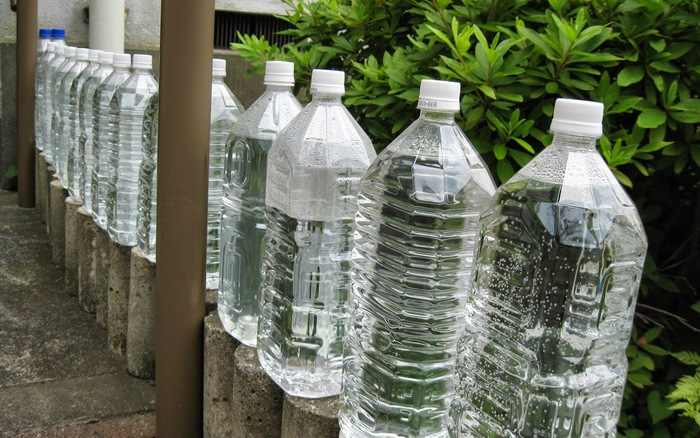
7. Why Simple Household Tricks Remain Popular
If the effectiveness of water bottles is uncertain, why do people continue to use them?
One reason is convenience.
Many household problems do not appear serious enough to justify purchasing specialized equipment. A homeowner who wants to keep cats away from a small flower bed may be reluctant to spend money on a product that might not work.
A plastic bottle filled with water seems like a low-cost alternative.
Another reason is that household advice is often passed from one person to another through observation and personal experience. A neighbor tries something, believes it helped, and recommends it to someone else. The next person repeats the method, sometimes without knowing where the idea originated.
Over time, the practice may become familiar within a community.
People also tend to retain simple solutions because they are easy to remember. A complicated explanation involving animal behavior and environmental conditions may be less appealing than a straightforward instruction: fill a bottle with water and place it near the garden.
The method can also feel satisfying because it gives homeowners something practical to do. Instead of accepting the problem or purchasing a commercial product, they can experiment with an inexpensive object already available.
But convenience should not be mistaken for evidence.
A method can be popular because it is cheap, easy, and widely repeated, even when its actual effectiveness has not been demonstrated.
That does not mean every person who uses it is mistaken. An individual may believe the bottles help in a particular setting. The important point is that personal experience does not establish that the same result will occur for everyone.
8. The Difference Between a Traditional Belief and Scientific Evidence
Household practices often occupy a space between tradition, personal observation, and scientific knowledge.