Also remember that harmful pathogens do not always produce noticeable odors. Meat can contain dangerous microorganisms while looking and smelling normal.
3. A slimy or sticky surface
Texture is another useful indicator.
Deli ham may naturally feel slightly moist, but it should not develop an unusual slippery, sticky, or slimy coating.
A slimy film can be associated with microbial growth and deterioration, particularly when accompanied by an unpleasant odor or abnormal appearance.
If the surface feels distinctly slimy, the safest decision is to discard the product.
Do not attempt to wash away the film and continue eating the meat. Rinsing does not reliably remove harmful microorganisms and may spread contamination to nearby surfaces.
4. Unusual discoloration that does not behave like a reflection
Spoiled meat may develop abnormal discoloration.
The appearance can vary depending on the product, storage conditions, and microorganisms involved. Some areas may become dull, grayish, brownish, or otherwise different from the normal color.
However, discoloration is not always proof of spoilage, and its absence does not guarantee safety.
The important distinction is that iridescence generally behaves like a reflection, changing with the angle of light. Spoilage-related changes are more likely to involve an actual alteration in the meat's appearance or condition.
Even then, appearance alone cannot provide a reliable diagnosis.
5. Mold or visible growth
Visible mold is another reason to discard deli ham.
Unlike certain hard cheeses or other foods specifically intended to tolerate surface mold under controlled conditions, sliced deli meat is a moist, ready-to-eat product.
If mold appears, do not simply remove the affected slice or cut around the visible spot.
Discard the product and clean any surfaces or containers that may have contacted it.
The most important rule
Never use one sensory clue as the only test of safety.
A slice of ham can look normal and still contain harmful bacteria. Conversely, a harmless rainbow sheen may appear on meat that is otherwise in good condition.
The safest approach combines proper refrigeration, storage-time guidance, package information, and attention to obvious signs of spoilage.
If the product has been stored incorrectly, is past its recommended storage period, or has an unusual odor or texture, do not rely on the rainbow effect as reassurance.
And one of the most important factors in this decision is something many people overlook: how long the ham has been sitting in the refrigerator.
CHAPTER 4: HOW LONG DOES DELI HAM REALLY LAST IN THE REFRIGERATOR?
A package of deli ham can look perfectly fine several days after opening, but appearance alone does not tell you how long it remains safe.
Ready-to-eat deli meat requires careful storage because it can become contaminated with bacteria during processing, slicing, packaging, or handling.
One important organism associated with refrigerated ready-to-eat meats is Listeria monocytogenes.
Listeria is particularly concerning because it can grow at refrigerator temperatures, although refrigeration slows its growth. Unlike many foodborne bacteria, it does not necessarily require warm conditions to multiply.
This makes proper storage especially important.
According to USDA Food Safety and Inspection Service guidance, opened packages of lunch meats and deli-sliced meats generally keep for about three to five days in the refrigerator when stored at 40°F (4°C) or below.
Unopened factory-sealed packages of lunch meat generally keep for up to two weeks under proper refrigeration, although the manufacturer's use-by instructions and product-specific labeling should always be followed.
These recommendations are general guidelines, not guarantees that every package will remain safe for the entire period.
Storage conditions matter.
A package left in a warm car, placed on a counter for an extended period, or repeatedly exposed to warmer temperatures may become unsafe sooner.
For this reason, deli meat should be refrigerated promptly after purchase.
Keep the refrigerator at the correct temperature
The refrigerator should be maintained at 40°F (4°C) or below.
A refrigerator thermometer can help confirm that the appliance is actually maintaining a safe temperature. The temperature setting on the control panel does not always reflect the temperature inside every compartment.
Deli meat should generally be stored in the refrigerator rather than in the door, where temperatures may fluctuate more frequently.
Keep the package properly sealed
Once opened, deli ham should be stored in a clean, airtight container or tightly wrapped according to the manufacturer's instructions.
Reducing exposure to air and preventing contact with other foods can help maintain quality and reduce opportunities for cross-contamination.
Always use clean hands and utensils when handling the meat.
Avoid placing cooked deli meat on plates or cutting boards that previously held raw meat unless they have been thoroughly washed.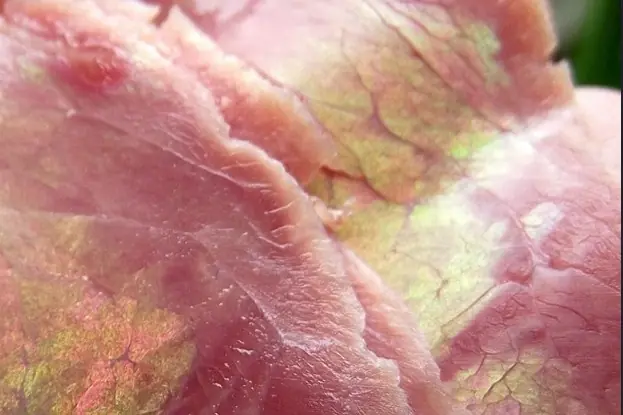
Don't leave deli meat at room temperature for too long
Perishable foods should generally not remain at room temperature for more than two hours.
If the surrounding temperature is above 90°F (32°C), such as during hot weather or in a hot vehicle, the limit becomes one hour.
These time limits matter even if the ham still looks and smells normal.
Bacteria can multiply under favorable conditions without producing obvious visual changes.