You’re lying comfortably in bed, your eyes are getting heavy, and you can feel yourself drifting toward sleep.
Then, suddenly - Your leg kicks. Your arm jumps. Your whole body seems to jolt.
For a split second, you may feel as though you are falling, stumbling, or being startled awake.
If this has happened to you, you’re not alone. This sudden involuntary movement is commonly called a hypnic jerk, sleep start, or hypnagogic jerk. It typically happens during the transition from wakefulness into sleep and is generally harmless.
But why does it happen?
And does a sudden jerk while falling asleep ever mean something more serious?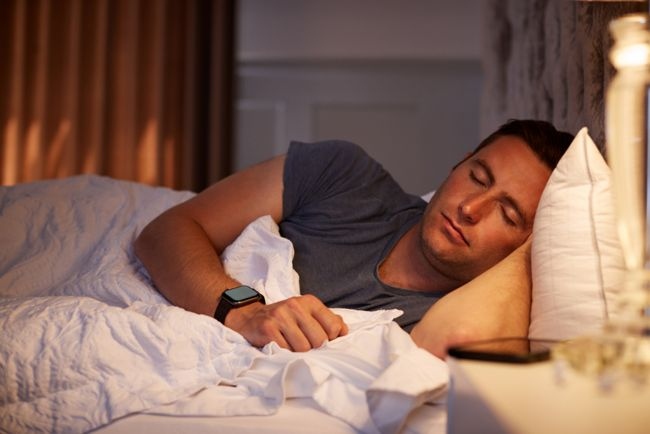
What Is a Hypnic Jerk?
A hypnic jerk is a sudden, brief, involuntary muscle contraction that occurs as you are falling asleep.
It can involve:
-
One leg
-
One arm
-
Several muscles
-
Your shoulders
-
Your entire body
Some people experience only a tiny twitch, while others experience a much stronger movement that wakes them completely.
You might also experience a sensation of falling or hear a sudden sound in your head at roughly the same time.
The movement can be surprising because it happens precisely when your body is beginning to relax.
In most cases, however, a hypnic jerk is simply part of the normal transition into sleep.
Why Does It Happen?
Scientists don't have one definitive explanation for every hypnic jerk.
Sleep is a complex neurological process, and the transition from being awake to being asleep involves changes in brain activity, muscle tone, breathing, and sensory processing.
As you fall asleep, your muscles gradually relax.
One theory is that the brain can sometimes misinterpret this sudden relaxation as a sign that you're falling.
The nervous system may then produce a brief muscle contraction as a kind of startle response.
This may explain why some people experience a sensation of falling at the same time as the physical jerk.
However, the exact mechanism isn't fully understood.
So if you've ever wondered why your body suddenly “jumps” just as you're drifting off, there isn't necessarily a hidden problem behind it.
It may simply be your nervous system transitioning between two different states.
The Falling Sensation Can Be Part of the Experience
One of the strangest things about a hypnic jerk is that it can feel as though you're falling.
You might suddenly feel as if:
-
You're stepping off a ledge
-
Your bed has disappeared
-
You're falling down stairs
-
You're losing your balance
-
Your body is dropping unexpectedly
Then your muscles contract and you wake up.
This experience can feel extremely real.
But feeling as though you're falling doesn't necessarily mean anything is physically wrong with your balance or nervous system.
It can occur as part of the same transition into sleep.
Why Does It Sometimes Happen More Often?
Although hypnic jerks can happen to healthy people without any obvious trigger, certain circumstances may make them more noticeable or more frequent.
1. Sleep Deprivation
One of the most common factors associated with sleep starts is not getting enough sleep.
If you're repeatedly staying up late, waking early, or sleeping poorly, your nervous system may become more susceptible to unusual movements during the transition into sleep.
Instead of viewing an occasional jerk as a problem, it may be more useful to look at your overall sleep pattern.
Are you consistently getting enough sleep?
Are you going to bed at roughly the same time?
Are you waking frequently during the night?
Improving your sleep routine may reduce how often these movements occur.
2. Stress and Anxiety
Stress can affect both sleep quality and nervous-system activity.
If you're lying in bed thinking about work, finances, relationships, or tomorrow's responsibilities, your brain may remain more alert than you realize.
That can make falling asleep more difficult.
Some people notice more twitching or sleep starts during particularly stressful periods.
Relaxation techniques before bed—such as reading, gentle stretching, breathing exercises, or reducing stimulating activities—may help your body transition more smoothly into sleep.
3. Caffeine
Caffeine stimulates the nervous system and can interfere with sleep, particularly when consumed later in the day.
Coffee isn't the only source.
Caffeine can also be found in:
-
Tea
-
Energy drinks
-
Some soft drinks
-
Chocolate
-
Certain medications and supplements
If you notice that nighttime jerks become more frequent after consuming caffeine late in the day, reducing your intake or moving it earlier may be worth trying.
People differ considerably in how sensitive they are to caffeine.
4. Intense Evening Exercise
Exercise is generally beneficial for sleep and overall health.
However, very intense physical activity close to bedtime may leave some people feeling more physiologically activated.
If you regularly experience strong muscle jerks after late-night workouts, consider whether changing the timing or intensity of exercise makes a difference.
That doesn't mean you need to stop exercising.
It simply means your body's response to late-evening activity may be worth observing.
5. Certain Medications or Substances
Some medications and substances can affect sleep or muscle activity.
If sudden movements began after starting, stopping, or changing a medication, don't assume the medication is definitely responsible—but mention the timing to your healthcare professional.
Don't stop a prescribed medication without medical advice.
Are Hypnic Jerks Dangerous?
For most people, occasional hypnic jerks are not dangerous.
They can be startling and annoying, but they generally don't indicate a serious medical condition.
A person might experience one occasionally or several in a single night.
The fact that the movement wakes you up doesn't automatically make it abnormal.
However, the context matters.
There is a difference between an occasional jerk while falling asleep and repeated, unexplained movements that occur throughout the night or while you're fully awake.
When Should You Talk to a Doctor?
It is worth discussing nighttime movements with a healthcare professional if they are frequent, severe, worsening, or significantly disrupting your sleep.
You should also seek medical advice if the movements don't occur only as you're falling asleep.
For example, pay attention if you experience:
-
Repeated muscle jerking while fully awake
-
Frequent movements throughout the night
-
Episodes involving loss of awareness
-
Confusion after an episode
-
Tongue biting
-
Loss of bladder control during sleep
-
Significant injuries
-
Persistent weakness or numbness
-
New neurological symptoms
-
Severe daytime sleepiness
These features don't necessarily mean you have a serious disorder, but they may warrant further evaluation.
Hypnic Jerks Are Different From Other Sleep Movements
Not every movement during sleep is a hypnic jerk.