Medical-grade honey is specially prepared and regulated for certain wound-care applications. This is different from ordinary honey purchased for cooking. Kitchen honey should not be applied to deep, infected, or serious wounds as a replacement for professional care.
Cloves: A small spice with powerful aromatic compounds
Cloves are the dried flower buds of Syzygium aromaticum, an evergreen tree native to the Maluku Islands of Indonesia. They are used in cuisines around the world, particularly in spice blends, baked goods, marinades, and warm beverages.
Their distinctive aroma comes largely from eugenol, a major component of clove essential oil.
Eugenol has been studied for several biological activities.
1. Antioxidant activity
Laboratory research suggests that eugenol and other compounds in cloves can help neutralize certain free radicals. Cloves also contain other phenolic substances that may contribute to antioxidant activity.
This makes cloves an interesting ingredient in research on oxidative stress. However, the results of laboratory studies do not prove that consuming cloves prevents chronic disease in humans.
2. Anti-inflammatory potential
Eugenol has demonstrated effects on certain inflammatory pathways in experimental studies. Researchers continue to investigate how these mechanisms might relate to human health.
Traditional uses of clove preparations for discomfort and inflammation should not be confused with established medical treatments. Concentrated clove oil can irritate tissues and should never be swallowed casually.
3. Oral health and dental care
Clove oil has a long history of use in traditional dental practices because eugenol has local anesthetic and antiseptic properties. Certain dental materials have also used eugenol in controlled formulations.
However, applying undiluted clove oil directly to the gums or teeth can cause irritation, burns, or tissue damage. Dental pain may be caused by cavities, infection, gum disease, or other conditions that require professional treatment.
Cloves in food are a much safer and more appropriate way for most people to enjoy the spice.
Why honey and cloves complement garlic
Honey balances garlic's sharp taste, while cloves provide a warm, aromatic note. Together, they create a flavorful preparation that can be used in small amounts.
The combination is attractive because it brings together ingredients with different chemical profiles. Nevertheless, there is not enough high-quality human research to conclude that mixing these ingredients produces a special combined effect or makes them more effective than consuming them separately.
Chapter 4: What Happens When Garlic, Honey and Cloves Are Combined?
The idea of combining garlic, honey, and cloves is appealing because each ingredient has a long history of culinary and traditional use. Many people prepare the mixture as a homemade tonic, adding it to warm water or taking a small amount alongside meals.
But what does science actually say about the combination?
The most important distinction is between research on individual ingredients and research on the finished mixture.
Garlic, honey, and cloves have each been studied separately. There is laboratory research on their chemical components, and there are some human studies examining specific garlic or honey preparations. However, evidence directly testing a homemade mixture of all three ingredients is limited.
This means that claims about the combination curing infections, cleansing the liver, removing toxins, preventing cancer, or dramatically strengthening immunity are not supported by reliable clinical evidence.
1. A variety of plant-derived compounds
Garlic contains sulfur compounds, honey contains varying amounts of polyphenols, and cloves contain eugenol and other aromatic substances.
These compounds have different properties and have been investigated in laboratory settings. Consuming a varied diet that includes herbs, spices, fruits, and vegetables can help increase the range of plant-derived compounds in everyday meals.
However, more ingredients do not necessarily mean greater health benefits. Combining several substances does not guarantee that their effects will add together. Some compounds may interact, and the amounts present in a homemade preparation are difficult to standardize.
2. A flavorful addition to everyday eating
One practical advantage of the mixture is its flavor. Garlic and cloves provide a strong, aromatic taste, while honey adds sweetness.
A small quantity can be used in a salad dressing, marinade, or sauce. This may encourage people to experiment with home cooking and reduce their reliance on heavily processed condiments.
The overall dietary pattern matters far more than any single mixture. A person who regularly eats vegetables, fruit, whole grains, legumes, and appropriate protein sources is likely to gain more from that consistent pattern than from relying on one homemade tonic.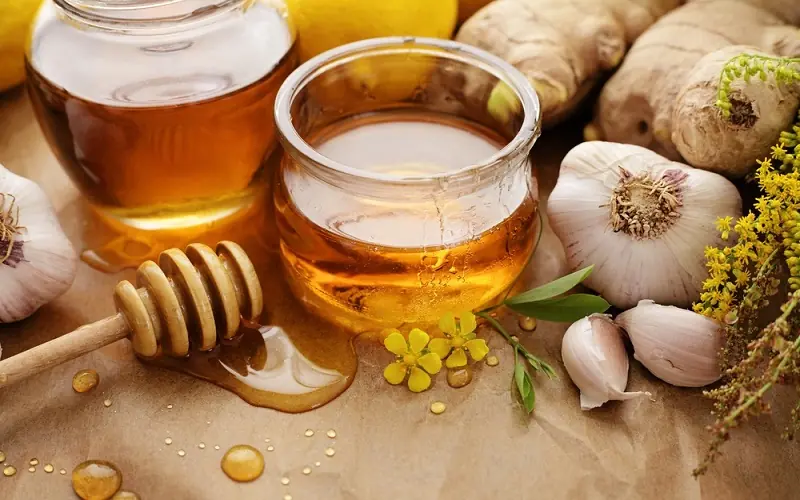
3. Possible antioxidant and antimicrobial activity
The individual ingredients contain substances that have shown antioxidant or antimicrobial effects in experimental research.
For example, allicin from garlic and eugenol from cloves have been investigated for their effects on microorganisms in laboratory conditions. Honey also has antimicrobial properties under certain circumstances.
But these findings cannot be translated directly into a claim that the mixture kills harmful bacteria inside the human body. The digestive system, bloodstream, and tissues are very different environments from a laboratory dish.
The mixture should therefore be considered a food preparation, not an antimicrobial medicine.