Dryness is one reason people feel compelled to pick their noses. Indoor heating, air conditioning, low humidity, dust, and some medications can contribute to uncomfortable dryness. When mucus dries, it may form crusts that seem difficult to remove. Pulling at them can restart a cycle: irritation produces more crusting, crusting creates discomfort, and the person picks again. Over time, the tissue may become tender and bleed easily.
A gentler approach is to address the dryness rather than repeatedly removing crusts by force. A commercially prepared saline nasal spray may help moisten the lining and loosen dried mucus. If a nasal rinse is used, it is essential to follow product instructions and use distilled, sterile, or previously boiled and cooled water—not untreated tap water. Nasal rinsing equipment should be cleaned and dried according to its instructions. Anyone who has recently undergone nasal surgery should follow the surgeon’s specific guidance before using sprays or rinses.
People should also avoid inserting cotton swabs, tweezers, or other objects deep into the nostrils to remove material. Such objects can scratch tissue, cause bleeding, or push material farther inside. If a crust is painful, repeatedly bleeds, or cannot be cleared gently, a clinician can assess the area and recommend an appropriate treatment.
Good hand hygiene is a simple preventive measure. Washing hands with soap and water, avoiding unnecessary touching of the nose, and keeping fingernails clean can reduce the transfer of germs. People who work in dusty environments may also benefit from appropriate protective equipment, depending on their circumstances. These measures support general health, but they cannot guarantee that someone will never develop a sinus infection.
Another habit worth reconsidering is forceful nose blowing. Blowing too hard may increase discomfort, especially when the nasal lining is already inflamed. Gentle blowing, one nostril at a time, is usually more comfortable. Smoke exposure, including secondhand smoke, can also irritate the nasal passages and worsen symptoms in some people.
If someone has persistent congestion, unusual discharge, or repeated nosebleeds, it is better to investigate the underlying reason than to focus solely on a single habit. Allergies, structural problems, chronic inflammation, medication effects, and infections can produce overlapping symptoms. An ear, nose, and throat specialist can determine whether further examination is needed.
The practical message is straightforward: avoid damaging the nasal lining, keep your hands clean, and manage dryness gently. These are sensible habits for protecting the nose. But the claim that one everyday behavior caused the fungal growth depicted in the image should not be presented as fact without credible evidence and a confirmed medical history.
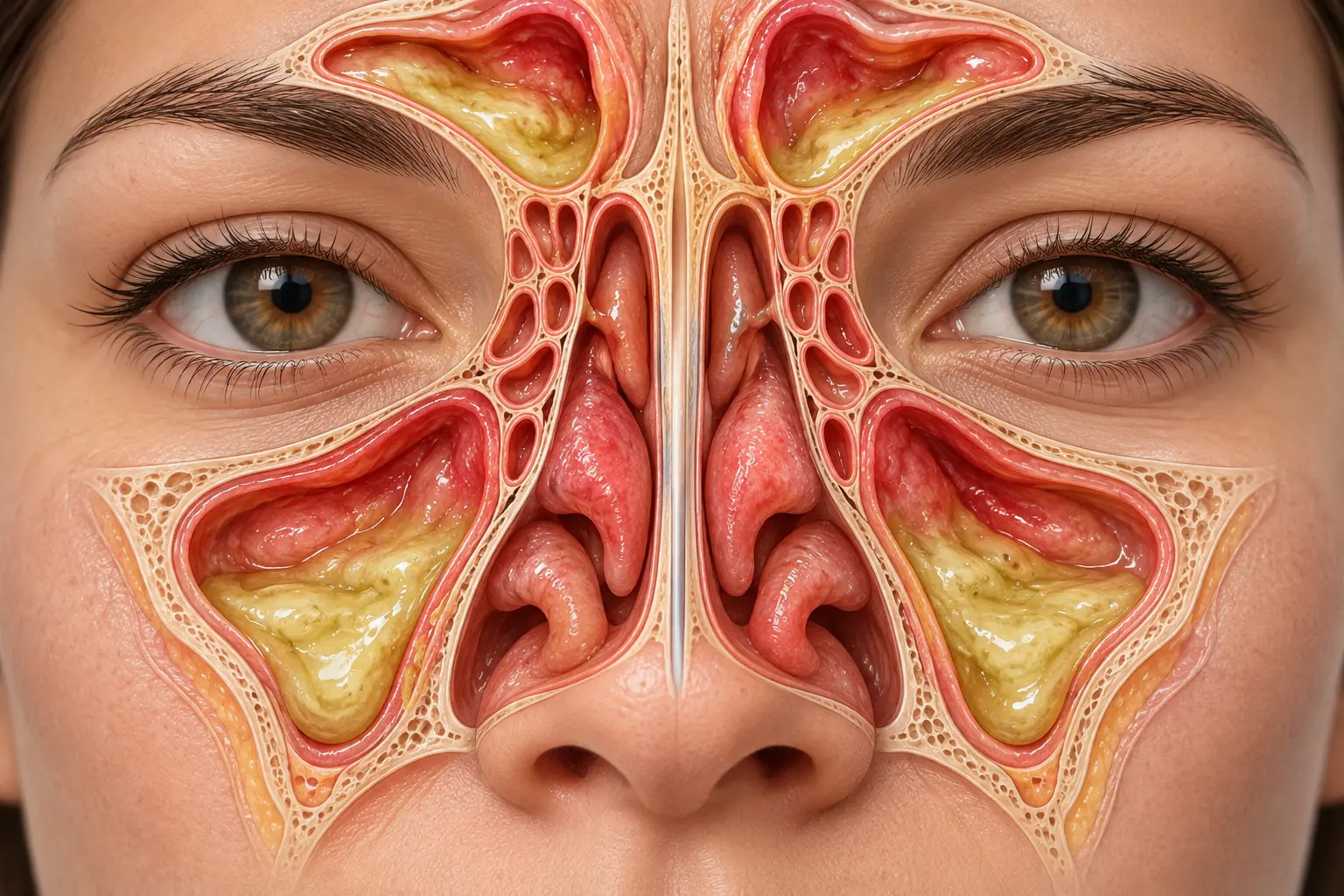
Understanding Fungal Sinusitis and Its Different Forms
Chapter: What Actually Allows Fungi to Cause Disease?
The word “fungus” can sound frightening, especially when it is associated with a close-up image of abnormal material inside the nose. Yet fungal sinus disease is not a single condition. Medical professionals classify it according to how the body responds to fungi and whether the organisms remain within the sinus spaces or invade the surrounding tissue. Understanding these differences helps explain why some cases are relatively manageable while others require urgent treatment.
One form is a fungal ball, sometimes called a mycetoma. In this condition, fungal material accumulates in a sinus and forms a dense collection. It often affects a single sinus and may cause few obvious symptoms at first. As the material builds up, a person may develop persistent blockage, pressure, discomfort, or other signs of chronic sinus disease. The condition generally requires specialist assessment, and treatment often involves a procedure to open and clear the affected sinus.
Another form is allergic fungal rhinosinusitis. Here, the problem is not simply that fungus is growing like a plant inside the nose. Instead, the immune system reacts to fungal material, triggering inflammation. Thick mucus can accumulate, and nasal polyps may develop. People with allergic conditions such as asthma or allergic rhinitis may be more likely to experience this type of disease, although the diagnosis depends on a broader clinical assessment.
A third category includes invasive fungal sinus infections. These are less common but potentially much more dangerous. Invasive fungi can enter and damage the tissue lining the nose and sinuses and, in severe cases, spread into nearby structures. These infections are particularly concerning in people whose immune systems are weakened by certain diseases, cancer treatment, immune-suppressing medicines, or poorly controlled diabetes. Invasive disease can also occur in other circumstances, so symptoms should be assessed in context rather than judged by risk factors alone.
The difference between these conditions is not something that can reliably be determined from a photograph. Thick yellow, green, brown, or dark mucus does not by itself prove a fungal infection. The colour of nasal discharge can vary for many reasons, and appearance alone cannot establish which organism is responsible or whether tissue invasion has occurred. Likewise, an image of a patient after a nasal procedure does not reveal the exact diagnosis or the cause of the condition.
Fungi can enter the nasal passages when people breathe in environmental spores. That exposure is common, but most people do not develop invasive fungal disease from ordinary exposure. The body’s defenses, the condition of the nasal and sinus tissues, and the presence of underlying illness all influence what happens next. In some noninvasive conditions, altered drainage or chronic inflammation may contribute to the accumulation of mucus and fungal material. In allergic disease, the immune response itself plays a major role.
This is why the simplistic explanation that a common habit “creates fungus” is not medically adequate. Picking the nose may injure the lining, introduce bacteria, and cause bleeding or local irritation. However, it is not established as a general, direct cause of fungal sinusitis. It would be inaccurate to tell readers that anyone who picks their nose is likely to develop fungal growth, or to suggest that the condition shown in the image proves such a connection.