For properties with frequent snake encounters, professionally installed snake-exclusion barriers or fencing may be worth considering. Their effectiveness depends on correct design, installation, and maintenance.
No barrier is completely effective if gates are left open or gaps remain around its edges.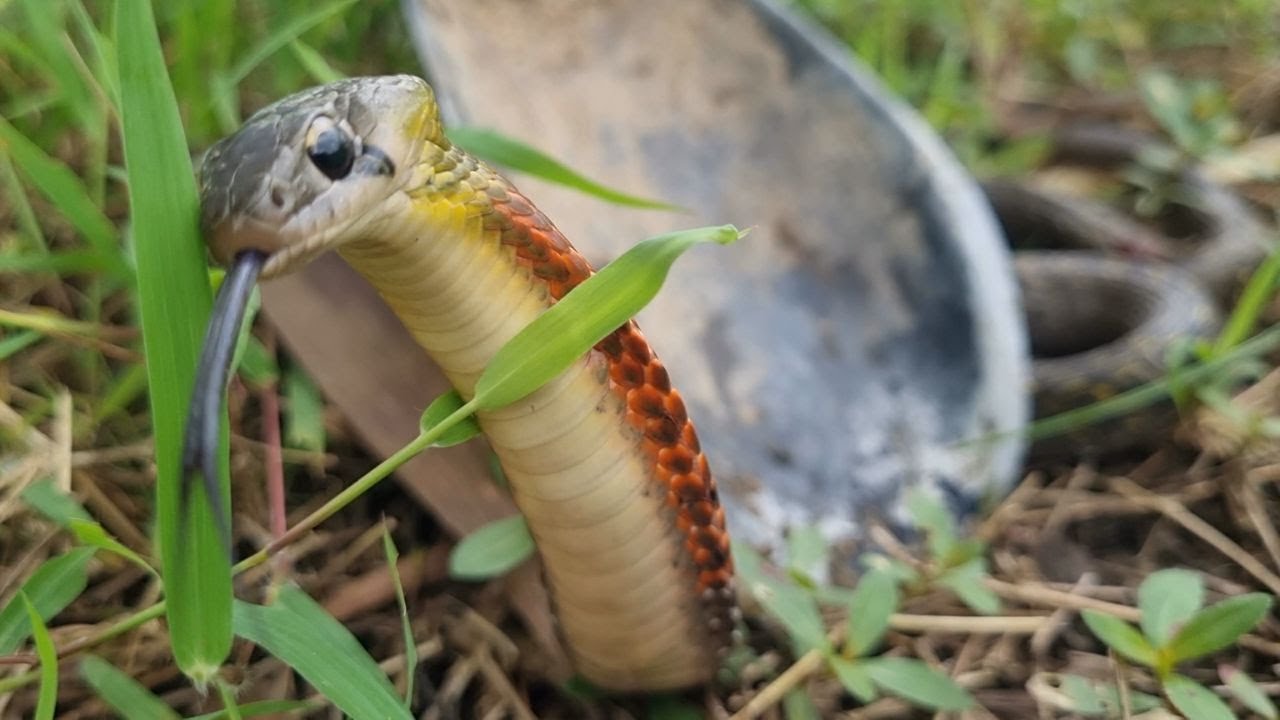
What if you find a snake inside?
Do not try to grab it, pin it down, or trap it with improvised equipment.
Keep children and pets away, move to a safe distance, and contact a qualified local wildlife-removal service or the appropriate animal-control authority.
If you cannot safely leave the area, avoid approaching the animal and seek professional assistance.
Preventing entry is usually easier and safer than trying to remove a snake after it has entered a building.
5. Keep Shrubs, Ground Cover, and Garden Borders Under Control
Beautiful landscaping and snake prevention do not have to be incompatible.
However, dense vegetation close to the house can create sheltered spaces where snakes and their prey may remain hidden.
Thick ground cover, tangled vines, overgrown flower beds, and shrubs with branches touching the ground can make it difficult to see what is underneath.
Garden borders built from loose stones may also contain small gaps that provide shelter for various animals.
The solution is not to remove every plant. Instead, make the landscape easier to inspect and avoid allowing dense cover to form uninterrupted pathways directly toward doors and patios.
Improve the layout of your garden
Prune shrubs where necessary to improve visibility near the ground. Keep plants from completely covering pathways, steps, and areas around outdoor seating.
If a flower bed is heavily overgrown, thin it selectively rather than removing all vegetation.
Keep frequently used paths clear and inspect the edges of garden beds before kneeling or reaching into thick plants.
When working among dense vegetation, wear suitable footwear and gloves. Use a garden tool to move leaves or branches before placing your hands into concealed spaces.
If your property borders a field, stream, or wooded area, consider maintaining a more open strip around the house and play areas.
A well-designed garden can still support birds and beneficial insects while reducing the number of hidden spaces immediately beside the home.
Be cautious with ground-level features
Loose rocks, stacked bricks, discarded pots, and unused garden ornaments can create small shelters.
If you enjoy decorative stonework, consider designs that minimize large, accessible gaps near areas where children and pets regularly play.
Avoid piling damp garden waste against exterior walls.
Remember that snakes may still cross open areas while moving between habitats. Landscaping changes reduce opportunities for concealment; they do not create an invisible barrier that snakes cannot cross.
6. Manage Standing Water and Damp, Sheltered Areas
Water can influence the types of animals that visit your yard.
Depending on the local environment, ponds, water features, drainage ditches, and damp areas may attract frogs, insects, and other potential prey. Some snake species are strongly associated with aquatic or semi-aquatic habitats, while others primarily live in drier environments.
For that reason, the relationship between water and snakes varies considerably by species and location.
You do not necessarily need to remove a pond or garden water feature. Instead, maintain it properly and consider how it fits into the surrounding landscape.
What can you do?
Repair leaking outdoor taps and hoses. Improve drainage where water repeatedly collects against the house, and remove containers that hold stagnant water unnecessarily.
Keep the edges of water features visible and avoid allowing discarded materials, thick weeds, and unmanaged debris to accumulate beside them.
If you have a pond, understand that frogs and other wildlife may naturally use it. Snakes may occasionally visit such habitats, even when the area is well maintained.
Do not use chemicals or pesticides indiscriminately to eliminate every insect, frog, or small animal. These measures can harm other wildlife and may not prevent snakes from visiting.
Instead, focus on the immediate areas where people walk, sit, or play. Keep pathways visible, maintain vegetation, and avoid reaching into hidden spaces beside water features.
If a snake appears near a pond, keep your distance and allow it an opportunity to move away. If it remains in a dangerous location or appears to be inside a building, seek professional assistance.
The aim is to reduce avoidable encounters while maintaining a healthy outdoor environment.