A sudden headache, unexplained vision changes, unusual eye pain, or unexpected weakness on one side of the body may seem like ordinary health problems at first. Many people dismiss these symptoms as signs of stress, fatigue, dehydration, or simply getting older.
However, certain neurological symptoms should never be ignored.
One potentially life-threatening condition that deserves attention is a brain aneurysm. Also known as a cerebral aneurysm, this condition occurs when a weakened area in the wall of an artery in the brain begins to bulge outward, forming a balloon-like swelling.
Some brain aneurysms remain small and cause no noticeable symptoms. Others gradually enlarge and place pressure on nearby nerves or brain tissue. The most dangerous situation occurs when an aneurysm ruptures, allowing blood to leak into the space surrounding the brain.
A ruptured brain aneurysm can cause a medical emergency known as a subarachnoid hemorrhage. Without rapid medical treatment, it can lead to permanent brain damage, disability, or death.
The challenge is that the symptoms are not always obvious, and many people do not realize what is happening until the condition becomes severe.
Understanding the possible warning signs can help people recognize when something is seriously wrong and seek medical attention without delay.
Here are 12 symptoms associated with brain aneurysms that everyone should know.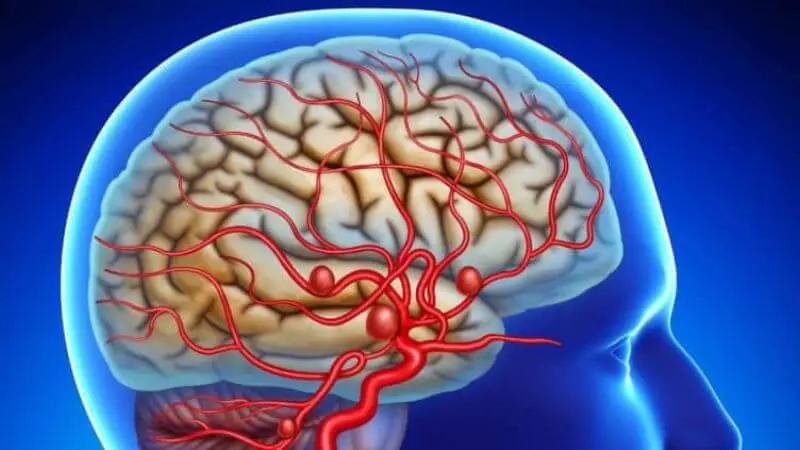
First, Understand Why Brain Aneurysms Can Be Dangerous
A brain aneurysm develops when part of an artery wall becomes weakened and begins to bulge.
Think of a blood vessel as a flexible tube carrying blood throughout the body. If one section of its wall becomes weaker than the surrounding areas, pressure from the flowing blood may cause that section to expand.
Not every aneurysm will rupture. Many remain small and are discovered accidentally during brain imaging performed for another medical reason.
However, an aneurysm can become dangerous in two main ways.
First, it may grow large enough to press against nearby structures.
The brain contains delicate nerves and tissues responsible for vision, movement, sensation, and other essential functions. An enlarging aneurysm may put pressure on these structures, causing symptoms such as eye pain, double vision, or facial weakness.
Second, it may rupture.
When an aneurysm bursts, blood escapes from the artery and enters the surrounding space or brain tissue. This can rapidly increase pressure inside the skull and interfere with normal brain function.
A ruptured aneurysm requires immediate emergency treatment.
It is also important to understand that most unruptured brain aneurysms do not produce recognizable warning signs. The symptoms below are possible manifestations of a growing, leaking, or ruptured aneurysm—not a checklist that can reliably identify one at home.
1. A Sudden, Extremely Severe Headache
One of the most important warning signs of a ruptured brain aneurysm is a sudden, extremely severe headache.
Doctors sometimes call this a thunderclap headache because it appears suddenly and reaches maximum intensity very quickly, often within seconds or a minute.
People who experience this type of headache may describe it as the worst headache they have ever experienced.
Unlike an ordinary headache that gradually develops, a thunderclap headache can feel as though something has suddenly struck the head.
The pain may be accompanied by nausea, vomiting, neck stiffness, or sensitivity to light.
This symptom is particularly concerning because it may indicate bleeding around the brain.
Some people experience a sudden severe headache from a small leak before a larger rupture occurs. This is sometimes called a sentinel headache. The pain may improve, leading the person to believe the danger has passed.
However, improvement does not make the situation safe.
A sudden, unusually severe headache requires immediate emergency medical evaluation, even if it begins to disappear.
Do not wait to see whether pain medication works, and do not attempt to sleep through it.
2. Nausea and Vomiting Without an Obvious Explanation
Nausea and vomiting can occur for many reasons, including digestive problems, infections, medication side effects, and migraines.
However, when these symptoms appear suddenly alongside an unusually severe headache, they may indicate a serious neurological emergency.
A ruptured brain aneurysm can cause bleeding around the brain. This bleeding may increase pressure inside the skull and irritate structures involved in controlling nausea and vomiting.
As a result, a person may suddenly feel extremely sick and vomit repeatedly.
The combination of a severe headache, nausea, and vomiting is especially concerning when the symptoms appear together and develop rapidly.
Some people initially assume they have food poisoning or a stomach virus. Others may believe they are experiencing an unusually severe migraine.
The important distinction is that a sudden, explosive headache accompanied by vomiting should never be treated as an ordinary digestive problem without medical assessment.
If these symptoms appear suddenly, particularly with confusion, neck stiffness, vision changes, or weakness, call emergency services immediately.
3. Neck Pain or Stiffness
Neck stiffness is another possible symptom of bleeding around the brain.
When blood enters the space surrounding the brain, it can irritate the membranes that cover the brain and spinal cord. These membranes are called the meninges.
This irritation may cause discomfort, pain, and stiffness in the neck.
A person may find it difficult or painful to move the head, particularly when attempting to bend the neck forward.