Some people describe the sensation as an unusually tight neck, while others experience significant pain extending from the back of the head into the neck.
It is important to remember that neck pain is extremely common and usually has other explanations, such as muscle strain, poor posture, or degenerative changes in the cervical spine.
However, sudden neck stiffness combined with a severe headache, vomiting, or other neurological symptoms is a serious warning sign.
Do not assume that the problem is simply a strained muscle when several symptoms appear together.
4. Blurred Vision or Double Vision
Changes in vision can sometimes occur when a brain aneurysm grows and presses against nearby nerves or structures involved in eye movement.
A person may notice that objects appear blurry, letters become difficult to focus on, or familiar surroundings suddenly seem unclear.
Another possible symptom is double vision, medically known as diplopia.
Instead of seeing one clear image, the person may see two overlapping or separated images of the same object.
This can make activities such as reading, walking, driving, or recognizing faces more difficult.
Why can this happen?
Several nerves responsible for controlling eye movement travel close to arteries where aneurysms may develop. If an aneurysm enlarges, it can compress these nerves and interfere with normal eye coordination.
Vision changes may also occur after an aneurysm ruptures because bleeding can affect brain function.
Sudden double vision, sudden loss of vision, or significant visual changes should be assessed urgently, especially when accompanied by headache, weakness, or difficulty speaking.
Even if vision returns to normal, the episode should not automatically be dismissed.
5. Pain Above or Behind One Eye
Unexplained pain above or behind one eye is another possible symptom of a brain aneurysm.
This type of discomfort may occur when an enlarging aneurysm places pressure on nearby nerves or surrounding structures.
The pain may be localized to one side of the face, around the eyebrow, or deep behind the eye.
Some people describe it as a persistent pressure sensation, while others experience sharper or more intense discomfort.
In certain cases, the pain may be accompanied by blurred vision, double vision, a drooping eyelid, or changes in pupil size.
However, pain behind the eye is not specific to brain aneurysms.
It can also result from migraine, sinus disease, eye conditions, inflammation, and other neurological problems.
The pattern of symptoms matters.
Persistent or worsening pain around one eye, particularly when accompanied by new visual or neurological changes, deserves prompt medical assessment.
If it appears suddenly with a thunderclap headache or other signs of a rupture, emergency care is essential.
6. A Drooping Eyelid
A drooping upper eyelid, known medically as ptosis, can sometimes indicate pressure on a nerve that controls the muscles around the eye.
The eyelid may begin to hang lower than usual, making one eye appear smaller or partially closed.
This can happen when an aneurysm presses against the third cranial nerve, which helps control several eye movements and the muscles responsible for lifting the eyelid.
A person may also experience double vision or difficulty moving the affected eye normally.
In some cases, the change develops gradually as an aneurysm enlarges.
In other situations, a sudden drooping eyelid may be associated with a serious neurological or vascular condition.
It is important not to assume that a new drooping eyelid is simply a cosmetic issue or a normal sign of aging.
A sudden change, especially when accompanied by a newly enlarged pupil, eye pain, or double vision, requires urgent medical evaluation.
7. One Pupil Becoming Larger Than the Other
The pupils are the dark openings in the center of the eyes. They naturally change size in response to light, helping control how much light enters the eyes.
Normally, the pupils are approximately equal in size, although slight differences can occur naturally in some healthy individuals.
However, a newly enlarged pupil on one side can sometimes indicate a problem involving the nerves that control eye function.
A brain aneurysm pressing against the third cranial nerve may interfere with the normal response of the affected pupil.
The pupil may become unusually large and may not respond normally to changes in light.
This finding can occur alongside a drooping eyelid, double vision, or pain around the eye.
A sudden difference in pupil size should be treated seriously, particularly if it occurs with a severe headache or other neurological symptoms.
Although there are several possible causes, an acute change requires urgent medical assessment rather than observation at home.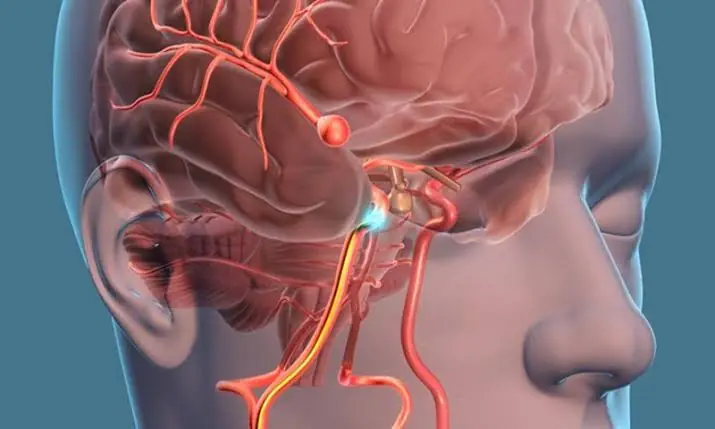
8. Numbness or Weakness on One Side of the Face
Unexpected numbness or weakness affecting one side of the face can be another warning sign of a neurological problem.
An enlarging aneurysm may press against nearby nerves or brain structures, potentially interfering with normal sensation or muscle movement.
A person may notice that one side of the face feels different from the other.
There may also be difficulty smiling evenly, closing one eye, or controlling facial muscles.
In some cases, facial weakness can occur as part of a stroke-like presentation following bleeding from a ruptured aneurysm.
However, facial weakness can also have other causes, including stroke, nerve disorders, and certain infections.
A sudden facial droop should always be treated as a medical emergency.