You can also perform a simple paper test. Place a piece of paper between the door and the gasket, close the door, and gently pull the paper.
If the paper slides out very easily in a particular area, the seal may be weak there. Repeat the test around different sections of the door to compare the resistance.
This test is not a definitive diagnosis, but it can help identify areas where the door may not be sealing properly.
If the gasket is damaged, loose, or no longer sealing effectively, replacement may be necessary. Some refrigerator door seals can be replaced relatively easily, but the correct part must match the model.
Make Sure Nothing Is Blocking the Air Vents
Another common mistake is filling the refrigerator or freezer so tightly that cold air cannot circulate properly.
Air vents are usually located along the interior walls or near the rear of the compartment. Their exact positions vary by model.
When packages, containers, or bags of food block these vents, the appliance may struggle to distribute cold air evenly.
This can lead to temperature inconsistencies. Some areas may become excessively cold, while other areas may remain warmer than intended. In certain situations, restricted airflow may contribute to frost formation or reduced cooling performance.
Try to leave space around air vents and avoid pushing food directly against the rear wall of the freezer.
Organizing food into containers and keeping frequently used items in accessible locations can also reduce the amount of time the door remains open.
A refrigerator does not necessarily need to be completely empty to function properly, but it should not be packed so tightly that air cannot move freely.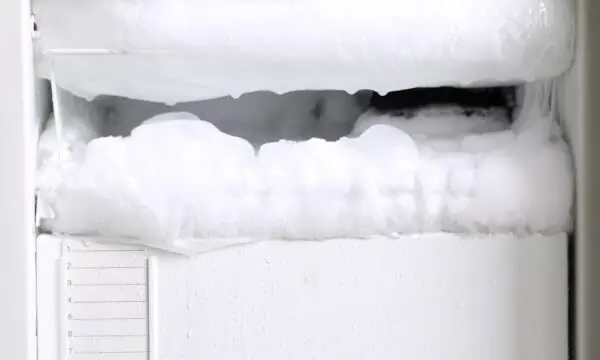
Pay Attention to How Often the Door Is Opened
Every time the freezer door opens, warm air enters.
In a household where several people frequently open the freezer, moisture can enter repeatedly throughout the day. This may be particularly noticeable during humid weather.
A few simple habits can help:
Try to decide what you need before opening the door.
Avoid leaving the door open while organizing groceries.
Make sure children understand that the freezer door should not be left open.
Check that the door closes completely after each use.
If the refrigerator has a door alarm, make sure it is functioning correctly.
These small changes may reduce the amount of warm, moist air entering the appliance and help prevent frost from returning.
Could Your Refrigerator's Temperature Setting Be Too Low?
Temperature settings are another detail worth checking.
If the freezer is set colder than necessary, it may contribute to excessive freezing in certain areas, particularly if the appliance is already experiencing airflow problems or if food is positioned near cold-air outlets.
However, frost buildup is not necessarily caused by a temperature setting that is too low. In many cases, moisture entering the freezer is the primary issue. Changing the temperature setting without addressing the source of moisture may not solve the problem.
For most household refrigerators, the freezer should generally be set around 0°F (-18°C), while the refrigerator compartment should remain at or below 40°F (4°C). These are commonly recommended food-storage temperatures.
If your refrigerator uses a numbered dial rather than a temperature display, the numbers may represent cooling intensity rather than actual temperatures. A higher number may mean colder operation, depending on the model.
Before making adjustments, check the manufacturer's instructions. Avoid repeatedly changing the settings in an attempt to solve frost buildup, because frequent adjustments can make it harder to determine whether the appliance is operating properly.
If the temperature seems inconsistent, consider using a separate refrigerator or freezer thermometer. It can provide a more reliable indication of the actual temperature inside the compartment.
Why Frost Buildup Can Make Your Refrigerator Work Harder
A thick layer of frost may appear harmless, especially if the freezer still seems cold. However, excessive ice can interfere with normal operation.
In some freezer designs, frost can accumulate around evaporator coils or other cooling components. When this happens, airflow may become restricted, and the appliance may have difficulty maintaining consistent temperatures.
The refrigerator may run longer than usual in an attempt to compensate. This can increase energy consumption and place additional strain on certain components.
Frost can also reduce usable storage space. Drawers may become difficult to open, food packages may become trapped, and the interior may be harder to organize.
In severe cases, the freezer may become colder in certain areas while the refrigerator compartment struggles to maintain the correct temperature.
This is why removing excessive frost is not simply a cosmetic task. It can help restore normal airflow and make it easier to determine whether the refrigerator is functioning properly.
However, if the frost returns quickly after a complete defrost, the underlying issue may need professional attention.