The refrigerator door seal is easy to forget. Most people regularly wipe down shelves, clean drawers, throw away expired food, and occasionally wash the interior walls. Yet the flexible rubber gasket around the door often receives far less attention. Its narrow grooves and folded edges can trap moisture, crumbs, spilled liquids, and other organic residue. Over time, these conditions may create an environment where mold and mildew can develop.
The good news is that a small amount of surface mold on an otherwise intact refrigerator gasket can often be cleaned with ordinary household supplies. A simple routine involving warm water, mild dish soap, and careful wiping may be enough to remove many everyday stains and residues. For stubborn spots, an appropriate diluted cleaning product may be necessary, provided the refrigerator manufacturer's instructions allow it.
Although online cleaning tips sometimes promise a completely spotless refrigerator seal in just five minutes, the actual time depends on how extensive the buildup is. Light surface stains may disappear quickly, while mold embedded in damaged rubber or persistent discoloration may require more attention.
Understanding why the problem occurs, how to clean the gasket safely, and when it may need replacing can help keep your refrigerator cleaner and functioning properly.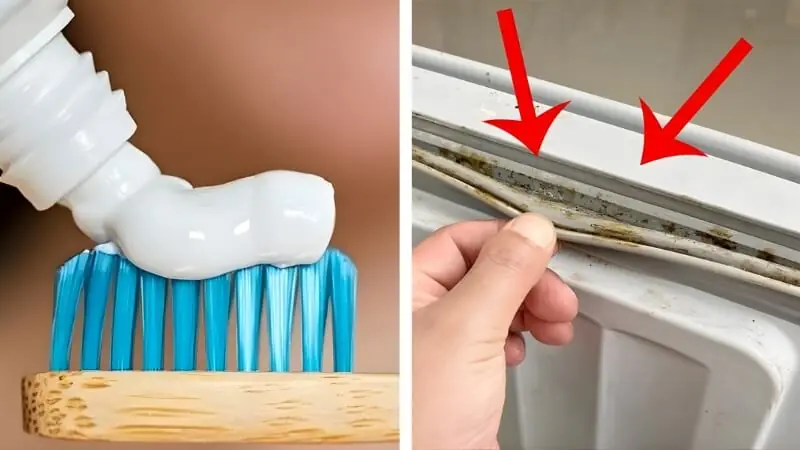
CHAPTER 1: WHY DOES MOLD GROW ON YOUR REFRIGERATOR DOOR SEAL?
The rubber gasket around a refrigerator door has a surprisingly important job. It creates a tight seal between the refrigerator compartment and the surrounding kitchen environment. When the door closes, the gasket helps prevent warm air from entering and cold air from escaping.
Without an effective seal, the refrigerator may struggle to maintain its intended temperature. It may also use more energy because the cooling system has to work harder to compensate for the air exchange.
However, the gasket's design also makes it one of the easiest places for moisture and dirt to accumulate.
Unlike the smooth interior walls of a refrigerator, the door seal is flexible and often contains several folds, grooves, and narrow channels. These areas are useful for creating a secure seal, but they can also collect small amounts of water, food particles, grease, and dust.
Every time someone opens the refrigerator, warm air from the kitchen enters the compartment. Changes in temperature can contribute to condensation, particularly around surfaces where moisture collects. If water remains trapped in the folds of the gasket, the area may stay damp longer than expected.
Add a little food residue, and the conditions can become favorable for mold growth.
The hidden combination of moisture and food residue
Mold is a type of fungus that can grow in many environments when suitable conditions are present. It does not need a large puddle of water or obvious food waste to begin developing. Small amounts of moisture and organic material may be enough.
Consider what happens during an ordinary week in a busy household.
Someone spills a little juice while putting groceries away. A container leaks a few drops of sauce. A wet hand touches the refrigerator door seal. A small piece of food becomes trapped in one of the rubber folds.
The refrigerator may look perfectly clean from the outside, but those small residues can remain hidden.
Because the gasket is not always included in routine cleaning, the buildup may continue unnoticed. Eventually, tiny dark or greenish spots may appear along the rubber.
Not every dark mark is necessarily mold. Some stains may come from dirt, food pigments, or discoloration caused by age. However, when spots appear alongside persistent dampness or a musty smell, mold becomes a possibility.
Why the folds of the gasket are particularly vulnerable
The most commonly overlooked areas are the inner folds and corners of the seal.
When cleaning the refrigerator, people often wipe the visible front surface of the rubber and assume the job is finished. Unfortunately, the narrow channels behind that surface can remain untouched.
Moisture can settle inside these folds, while crumbs and other debris may become lodged in the corners. A cloth that only touches the outer edge will not necessarily remove what has accumulated deeper inside.
This is why inspecting the entire gasket matters.
Gently open the folds with your fingers, taking care not to stretch or damage the rubber. Look along the upper edge, lower edge, corners, and the section closest to the refrigerator hinges. These locations may reveal buildup that is invisible when the door is closed.
Is mold on a refrigerator gasket dangerous?
The presence of mold should not be ignored, particularly in an area connected to food storage. However, seeing a small patch on the exterior door seal does not automatically mean that all the food inside the refrigerator has become contaminated.