Keeping food at a safe temperature does not eliminate mold from the gasket, but it is an important part of overall refrigerator hygiene and food safety.
If the refrigerator cannot maintain the recommended temperature, investigate the cause rather than assuming that cleaning the seal will solve the issue.
Inspect the gasket for damage
A healthy gasket should be flexible and should sit properly around the door.
Over time, rubber can become brittle, cracked, or deformed.
Inspect the seal periodically, especially if you notice condensation around the door or the refrigerator seems to run more frequently than usual.
If the gasket is damaged, consult the appliance manufacturer about the correct replacement part.
Avoid using household glue or improvised repairs unless the manufacturer specifically recommends them.
Keep food containers clean and covered
Uncovered food can release moisture and odors into the refrigerator.
Leaking containers can also leave residue on shelves and near the door.
Use appropriate food-safe containers with secure lids. Clean sticky surfaces before putting containers back into the refrigerator.
These habits reduce spills and make it less likely that food residue will collect around the gasket.
CHAPTER 6: WHEN SHOULD YOU BE CONCERNED ABOUT MOLD INSIDE YOUR REFRIGERATOR?
A few small spots on a door seal are not necessarily a reason to panic. However, there are situations in which the problem deserves more attention.
The distinction is between a limited area of removable surface contamination and a recurring or extensive problem that may involve damaged materials or other parts of the appliance.
Mold that keeps returning
If the same dark spots reappear shortly after cleaning, there may be an underlying source of moisture or contamination.
The gasket may be damaged, or water may be collecting in an area that is difficult to reach.
Inspect the entire seal and check whether the refrigerator door closes correctly.
If the growth continues despite appropriate cleaning and drying, consider having the appliance inspected.
Mold spreading beyond the gasket
If you find mold on shelves, drawers, food containers, or other interior surfaces, clean the affected nonporous surfaces according to the manufacturer's instructions.
Inspect nearby food carefully.
Food that is visibly moldy should generally be discarded. Soft, moist foods are particularly difficult to assess because mold may extend beyond the visible area.
Do not simply scrape mold from food and return it to the refrigerator.
If the refrigerator has a persistent musty smell or mold appears in areas that cannot be cleaned properly, professional assessment may be appropriate.
A refrigerator that does not maintain a safe temperature
The door gasket plays a role in maintaining the refrigerator's internal environment.
If the seal is damaged, warm air may enter and make it harder for the appliance to maintain a stable temperature.
Use a refrigerator thermometer to check whether the temperature remains at or below 40°F (4°C).
If food has been exposed to unsafe temperatures, follow established food-safety guidance. Do not rely on smell or appearance alone to determine whether perishable food is safe.
People who may be more sensitive to mold
Some people experience allergic reactions when exposed to mold. Symptoms can include sneezing, a runny or blocked nose, itchy eyes, or skin irritation.
People with asthma may experience worsening respiratory symptoms.
Those with weakened immune systems or certain underlying health conditions may face additional risks from mold exposure.
If you belong to one of these groups, avoid directly handling extensive mold growth. Consider having another person clean the area or seek professional assistance.
If respiratory symptoms or other concerning reactions occur, consult a healthcare professional.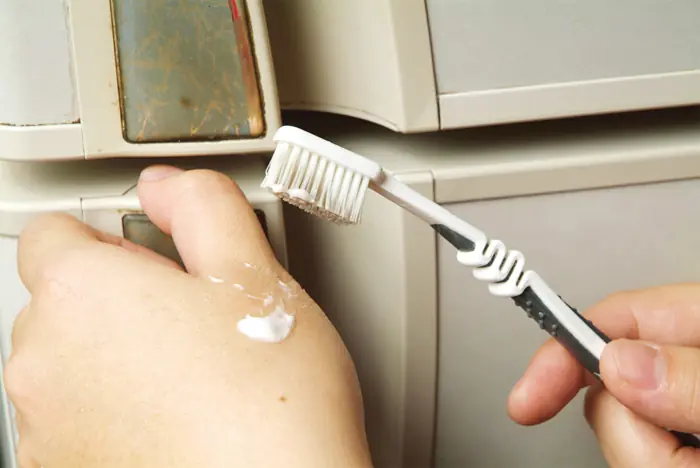
FINAL THOUGHTS: A FEW MINUTES OF CLEANING CAN HELP KEEP YOUR REFRIGERATOR FRESHER
The rubber seal around your refrigerator door may seem like a minor detail, but it plays an essential role in keeping the appliance closed properly and maintaining a stable internal temperature.
Because the gasket contains folds and narrow spaces, it can collect moisture, food residue, and dirt that are easy to overlook during ordinary kitchen cleaning. When these conditions persist, mold may develop.
The good news is that small areas of surface buildup can often be addressed with a simple cleaning routine. Warm water, mild dish soap, a soft cloth, and a gentle brush may be all you need to remove everyday residue. The key is to clean the hidden folds, rinse away any remaining soap, and dry the rubber thoroughly.
A quick five-minute cleaning may be enough for a lightly affected gasket, but extensive growth, persistent stains, or damaged rubber may require more time or even replacement.
Most importantly, do not focus only on removing the visible spots. Pay attention to why moisture and residue accumulated in the first place. Clean spills promptly, inspect the gasket regularly, make sure the door closes properly, and keep the refrigerator at a safe temperature.
These small habits can help prevent recurring buildup and support better refrigerator hygiene.
So the next time you clean your kitchen, take a closer look at that rubber strip around your refrigerator door. It may be one of the most neglected parts of the appliance, but giving it a little attention can make your entire refrigerator easier to maintain.