A beautiful garden can make a home feel peaceful, private, and connected to nature. Flowering plants, thick shrubs, climbing vines, ornamental grasses, and leafy ground covers can transform even a small yard into a lush retreat.
But there is another side to dense vegetation that many homeowners overlook.
Some plants and landscaping choices can make a yard more attractive to snakes - not necessarily because snakes want to eat the plants, but because the vegetation can provide shelter, shade, moisture, hiding places, and habitat for the small animals snakes feed on.
That distinction is important. A plant is rarely a simple “snake magnet.” In most cases, snakes are responding to the conditions around the plant rather than the plant itself.
If your garden contains dense ground cover, overgrown shrubs, thick piles of vegetation, or plants that create cool, undisturbed spaces close to the ground, it may provide exactly the kind of environment a snake is willing to explore.
The good news is that you do not have to turn your garden into a barren landscape.
With thoughtful planting, regular maintenance, and attention to the places where snakes can hide, you can make your outdoor space less attractive to unwanted wildlife while still keeping it green and beautiful.
Why Would a Snake Enter a Garden?
Before discussing particular plants, it helps to understand what snakes are actually looking for.
Snakes generally do not enter gardens because they are attracted to flowers, colors, or beautiful foliage in the same way that bees and butterflies may be. Instead, they are usually interested in food, shelter, temperature, and water.
A garden can accidentally provide all four.
Depending on the species, a snake may feed on rodents, frogs, lizards, insects, eggs, or other small animals. A yard with abundant prey can therefore become attractive even if there is nothing inherently appealing about the plants themselves.
Dense vegetation can also provide protection from predators and people.
During hot weather, shaded vegetation may create cooler areas close to the ground. During cooler periods, protected spaces can offer shelter from wind and exposure. Moist areas may attract frogs, insects, and other animals, which can indirectly create a food source for snakes.
This means that the real question is often not:
“Which plant attracts snakes?”
but rather:
“Which plants and landscaping conditions make my garden a good place for snakes to hide or find food?”
That is a much more useful way to think about the issue.
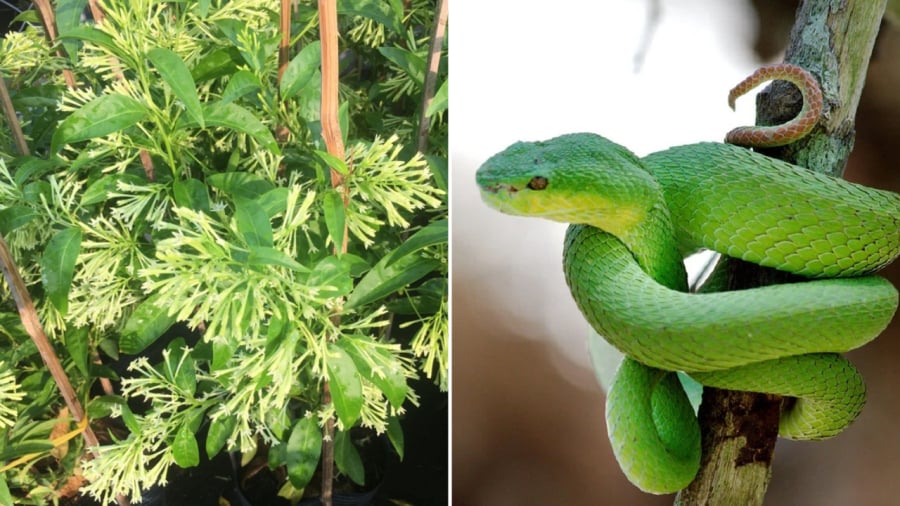
1. Dense Ground Cover
Ground-cover plants can be extremely useful in landscaping. They help reduce exposed soil, add texture, suppress weeds, and create a lush appearance.
However, when ground cover becomes extremely dense, it can create a network of protected spaces close to the soil.
A snake moving through a yard may use these areas for concealment, particularly if the vegetation is thick enough that the animal is difficult to see from above.
Dense ground cover can also shelter insects, lizards, frogs, and small rodents. Those animals may then attract predators—including snakes.
This does not mean that every ground-cover plant should be removed.
Instead, consider maintaining enough spacing around paths, entrances, patios, and frequently used areas that vegetation does not become an impenetrable wall of leaves.
Regular trimming can also improve visibility.
A garden that remains green but allows you to clearly see the ground beneath and around plants is generally easier to monitor than one where every section is covered by thick foliage.