Have you ever looked at your hands and wondered whether the shape and proportions of your fingers might reveal something about the way you think, behave, or interact with other people?
For centuries, humans have tried to interpret physical characteristics as clues to personality. Ancient traditions, physiognomy, palmistry, astrology, and various forms of folk belief have all suggested that the body can offer hints about a person's character.
Finger length has become particularly interesting because the differences can be subtle but easy to observe.
One of the most commonly discussed comparisons is the relationship between the index finger and the ring finger. Another involves the relative length of the thumb and the index finger.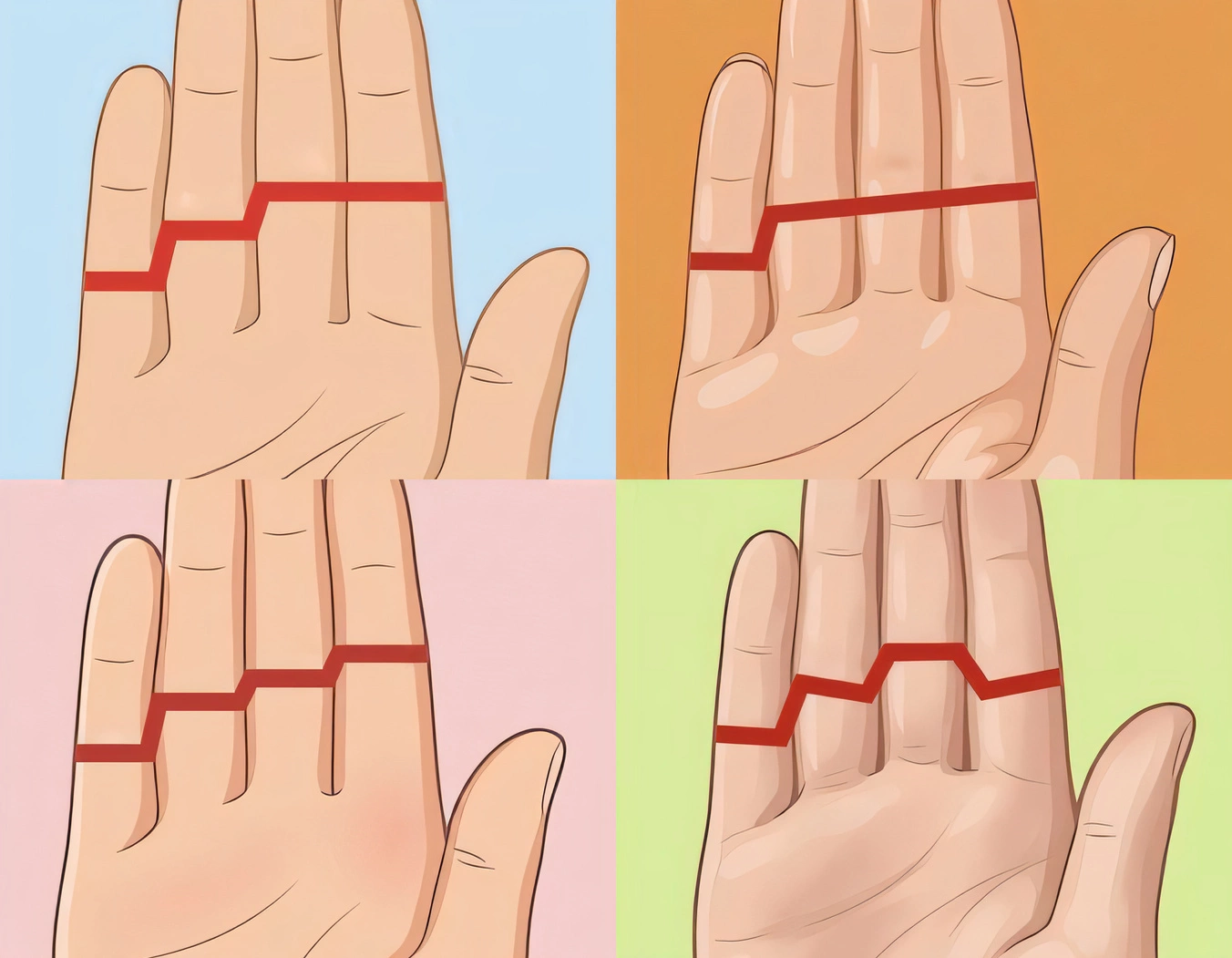
Some personality traditions associate different proportions with confidence, caution, ambition, empathy, independence, or emotional sensitivity.
Modern science has also examined finger-length ratios, especially the 2D:4D ratio, which compares the length of the index finger, or second digit, with the ring finger, or fourth digit. Researchers have investigated whether this ratio may be associated with biological factors and certain behavioral or physical characteristics.
But there is an important distinction between scientific research into finger-length ratios and traditional claims that a person's fingers can predict their personality, career success, relationships, or financial future.
The evidence does not support treating finger length as a reliable personality test.
In other words, your fingers may be interesting to study, but they cannot tell the complete story of who you are.
With that in mind, let's take a closer look at the different interpretations and why this simple hand comparison continues to fascinate people.
1. When the Index Finger Is Shorter Than the Ring Finger
One of the most commonly discussed patterns is an index finger that appears shorter than the ring finger.
In traditional personality interpretations, people with this hand pattern are sometimes described as more cautious, reflective, or reserved.
They may be portrayed as individuals who think carefully before acting rather than immediately taking risks.
Some traditions also associate this appearance with lower self-confidence or a tendency to hesitate when facing unfamiliar situations.
According to these interpretations, such people may spend more time analyzing a decision before committing themselves.
That can be both a strength and a challenge.
Being cautious may help a person avoid unnecessary mistakes.
At the same time, excessive hesitation can sometimes lead someone to miss an opportunity.
Career and Success
Traditional readings sometimes suggest that individuals with a shorter index finger compared with the ring finger prefer stability over uncertainty.
They may be attracted to careers with predictable structures, clear responsibilities, and manageable risks.
They might take longer to commit to major changes because they prefer to understand the potential consequences first.
But this should not be confused with a lack of ambition.
A cautious person can be highly successful.
In fact, careful analysis, patience, consistency, and attention to detail can be extremely valuable in many professions.
The important question is not whether someone takes risks.
It is whether they know when a risk is worth taking.
Relationships and Social Life
Some personality traditions also describe these individuals as less likely to dominate a social situation.
They may prefer cooperation over confrontation.
They may listen more than they speak.
They may take time to become comfortable around new people.
For some, this can make them thoughtful and dependable friends.
However, people who consistently avoid conflict may also find it difficult to communicate their needs clearly.
They may agree to things they don't really want.
They may hesitate to set boundaries.
They may keep their opinions quiet because they don't want to create tension.
If someone recognizes these tendencies in themselves, building confidence and learning assertive communication can be useful—regardless of finger length.
2. When the Index Finger Is Longer Than the Ring Finger
The opposite pattern is an index finger that is visibly longer than the ring finger.
Traditional interpretations often connect this proportion with qualities such as confidence, independence, decisiveness, and leadership.
People with this pattern are sometimes described as individuals who are comfortable taking the initiative.
They may be more likely to make decisions quickly and move forward rather than waiting for complete certainty.
Again, these are personality interpretations rather than established predictions.
Still, they can make an interesting framework for self-reflection.
Career and Ambition
According to traditional readings, people with longer index fingers are often portrayed as goal-oriented.
They may enjoy environments where performance matters.
Competition may motivate them.
They may be willing to take responsibility when a decision has to be made.
They may also feel comfortable telling others what needs to happen next.
These qualities can be useful in leadership positions.
But there is another side.
Confidence can become impatience.
Determination can become stubbornness.
Leadership can become controlling behavior when a person stops listening to other perspectives.
So one of the most useful questions for someone who identifies with this description is not:
“Am I naturally a leader?”
It may be:
“Do I know how to lead without overlooking other people?”
That question has much more practical value.
Romantic Relationships
A strong personality can be attractive.
People who are decisive and direct may make their partners feel secure because they know what they want.
But relationships require flexibility as well as confidence.
Someone who always insists on having things their way may eventually create tension.
Compromise is not weakness.
Listening is not weakness.
Changing your mind after hearing another perspective is not weakness.
A healthy relationship requires two people who can express themselves while still respecting each other's needs.
3. When the Index Finger and Ring Finger Are About the Same Length
Some people have an index finger and ring finger that appear relatively similar in length.
Traditional personality interpretations often describe this pattern as a sign of balance.