The Science Behind Finger Length: The 2D:4D Ratio
This is where the discussion becomes more scientifically interesting.
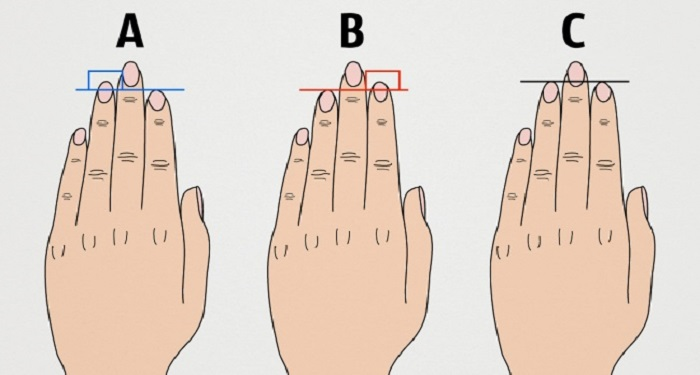
Researchers have studied the 2D:4D ratio, which refers to the relationship between the second digit—the index finger—and the fourth digit—the ring finger.
The ratio is calculated by dividing the length of the index finger by the length of the ring finger.
For example, if someone's index finger is shorter than their ring finger, the ratio will be lower than if the two fingers are the same length.
This measurement has attracted scientific attention because researchers have investigated whether it might be associated with biological processes occurring before birth.
One area of interest is prenatal hormone exposure.
And this is where the subject needs careful explanation.
What Researchers Have Actually Investigated
Scientists have explored whether finger-length ratios might correlate with prenatal androgen and estrogen exposure.
The basic hypothesis is that the development of the fingers may be influenced, at least in part, by hormonal and genetic factors during fetal development.
That has led researchers to investigate whether differences in 2D:4D could correlate with certain traits.
Studies have looked at possible relationships involving:
- Athletic performance
- Physical characteristics
- Certain behavioral tendencies
- Reproductive biology
- Health-related measurements
- Some aspects of cognition or behavior
However, the results have often been mixed.
Some studies report associations.
Other studies find weak effects.
Some fail to reproduce earlier findings.
The relationship is therefore much more complicated than many social-media posts imply.
A Correlation Is Not a Personality Diagnosis
This is the single most important point.
Even if researchers find a statistical association between finger ratio and a particular trait, that does not mean the finger ratio determines the trait.
It also doesn't mean you can look at someone's hand and predict:
- How successful they will be
- How rich they will become
- Whether they will be a good partner
- How confident they are
- Whether they are naturally aggressive
- Whether they will become an athlete
- Whether they are empathetic
Human behavior is influenced by enormous numbers of variables.
Genetics.
Family environment.
Childhood experiences.
Education.
Culture.
Socioeconomic conditions.
Friendships.
Trauma.
Health.
Personality development.
Personal choices.
And random life events.
Finger length is, at most, one small biological characteristic among many.
Why Finger-Length Personality Tests Remain So Popular
Even when the scientific evidence is limited, these tests remain popular because they are easy.
You don't need special equipment.
You don't need a questionnaire.
You don't need a psychologist.
All you need is your hand.
The result feels personal because it is based on something physically attached to you.
And the categories are usually broad enough that many people can recognize themselves in them.
For example:
“You're cautious but thoughtful.”
“You're ambitious but sometimes stubborn.”
“You're kind but may trust too easily.”
These statements can feel surprisingly accurate because they describe common human experiences.
This is one reason personality-style readings can be entertaining without necessarily being scientifically predictive.
The Barnum Effect and Why General Descriptions Can Feel Personal
There is a psychological phenomenon known as the Barnum effect, sometimes discussed in relation to horoscopes and personality readings.
It refers to the tendency for people to perceive broad, generally applicable descriptions as uniquely accurate for themselves.
For example, a statement like:
“You care what others think of you, but sometimes you prefer to be alone.”
could describe an enormous number of people.
Yet someone reading it may think:
“That is exactly me.”
This doesn't mean the person is being irrational.
It means humans naturally look for meaningful patterns.
That's one reason physical-feature personality readings can feel convincing even when they lack strong predictive power.
Your Fingers Can Be Interesting Without Predicting Your Future
There is no need to completely dismiss the fascination.
Looking at your hands can still be fun.
You can compare finger lengths.
You can notice family similarities.
You can observe how your hands have changed over time.
You can explore the cultural history of palmistry and physiognomy.
You can even use personality descriptions as prompts for self-reflection.