Cerebral angiography
In some situations, doctors may perform a more detailed catheter-based angiogram to examine the cerebral blood vessels.
The exact testing strategy depends on the person's symptoms, timing, medical history, and clinical findings.
What Happens if an Aneurysm Is Found?
Finding an aneurysm does not automatically mean that it needs immediate surgery.
Doctors consider multiple factors, including:
- Aneurysm size
- Location
- Shape
- Growth over time
- Previous rupture
- Patient age
- Overall health
- Family history
- Other risk factors
Some small aneurysms may be monitored with follow-up imaging.
Others may warrant treatment to reduce the risk of rupture.
Potential treatments can include surgical clipping or endovascular procedures such as coiling and other techniques.
The appropriate approach is highly individualized.
A Crucial Distinction: Unruptured vs. Ruptured
The difference between an unruptured and ruptured aneurysm is extremely important.
Unruptured aneurysm
An aneurysm has formed but has not leaked or burst.
Many cause no symptoms and may be discovered incidentally.
Ruptured aneurysm
The aneurysm breaks and blood escapes into surrounding spaces.
This can cause a sudden, severe headache and other neurological symptoms and represents a medical emergency.
The two situations can look very different clinically.
Don't Try to Diagnose an Aneurysm From Symptoms Alone
A headache doesn't tell you that an aneurysm is present.
Neither does nausea.
Neither does neck pain.
Neither does dizziness.
The same symptom can have dozens of possible causes.
Even experienced physicians cannot reliably diagnose a brain aneurysm simply by reading a symptom list.
Diagnosis may require neurological examination and appropriate imaging.
So if you are concerned about recurring headaches or unusual neurological symptoms, speak with a healthcare professional rather than trying to match yourself to an online checklist.
The Bottom Line
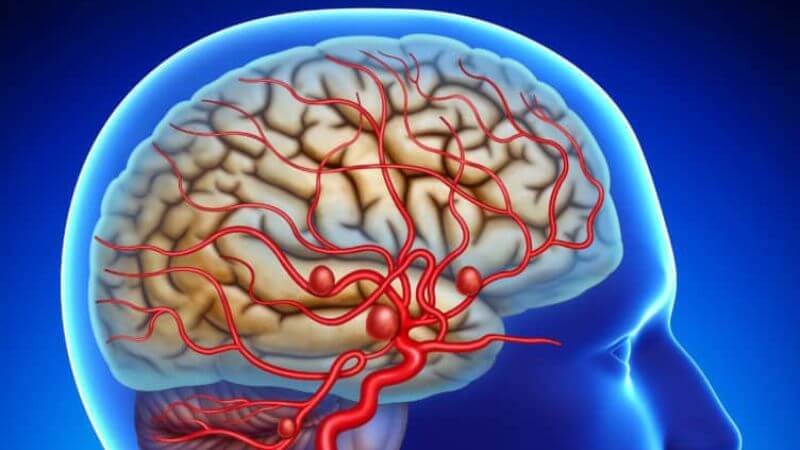
A brain aneurysm can sometimes exist without producing any symptoms, which is why it can be difficult to recognize.
When symptoms do occur, they may include sudden severe headache, neck stiffness, nausea or vomiting, sensitivity to light, vision changes, drooping eyelid or unequal pupils, one-sided weakness or numbness, speech difficulties, seizures, and sudden confusion or loss of consciousness.
However, these symptoms are not specific to aneurysms and can occur with many other conditions.
The symptom that should receive particular attention is a sudden, extremely severe headache that reaches maximum intensity rapidly, especially when accompanied by neurological changes.
If you or someone around you suddenly develops this type of headache, loses consciousness, has a seizure, develops weakness or numbness, has difficulty speaking, or experiences another major neurological change, seek emergency medical care immediately.
Don't wait for the symptoms to become more obvious.
With neurological emergencies, recognizing the warning signs is important—but knowing when to act is even more important.