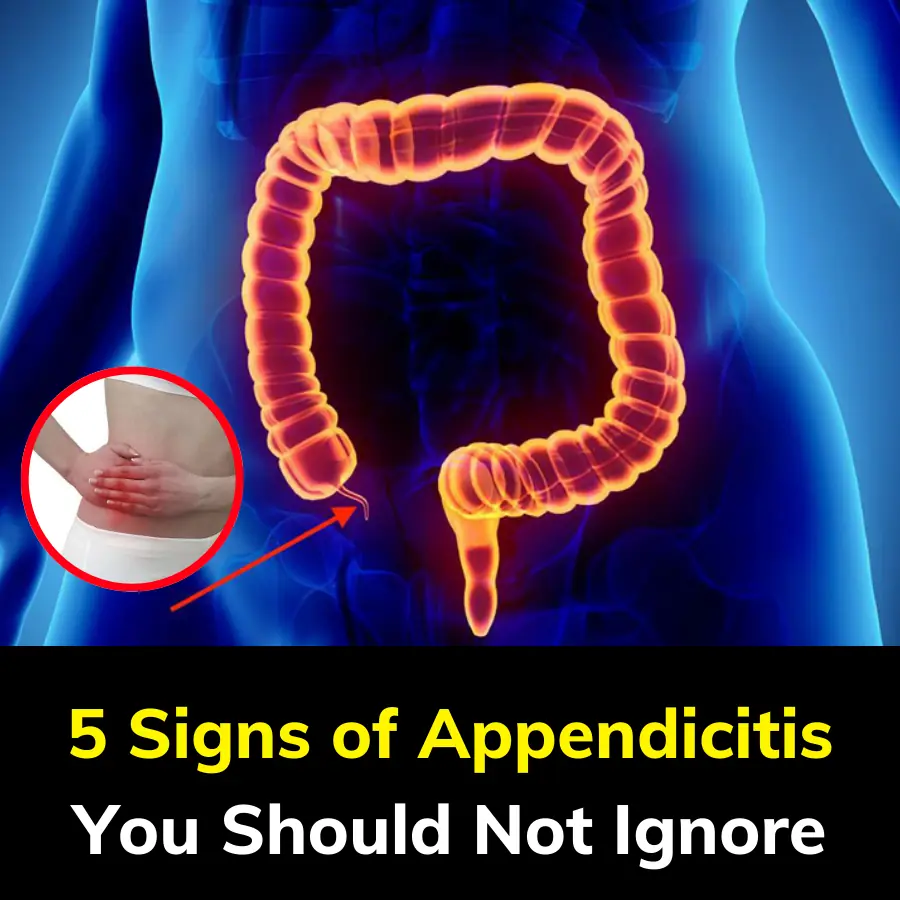
Appendicitis is a medical emergency that occurs when the appendix becomes inflamed, swollen, or infected. If not treated promptly, the
appendix can burst, leading to life-threatening complications such as peritonitis or sepsis. Because the early symptoms can sometimes
resemble common digestive issues, many people ignore the warning signs - putting themselves at serious risk. Understanding the key
symptoms and learning how to prevent appendicitis can help you act quickly and protect your health.
Below is a comprehensive guide on the five warning signs of appendicitis you should never overlook, along with practical prevention
strategies recommended by medical professionals.
1. Persistent Pain in the Lower Right Abdomen
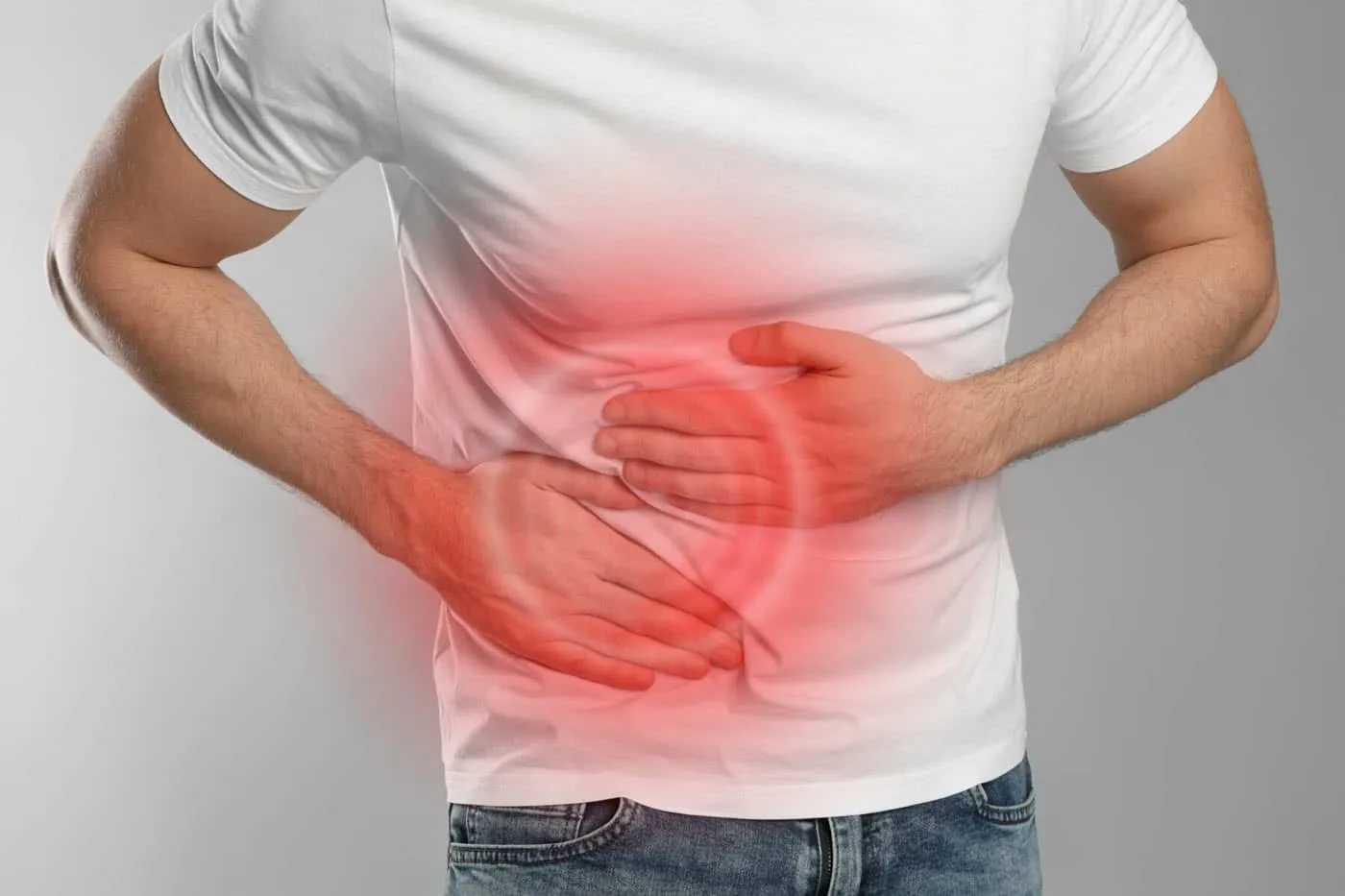
The most common and classic symptom of appendicitis is sharp or persistent pain in the lower right side of the abdomen.
Why it’s dan.gerous:
The pain typically begins near the belly button and gradually shifts to the lower right area as inflammation worsens. The pain may intensify
when moving, coughing, or applying pressure.
Ignoring this pain can lead to a burst appendix, which releases infected material into the abdominal cavity.
What to do:
Seek immediate medical attention. Do not take painkillers or apply heat to the abdomen, as this can worsen inflammation or cause rupture.
2. Loss of Appetite
A sudden loss of appetite - often accompanied by mild nausea - is one of the earliest but most subtle signs of appendicitis.
Why it’s dan.gerous:
Many individuals mistake this for a simple digestive issue. However, when loss of appetite is combined with abdominal pain, it can indicate the
appendix is becoming irritated.
What to do:
If you suddenly do not feel like eating and also notice abdominal discomfort lasting more than a few hours, consult a doctor promptly.

3. Nausea, Vomiting, or Low-Grade Fever
Many patients with appendicitis experience nausea or vomiting shortly after the abdominal pain begins. A mild fever (around 37.5°C to 38°C)
may also appear.
Why it’s dangerous:
These symptoms show that the body is reacting to infection and inflammation. A higher fever or chills can signal that the appendix may be
close to rupturing.
What to do:
Monitor symptoms closely. Worsening fever, persistent vomiting, or severe abdominal pain should be treated as a medical emergency.
4. Abdominal Bloating or Gas That Doesn’t Pass
Severe bloating or an inability to pass gas may indicate that inflammation is obstructing the digestive tract.
Why it’s dan.gerous:
This can signal the appendix is putting pressure on surrounding organs, creating blockages. Left untreated, this condition can escalate into a
serious infection.
What to do:
If bloating occurs together with localized pain and nausea, do not wait for symptoms to “go away on their own.” Visit an emergency room
immediately.
5. Rebound Tenderness
This occurs when you press on the lower right abdomen and feel sharp pain when you quickly release your hand.
Why it’s dangerous:
Rebound tenderness can be a key indicator that the peritoneum (lining of the abdominal cavity) is irritated - often a sign of advanced
appendicitis.
What to do:
Do not keep pressing to “test” the pain. This could worsen inflammation. Seek urgent medical evaluation.
How to Reduce the Risk of Appendicitis
While appendicitis cannot always be prevented - since it can happen suddenly - doctors suggest several lifestyle and dietary habits that may
lower your risk.
1. Eat a High-Fiber Diet
A fiber-rich diet helps prevent blockages in the appendix by keeping the digestive system running smoothly.
Best foods:
-
Whole grains
-
Fruits
-
Vegetables
-
Legumes
-
Nuts and seeds
A lack of fiber may increase the chance of fecal blockages (fecaliths), a common cause of appendicitis.
2. Stay Hydrated
Drinking enough water supports digestion and helps prevent constipation, reducing pressure on the intestinal walls.
Tip:
Aim for at least 1.5–2 liters of water daily, more if you sweat heavily or exercise regularly.
3. Avoid Holding in Bowel Movements
Ignoring the urge to go can lead to hard stools, constipation, and increased pressure on the appendix.
Healthy habit:
Use the restroom when needed and maintain regular bowel movements.
4. Reduce Intake of Processed or Junk Foods
Highly processed foods can contribute to inflammation and digestive blockages.
Limit:
-
Fast food
-
Greasy fried items
-
Foods high in additives
-
Low-fiber snacks
These foods offer little nutritional value and can disrupt healthy gut function.

5. Get Regular Medical Checkups
Routine health checks help detect digestive issues early and prevent complications from unnoticed infections.
Especially if you:
-
Have a family history of appendicitis
-
Frequently experience digestive discomfort
-
Have chronic constipation
When to Seek Immediate Medical Help
Go to an emergency room right away if you notice:
-
Severe pain in the lower right abdomen
-
Fever with vomiting
-
Pain worsening over 6–12 hours
-
A hard, bloated abdomen
-
Rebound tenderness
Appendicitis can progress quickly, and early treatment - usually surgery - is the safest way to prevent complications.
Final Thoughts
Appendicitis is a serious condition that should never be ignored. Recognizing early warning signs and knowing how to reduce risk can save
your life. By paying attention to symptoms such as persistent abdominal pain, nausea, fever, and bloating, you can take quick action before
the condition becomes life-threatening.
Maintaining a healthy diet, staying hydrated, and prioritizing digestive health are key preventive measures. When in doubt, always seek
medical advice promptly - your appendix might be small, but the consequences of inflammation can be severe.