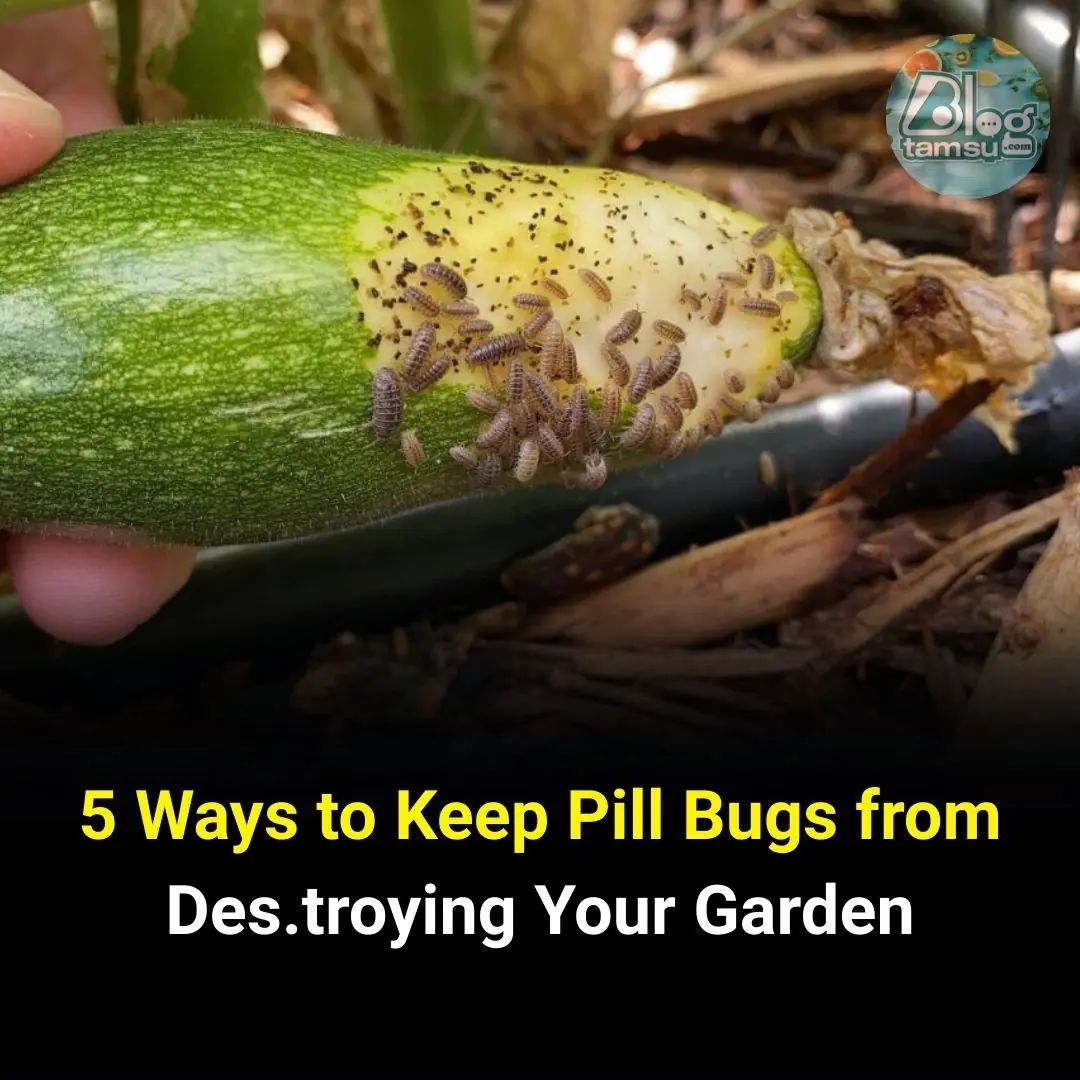
Although rollie pollies (also called pill bugs or potato bugs) usually eat decaying and decomposing plant matter, occasionally, pill bug numbers are high, and they can wreak havoc on a garden (and your favorite strawberries!). If you’re wondering how to get rid of pill bugs, this post shares my favorite natural pill bug control methods.
To my great frustration, rollie pollies have destroyed countless seedlings in my garden. As an organic gardener, I’m unwilling to use pesticides to control pill bug numbers when they get out of balance, so I’ve had to get creative. These are my time-tested and favorite ways to keep pill bugs from killing my seeds and seedlings.

What are pill bugs, and why are they harmful to gardens?
Pill bugs, also known as roly-polies or woodlice, are small, crustacean-like creatures that belong to the Armadillidiidae family. These gray, oval-shaped critters are about ½ inch (1.3 cm) long and are easily recognized by their ability to roll into a tight ball when threatened. Pill bugs thrive in damp environments and often hide under mulch, rocks, or decaying organic matter in gardens.
Get the Thursday Garden Email
Make smarter garden decisions each week.
While pill bugs are important in breaking down organic material, they can become a nuisance in gardens. In large numbers, they may start feeding on tender seedlings, young plants, fruits, or vegetables close to the ground, such as strawberries and squash. This feeding can stunt growth, damage crops, and reduce harvests, especially in gardens with an abundance of decaying plant matter that supports a growing population.
1. Don’t give rollie pollies in the garden what they want

Pill bugs prefer damp and dark hiding places. Try not to make life comfortable for them. To manage pill bugs, focus on reducing excessive moisture, avoiding over-mulching, and removing the food source debris where they might hide. Encouraging natural predators like birds can also help keep their population in check.
Remove wet leaves, fallen fruit, and dead organic matter from your garden. Try not to overwater your garden, as rollie pollies are also attracted to moisture. These steps can be helpful, but if you still have problems, keep reading for more ways to keep pill bugs from destroying your garden.

2. Set traps

If an area of your garden has an overabundance of pill bugs, setting traps is an effective way to bring the numbers back in balance. Check traps daily, and remove and either discard or transplant the pill bugs to other areas of your yard.
Citrus or fruit traps as a natural pill bug control method

Cut the fruit in half and place it face down in the affected area. The pill bugs will be drawn to the fruit. Check traps in the morning, and dig down a bit to collect the rollie pollies. Fruit can often be used for 2-3 days in a row.
Beer or yeast traps as a natural pill bug control method

Set a shallow container (such as a pie plate) with the rim flush to the ground; fill with beer or 1-2 Tb yeast dissolved in water. The rollie pollies will be drawn to the beer or yeast, fall in, and drown. Yeast and beer traps are very effective.
3. Use collars

Sick of losing my vegetable garden seedlings to rollie pollie damage, I wrapped the stems in duct tape (sticky side out) and it worked! The seedlings are thriving with no pest damage to the stems. This organic gardener technique is quick, simple, and effective. I’ve also used newspaper and toilet paper rolls as collars effectively.

Duct tape collar as a natural pill bug control method

Wrap a small piece of duct tape (sticky side out) around the stem of a seedling. Bury one-half of the taped stem in the ground, leaving some of the tape above ground as well. Remove the tape when the stem grows larger to keep the tape from suffocating the stem.
Newspaper collar as a natural pill bug control method
Tear a couple-inch strip of newspaper and carefully wrap it around the seedling stem, burying some if possible. As the seedling grows, the paper will fall off — no need to remove it.

Slide the tube over the seedling and into the soil. It’s best to have the collar buried an inch or two below the soil.
I’ve had mixed success with this type of collar. Sometimes it works. Other times the pill bugs get inside the collar.
4. Overplant to overwhelm rollie pollies in the garden
Certain crops are best started in the garden from seed, which makes using collar methods ineffective – the seedlings are often eaten before there is anything above ground to protect. When this happens, I usually try overplanting.
For example, instead of planting 1-2 seeds, I plant 3-4 seeds. In my experience, at least one of the seeds is overlooked or somehow protected by the other seedlings and not eaten by the rollie pollies — success!
If more than one seedling survives, thin additional seedlings by cutting at the soil level rather than pulling. (Pulling may disturb the roots of remaining seedlings.)
5. Use Slug & Snail Bait, Diatomaceous earth (DE), or Nematodes
Using slug & snail bait to combat pill bug overpopulation:
Garden Safe Slug & Snail Bait is OMRI (Organic Materials Review Institute) Listed. This bait is very effective in areas where rollie pollies are an issue. Use according to package directions. After planting beans twice, none came up. After replanting the third time, I sprinkled a small amount of this and had beans emerge within days, undamaged. It’s iron phosphate with an attractant for slugs. They eat the iron phosphate, which slows them down so much they die. It’s non toxic to worms and may help plants flower.
Using diatomaceous earth (DE) to combat pill bug overpopulation:
Diatomaceous earth (DE) can be an effective means of controlling pill bug populations around your plants. DE is safe to handle (for animals and pets, too) but not to inhale – wear a mask while using.
DE, or diatomaceous earth, works to kill pill bugs by dehydrating them. Diatomaceous earth is made up of tiny fossilized aquatic organisms called diatoms. When pill bugs come into contact with DE, the sharp edges of the diatoms cut through the bug’s exoskeleton and absorb the moisture, causing the bug to dehydrate and die.
DE is commonly used in organic pest control because it is non-toxic to humans, pets, and the environment. However, to ensure effective and safe usage, it is important to follow the instructions on the product label when using DE.

To use DE for pill bug control, apply a thin layer around their frequented areas, wear gloves and a mask, avoid windy conditions, and re-apply after rain. Apply in the late afternoon when the bugs are active and follow the product label for safe and effective results.
Using nematodes to combat pill bug overpopulation:
Nematodes are microscopic organisms that are often used as a natural method of controlling pests in gardens.
Specifically, the Steinernema carpocapsae nematode is effective at targeting and killing pill bugs. These nematodes are applied to the soil in the garden and penetrate the skin of the pill bug. Once inside, they release a bacteria that quickly kills the pill bug.

Using nematodes for pest control is considered a safe and environmentally friendly option as they only attack specific pests and do not harm beneficial insects or soil quality. However, it’s important to follow the application instructions carefully to ensure the nematodes are introduced properly.
Additionally, nematodes may not be as effective if the soil is too dry or too hot, so it’s important to monitor the environmental conditions in your garden to determine the best time to use this method.
Natural Control Methods for Pill Bugs
I’ve found that combining these methods is the best way to bring pill bug numbers back into balance. Effective methods for combating pill bug damage in a home garden include reducing favorable environmental conditions, creating physical barriers, using predators, manually removing the bugs, and using natural repellents.