8 Warning Signs of Stroke That May Appear Before a Major Event — and 9 Ways to Lower Your Risk
A stroke can happen in the middle of an ordinary day, without giving someone enough time to understand what is happening. A person may be preparing breakfast, talking with family, walking through the house, or getting ready for bed when something suddenly changes. Their arm may become weak, their speech may sound strange, or their vision may suddenly become blurred. Within minutes, a familiar routine can turn into a life-threatening emergency.
But what if the body has already experienced a warning episode before a major stroke occurs?
This is a question that deserves serious attention, particularly among older adults and people living with high blood pressure, diabetes, high cholesterol, or heart disease. Some individuals experience temporary neurological symptoms that disappear before they receive medical attention. Because they feel normal again, they may assume the problem was caused by exhaustion, stress, poor sleep, or an ordinary circulation issue.
In some cases, however, these temporary symptoms are associated with a transient ischemic attack, commonly known as a TIA or mini-stroke. Although the symptoms may last only a few minutes, a TIA can signal an increased risk of a more serious stroke.
The most frightening aspect is that the disappearance of symptoms does not necessarily mean the danger has passed.
There is an important medical distinction to understand from the beginning: doctors have not established that a particular group of eight symptoms reliably appears exactly one month before a stroke. Some people experience a TIA before a major stroke, while others experience no warning episode whatsoever. The symptoms discussed in this article are recognized warning signs of stroke or TIA, not a countdown that can predict when a stroke will happen.
Understanding these signs, knowing what to do when they appear, and managing everyday health risks can make a meaningful difference.
The following sections explain what happens inside the brain during a stroke, eight symptoms that should never be dismissed, and nine practical ways to protect cardiovascular health.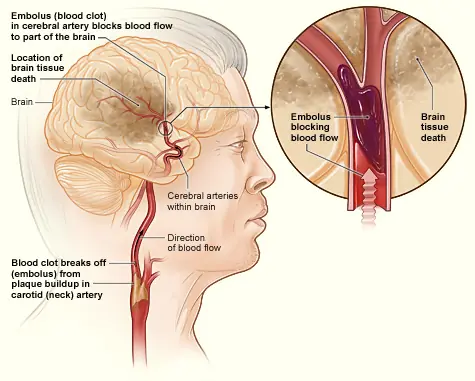
Understanding What Happens Inside the Brain During a Stroke
The human brain depends on a continuous supply of oxygen and nutrients delivered through a network of blood vessels. Even a brief interruption in this circulation can interfere with the way brain cells function.
A stroke occurs when blood flow to part of the brain is interrupted or when a blood vessel inside the brain ruptures and causes bleeding.
There are two major types of stroke, and understanding the difference is essential because their treatments are not the same.
Ischemic Stroke: When a Blood Clot Blocks Circulation
An ischemic stroke occurs when a blood vessel supplying the brain becomes blocked.
The blockage is commonly caused by a blood clot or a buildup of fatty deposits inside an artery. When blood cannot reach the affected area, brain cells are deprived of oxygen.
The longer the interruption continues, the greater the possibility of permanent damage.
Some people develop an ischemic stroke because a clot forms directly inside an artery supplying the brain. In other cases, a clot develops elsewhere, such as in the heart, and travels through the bloodstream until it becomes lodged in a smaller brain artery.
A condition called atrial fibrillation can increase the risk of this second mechanism.
This is one reason why people with irregular heart rhythms should receive appropriate medical evaluation.
Hemorrhagic Stroke: When a Blood Vessel Ruptures
A hemorrhagic stroke occurs when a blood vessel breaks and blood leaks into or around brain tissue.
The bleeding can damage brain cells directly and increase pressure inside the skull.
High blood pressure is an important risk factor because it can damage blood vessel walls over time.
Depending on the location and severity of the bleeding, a person may experience a sudden severe headache, vomiting, confusion, loss of consciousness, or other neurological symptoms.
Both ischemic and hemorrhagic strokes require emergency medical care.
A person cannot determine which type of stroke is occurring simply by looking at their symptoms. Medical professionals need to perform an examination and appropriate brain imaging.
The Connection Between a Mini-Stroke and a Major Stroke
A transient ischemic attack occurs when blood flow to part of the brain is temporarily interrupted.
Its symptoms can resemble those of a regular ischemic stroke, including sudden weakness, numbness, difficulty speaking, and visual disturbances.
The symptoms usually disappear within minutes, although they can last longer.
A TIA is sometimes called a mini-stroke, but the name can be misleading. It should never be considered a harmless event.
The American Stroke Association describes a TIA as a warning stroke because it can signal an increased risk of a subsequent stroke.
A person who experiences a suspected TIA needs urgent medical assessment, even if they feel completely normal afterward.
8 Warning Signs of Stroke That Should Never Be Ignored
Stroke symptoms usually begin suddenly. They do not necessarily develop gradually over several weeks, and not everyone experiences the same combination of symptoms.
Some warning signs are easy to recognize, while others can be mistaken for ordinary health problems.
The following eight symptoms are particularly important to understand.
1. Sudden Weakness or Numbness on One Side of the Body
Sudden weakness or numbness affecting one side of the body is one of the most recognizable symptoms of stroke.
A person may suddenly feel that one arm has become unusually heavy. They may struggle to hold a glass, lift a shopping bag, button a shirt, or perform a familiar activity.
In other cases, the weakness affects one leg, making walking difficult.
Some people describe the sensation as tingling, loss of feeling, or an inability to control their muscles normally.
The most concerning pattern is sudden weakness or numbness affecting the face, arm, or leg, particularly on one side.
This can happen because the brain controls movement and sensation through complex neurological pathways. When an area responsible for these functions loses its blood supply, the corresponding part of the body may stop responding normally.
For example, someone may suddenly discover that their left hand is not gripping objects properly. Another person may notice that one leg feels unusually weak while walking.
The symptoms may be temporary if the person experiences a TIA.
However, even if normal movement returns, the episode requires emergency assessment.
It is important not to assume that sudden one-sided weakness is simply caused by sleeping in an uncomfortable position or sitting too long.
If it develops abruptly, particularly alongside other neurological symptoms, seek emergency medical assistance.
2. Facial Drooping or an Uneven Smile
A sudden change in facial movement can be another important warning sign.
One side of the face may appear lower than the other. The mouth may droop, or the person may struggle to smile evenly.
Family members sometimes notice this change before the affected individual realizes anything is wrong.
A simple way to identify possible facial weakness is to ask the person to smile.
If one side of the mouth does not move normally, this may indicate a neurological problem.
Facial weakness can occur when a stroke affects the brain pathways responsible for controlling facial muscles.
It may appear together with weakness in an arm or leg, but not every person experiences all these symptoms simultaneously.
The sudden nature of the change is particularly important.
Some facial conditions, including Bell's palsy, can also cause facial weakness. Therefore, a person needs medical assessment to determine the actual cause.
Do not wait to see whether the face returns to normal.
Sudden facial drooping should be treated as a possible stroke until medical professionals establish otherwise.
3. Difficulty Speaking or Understanding Conversations
A person experiencing a stroke may suddenly have difficulty communicating.
They may know exactly what they want to say but struggle to find the correct words.
Their speech may sound slurred, unclear, or unusually slow.
Some people may produce sentences that do not make sense. Others may be unable to understand simple instructions despite appearing awake.
These changes can occur when a stroke affects areas of the brain responsible for language processing.
For example, someone who normally speaks fluently may suddenly struggle to explain what happened during an ordinary conversation.
They may repeat the same words, use incorrect expressions, or be unable to name familiar objects.