9 Silent Signs of a Brain Blood Clot That May Appear Weeks Before a Stroke
A stroke often strikes suddenly, but doctors warn that brain blood clots frequently send subtle warning signals weeks in advance. These early signs are easy to overlook or mistake for everyday fatigue or minor health issues. Recognizing them early can be life-saving.
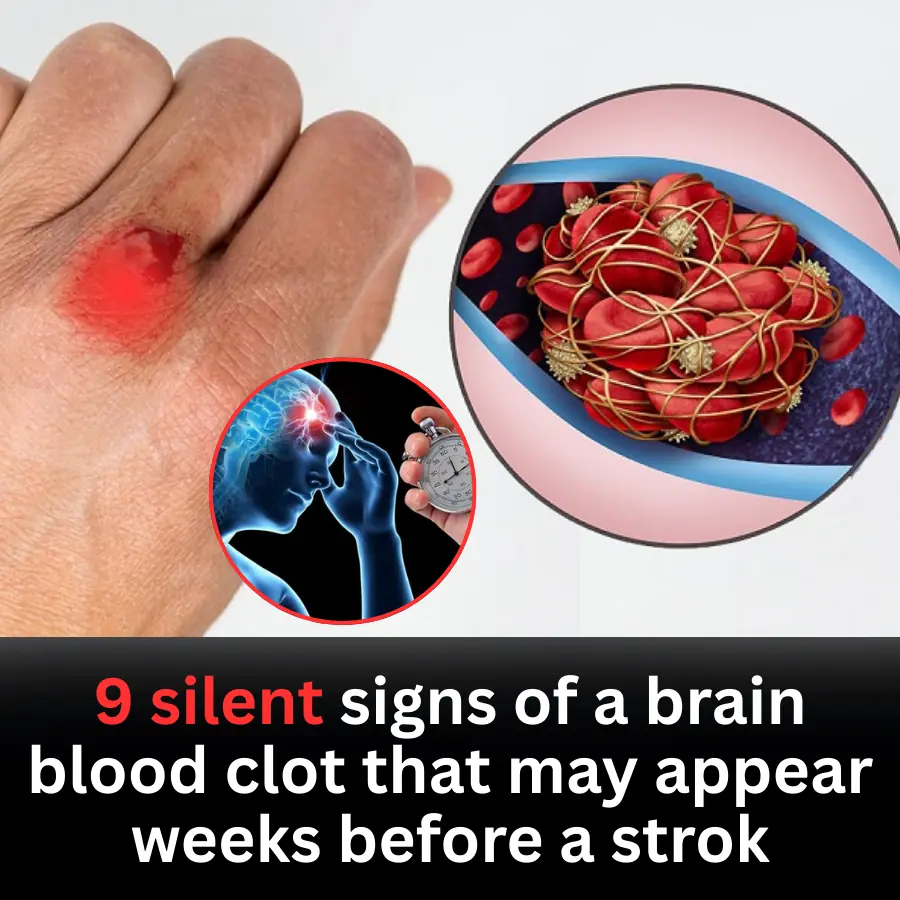
What Is a Brain Blood Clot?
A brain blood clot occurs when a vessel supplying blood to the brain becomes blocked, reducing oxygen flow. If untreated, it can lead to an ischemic stroke, brain damage, or death.
9 Silent Warning Signs You Should Never Ignore
1. Frequent, unexplained headaches
Persistent or unusual headaches that feel different from normal tension headaches may indicate reduced blood flow.
2. Sudden dizziness or loss of balance
Feeling unsteady while walking or standing, even briefly, can be an early neurological warning.
3. Temporary blurred or double vision
Short episodes of vision disturbance may signal impaired circulation in the brain.
4. Numbness or tingling on one side of the body
Especially in the face, arm, or leg — even if it disappears quickly.
5. Brief episodes of confusion or memory lapses
Trouble concentrating, forgetting simple things, or feeling mentally “foggy.”
6. Slurred or slowed speech
Difficulty forming words or speaking clearly, even for a short time.
7. Unusual fatigue with no clear cause
Extreme tiredness that doesn’t improve with rest can be a hidden red flag.
8. Sudden mood or personality changes
Irritability, anxiety, or emotional instability may reflect brain circulation problems.
9. Shortness of breath or chest discomfort
These symptoms can accompany clot formation elsewhere that may travel to the brain.
Why These Signs Are Often Missed
Many of these symptoms are temporary and resolve on their own, leading people to delay medical care. However, doctors stress that these episodes may be transient ischemic attacks (TIAs) — often called “mini-strokes” — which strongly predict a major stroke.

Who Is at Higher Risk?
-
People over 40
-
Those with high blood pressure, diabetes, or high cholesterol
-
Smokers
-
Individuals with sedentary lifestyles or chronic stress
-
People with a family history of stroke or blood clots
What To Do If You Notice These Signs
If you experience even one of these symptoms repeatedly or suddenly, seek medical attention immediately. Early diagnosis allows doctors to use blood thinners, lifestyle interventions, and monitoring to prevent a catastrophic stroke.
Conclusion
A stroke is not always sudden. In many cases, the body whispers before it screams. Learning to recognize these 9 silent signs of a brain blood clot could save your life — or the life of someone you love.