A 41-Year-Old Woman Discovers Sto.mach Can.cer from Digestive Symptoms Many People Often Overlook
Thinking it was just bloating and indigestion caused by irregular eating habits, a 41-year-old woman never imagined these were actually early signs of stomach cancer.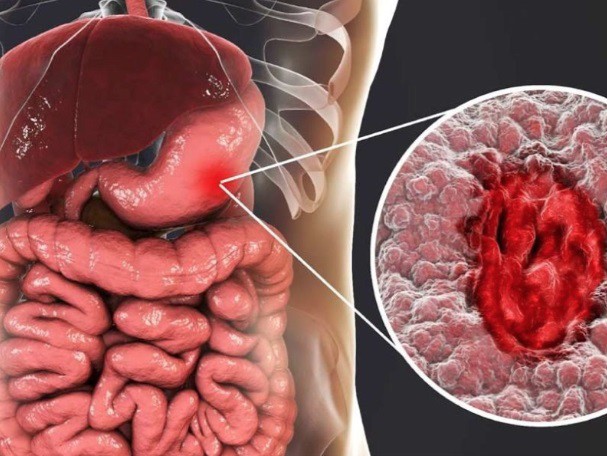
Stomach Cancer — A Disease Easily Mistaken for Digestive Disorders
Ms. Chinh, 41, from Lam Dong Province, experienced three months of low-grade fever in the afternoons along with symptoms such as bloating and acid reflux. At first, her family believed it was a digestive disorder. However, when her condition worsened and she developed black stools, she went to Tam Anh General Hospital in Ho Chi Minh City for examination to rule out cancer.
Using magnifying endoscopy with 150× zoom and electronic chromoendoscopy, doctors detected a large invasive lesion at the lesser curvature–antrum region of the stomach, with abnormal surface structure and several central ulcerated areas. Biopsy results confirmed stage 2 gastric cancer (tumor invading the submucosa and muscularis mucosae), with suspected lymph node metastasis.
Stomach Cancer — Cancer Cells Can Spread Widely Without Early Treatment
Master’s-level physician Dr. Ngo Hoang Kien Tam from the Center for Gastrointestinal Endoscopy and Laparoscopic Surgery identified the cancer cells as poorly differentiated and highly malignant. The disease was progressing rapidly, with invasion and spread to lymph nodes and other organs. Therefore, early treatment was crucial. If delayed, cancer cells could spread extensively, making surgery no longer possible, while large tumors could cause complications such as intestinal obstruction and rapid weight loss due to inability to eat.
“When a tumor grows, it can erode blood vessels in the stomach wall, causing slow or massive bleeding, leading to vomiting fresh blood or passing black stools,” Dr. Tam explained. He added that tumors may also penetrate the stomach wall, causing gastric perforation, leakage of digestive fluids and food into the abdominal cavity, peritonitis, and severe abdominal pain—requiring immediate emergency surgery.
Radical Treatment to Prevent Recurrence of Stomach Cancer
Ms. Chinh was indicated for laparoscopic partial gastrectomy combined with lymph node dissection to remove all cancer cells, preventing local recurrence and distant metastasis. During surgery, doctors found a tumor in the antrum along the lesser curvature that had not invaded the serosa. The entire tumor was removed using an ultrasonic scalpel, and up to 38 lymph nodes were dissected.
After surgery, Ms. Chinh recovered quickly—she was able to walk and eat after one day—and was discharged six days post-operation. Pathology results showed stage 2A gastric carcinoma with metastasis in three lymph nodes. She then continued treatment with the oncology department, undergoing chemotherapy to eliminate remaining cancer cells.
“Stage 2A cancer is considered an early stage, with a high likelihood of effective treatment if the patient has good overall health and responds well to surgery and adjuvant therapies such as chemotherapy or radiotherapy,” Dr. Tam noted.
Although stomach cancer has a high mortality rate, early detection allows for simpler, less invasive treatment with high effectiveness—and in some cases, complete cure.
Early-stage gastric cancer can be treated using methods such as endoscopic tumor resection via the gastrointestinal tract, including endoscopic mucosal resection (EMR), endoscopic submucosal dissection (ESD), submucosal or serosal tunneling endoscopic resection (STER/ESSD), laparoscopic surgery, or a combination of laparoscopy and endoscopy.
How to Prevent the Causes of Stomach Cancer
Some causes of stomach cancer include Helicobacter pylori infection, unbalanced diets high in salt, processed meats, smoked foods, and low in fruits and vegetables, as well as smoking and alcohol consumption. High-risk groups include those with genetic predisposition, a family history of gastric cancer, or a history of chronic atrophic gastritis. In early stages, symptoms are often vague—such as bloating, belching, or acid reflux—making them easy to confuse with other digestive disorders.
Dr. Tam recommends that, in addition to maintaining a healthy lifestyle, people should undergo regular health checkups. Anyone experiencing abnormal symptoms such as abdominal pain, indigestion, afternoon fever, or black stools should seek medical attention immediately.