My mother's house had always felt different after my father died.
The rooms were familiar, but the silence had changed. His tools remained organized in the garage. His favorite chair stood beside the living-room window. In the backyard, the garden beds waited through each season, and the tomato stakes he had built still leaned slightly to one side.
Mom kept everything because she believed that memories deserved a place to live.
After she died, I assumed the house would eventually be sold or divided among the family. I never imagined that she would leave it entirely to Ethan.
But the more I thought about her final decision, the more I understood it.
She had not given him the house because he was poor.
She had given it to him because she had come to know him, because she trusted him, and because she wanted him to have something she feared he might otherwise never experience.
A place where he belonged.
Ethan did not move in immediately.
He needed time to think about the inheritance, the documents, and everything he had learned. The house represented a future he had never expected, but it also contained memories of people whose lives had become painfully complicated.
My father had supported him from a distance.
My mother had loved him without revealing the truth at first.
Glenn had known he existed and stayed away.
Ethan had every reason to feel overwhelmed.
So we let him make his own decision.
A few weeks later, he called me.
"I think I'm ready to see the house again," he said.
I met him at the front door.
He carried the same green backpack, although it had been cleaned and repaired. The wooden box was tucked carefully beneath one arm.
For a moment, he stood on the porch without reaching for the handle.
"She used to open the door before I knocked," he said.
I smiled sadly.
"She always knew when it was Thursday."
He looked through the window toward the living room.
"Do you think she really wanted me to stay?"
I thought about the note she had left, the letter in the box, and the way she had spoken about him during those final months.
"Yes," I said. "I think she wanted you to have a home. Not because you owed her anything. Because she loved you."
Ethan looked down.
Then he stepped inside.
The first few weeks were quiet.
He cleaned the rooms, sorted through the papers, and repaired small things that had been neglected. He found my father's old gardening gloves in the garage and placed them on a shelf rather than throwing them away.
He opened the windows in the mornings.
He made coffee in the kitchen.
He learned which floorboards creaked and which cabinet door needed a gentle push before it would close.
Gradually, the house began to feel lived in again.
One afternoon, I found him in the backyard, examining the garden beds.
He had discovered a packet of tomato seeds in an old drawer, along with a handwritten note from my father describing when to plant them.
"I thought I'd try these," Ethan said.
I watched him loosen the soil with a small garden fork.
My father had loved tomatoes. He grew several varieties every summer and insisted that the best ones were always the ones eaten straight from the vine.
Ethan planted the seeds carefully, following the instructions on the packet.
It was a small act, but it seemed to connect three generations in a way none of us had expected.
My father had left behind the seeds.
My mother had left behind the house.
And Ethan, the grandson they had both cared about in different ways, was bringing the garden back to life.
Glenn began visiting too.
At first, Ethan allowed him to stay only a short time. Their conversations were awkward, filled with pauses and questions neither knew how to answer.
Glenn wanted to know about Ethan's life, but he had to learn how to ask without making the conversation about his own regret.
Ethan wanted answers, but he did not always want to hear them.
Some days, they talked about ordinary things.
The weather. Work. The garden. A broken shelf that needed repairing.
Other days, the past returned with painful force.
Ethan asked why Glenn had not contacted Tammy after promising to help. Glenn admitted that he had allowed fear and pride to make his decisions for him. He acknowledged that he had chosen the comfort of avoiding responsibility over the uncertainty of becoming a father.
He did not ask Ethan to excuse those choices.
He began trying to change the choices he made now.
He helped Ethan find more stable work. He offered practical assistance without attaching conditions to it. When Ethan declined an invitation, Glenn accepted the answer rather than turning it into another argument.
He learned to arrive when he said he would.
He learned that promises mattered only when they were kept.
Most importantly, he stopped treating forgiveness as something he was owed.
Months passed.
The tomato plants grew taller, their green leaves spreading across the garden beds. Ethan built supports for the vines, using a few of my father's old tools. Glenn sometimes joined him, and although they still had difficult conversations, they began to share stretches of silence that no longer felt entirely hostile.
One evening, I found them sitting on the back steps.
Ethan was holding a bowl of freshly picked tomatoes.
Glenn was listening as his son described a job he hoped to pursue.
Neither man noticed me standing by the kitchen door.
For a moment, they looked like a father and son who had known each other for years.
Then Ethan said something that reminded me how far they still had to go.
"I don't know if I'll ever be able to forget what happened."
Glenn nodded.
"You shouldn't have to forget it."
Ethan looked at him.
"But I don't want to spend the rest of my life being angry either."
Glenn's eyes filled with tears, though he quickly looked away.
"I understand."
"I don't know if I can call you Dad yet," Ethan continued.
"You don't have to."
The answer came without hesitation.
Ethan studied him for a moment, as though searching for the familiar signs of disappointment or pressure.
Then he returned his attention to the tomatoes.
It was not a dramatic reconciliation.
There was no sudden embrace, no declaration that everything had been forgiven, no promise that the years of separation no longer mattered.
There was only a small conversation between two people beginning to understand that rebuilding a relationship required more than regret.
It required time.
And perhaps that was the kind of beginning my mother had hoped for.
Today, the wooden box rests on the living-room mantel.
It is no longer locked.
The photographs remain inside, along with Tammy's letters and the documents that revealed the truth. Ethan keeps my mother's letter beside them, protected in a simple frame.
Sometimes visitors ask about the box.
Ethan tells them the story, though he does not always share every detail.
He explains that it held a secret that changed his life. He tells them about the grandfather who helped him from a distance, the grandmother who found him when he least expected it, and the father who had to learn that love without responsibility can leave wounds that last for decades.
Then he tells them about the pharmacy parking lot.
About the groceries scattered across the pavement.
About the stranger who stopped to help an elderly woman when everyone else kept walking.
That is where the story truly began.
Not with the inheritance.
Not with the secret.
Not even with the wooden box.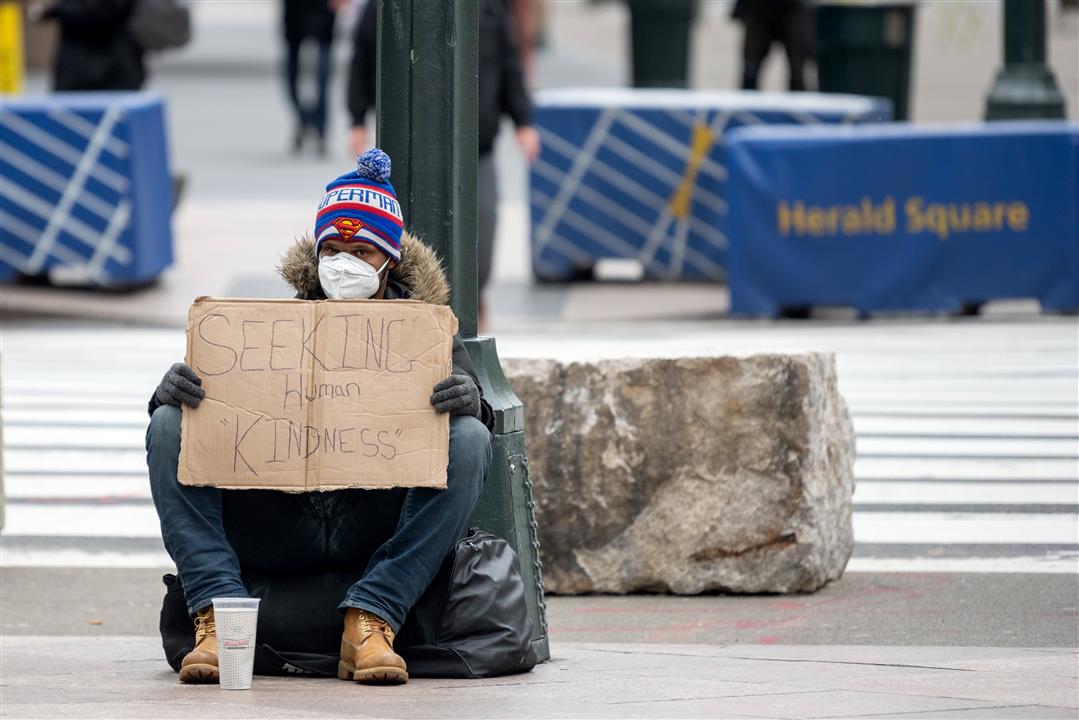
It began with a simple act of kindness that asked for nothing in return.
My mother once told me that people reveal who they are most clearly when they believe no one important is watching.
Ethan had proved that truth long before he learned he was part of our family.
He helped Mom because she needed help.
He visited because she was lonely.
He brought yellow roses because he remembered a story about the man she had loved.
He never knew that those small gestures would eventually lead him home.
And Glenn, who had spent years believing that silence could protect him from his mistakes, had to learn a different lesson.
The truth does not disappear when we refuse to face it.
It waits.
Sometimes it waits inside a wooden box. Sometimes it waits in a letter, a photograph, or a question a child has carried for twenty-six years.
And sometimes, when the truth finally emerges, the only way forward is to stop running from it.
My mother could not give Ethan back the childhood he had lost. She could not restore the years Glenn had spent absent from his son's life.
But she could offer him a place to begin again.
She could give him the house, the garden, and the memories of a family that had once known his name before he did.
And she could leave behind a lesson that none of us would forget.
Kindness does not erase every wound. Love does not guarantee that people will make the right choices. Forgiveness cannot be demanded, and trust cannot be rebuilt in a single afternoon.
But a small act of compassion can open a door that has been closed for years.
A visit can become a friendship.
A friendship can reveal a family.
And a family, even one damaged by decades of silence, can sometimes find a way to begin again.
The wooden box remains on the mantel, its brass lock turned open.
Whenever I see it, I remember the moment Glenn flinched in the lawyer's office. I remember Ethan's trembling hands, my mother's letter, and the photographs that forced us all to confront the truth.
But I also remember the garden.
The tomato plants reaching toward the summer sun.
The sound of Glenn arriving on a Thursday afternoon and asking whether Ethan needed help with anything.
The quiet way Ethan sometimes left the porch light on when he knew his father was coming.
None of those moments could undo the past.
They could only build something different from it.
And perhaps that was enough.
Because in the end, the greatest inheritance my mother left behind was not the house or the things inside it.
It was the opportunity to become a family again—not by pretending the past had never happened, but by finally telling the truth and choosing what to do next.
Ethan had arrived in our lives carrying a worn green backpack and more questions than answers.
He had been a stranger in the parking lot, a companion to a lonely widow, and a young man who had spent years wondering why his father had never come looking for him.
Now he had a home.
He had the truth.
And, slowly, he was discovering that he might have a father willing to learn how to stay.
Sometimes, family is not found through blood alone. Sometimes it is found through kindness, protected by truth, and rebuilt one small act of courage at a time.
And sometimes, all it takes to bring a lost family home is one person who refuses to walk past someone in need.