A quiet afternoon in Manhattan turned into a scene of tragedy when a vehicle reportedly lost control and struck pedestrians, leaving two people dead and three others seriously injured. In the account shown in the supplied image, emergency responders rushed to the scene, a 61-year-old driver was arrested, and investigators began searching for answers to a devastating question: What caused the vehicle to leave its path and hit people who were simply going about their day?
The incident is described as a serious traffic accident in New York City, but the screenshot does not provide an exact street address, police case number, or named source for the reported details. The date also needs careful checking: November 26, 2026, falls on a Thursday, not a Friday. Therefore, the article below treats the incident details as preliminary claims from the supplied material rather than independently confirmed facts.
The story is about more than the moment of impact. It is also about the victims, the people who witnessed the crash, the difficult work of emergency crews, and the investigation that must establish what happened before anyone can draw conclusions.
Important clarification before the article
The screenshot appears to describe a real Manhattan crash, but its date and some details do not match the news reports I found.
The matching incident occurred on Friday, May 15, 2026, around 6 p.m., near Amsterdam Avenue and West 109th Street on Manhattan's Upper West Side. Reports say a 61-year-old driver was taken into custody after a vehicle struck pedestrians and other vehicles. Two men died, and several people were injured.
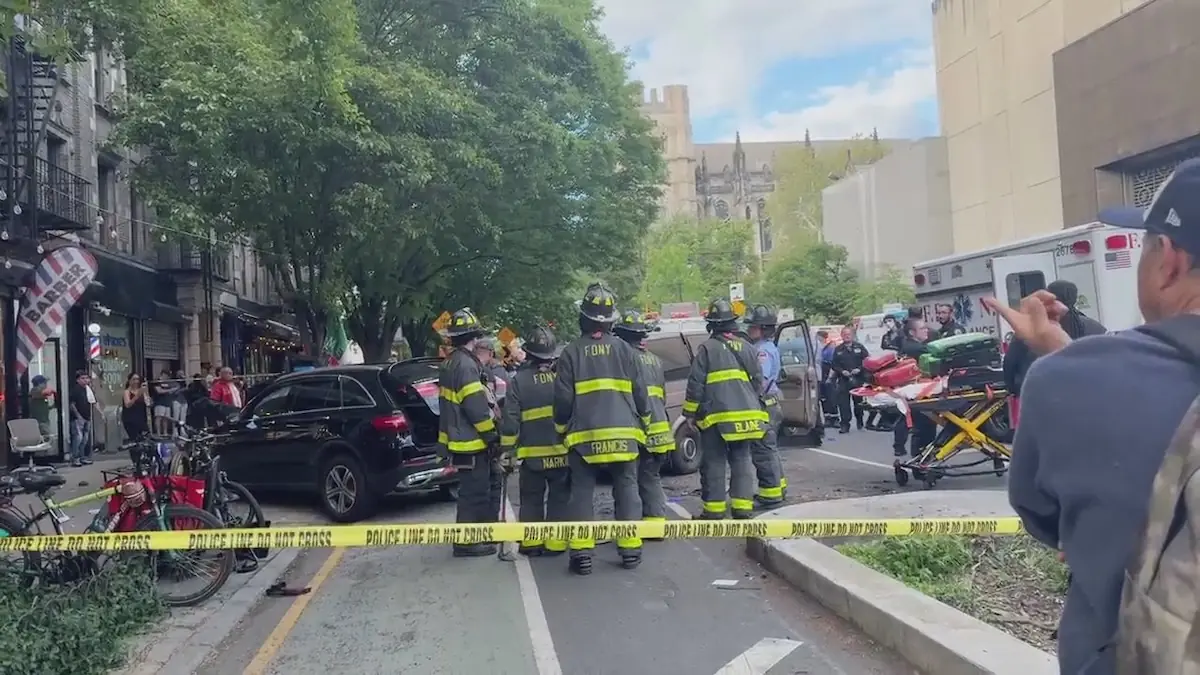
The screenshot's date of November 26, 2026, is not supported by those reports, and that date was a Thursday. I will therefore write the article around the verified May 15 incident, not present it as a new accident that happened minutes ago. The exact cause and any legal conclusions should be described according to the investigation and charges reported at the time.
The Crash That Shattered a Neighborhood's Ordinary Evening
On the Upper West Side of Manhattan, Amsterdam Avenue is more than a route for cars. It is part of a neighborhood where people walk to shops, meet friends, sit outside local businesses, and recognize familiar faces from one day to the next.
That everyday familiarity was at the heart of the tragedy on May 15.
According to prosecutors' later account, the driver was traveling north on Amsterdam Avenue before striking a parked vehicle, continuing through the area of West 109th Street, crossing a median near the bike lane, and hitting pedestrians and an occupied vehicle. The collision caused a chain of impacts involving other parked cars.
Two of the pedestrians, Jason Negron, 46, and Michael Saint-Hilaire, 35, died. Three other men were injured. The victims were not strangers passing through an anonymous place; they were people connected to the surrounding community.
The suddenness of the crash made the scene especially difficult for witnesses. People who had been standing nearby found themselves facing an emergency that demanded immediate action. Some called for help. Others tried to assist those who were hurt while waiting for professional responders.
The aftermath would continue long after the damaged vehicles were removed. Families had to confront the loss of loved ones, injured survivors faced recovery, and neighbors were left with memories of a frightening event that had taken place on a familiar street.
The tragedy also raised questions that reach beyond one intersection: how can a vehicle travel from the roadway onto a sidewalk, what responsibilities do drivers have when they get behind the wheel, and what can cities do to protect people who are walking?
Those questions are important because the sidewalk is supposed to be a place where people can move with a reasonable expectation of safety.
A Timeline of the May 15 Collision
The crash happened at approximately 6 p.m., when the street was still active with people returning from work, visiting neighborhood businesses, and spending time outdoors.
Police and prosecutors later described a sequence that began before the vehicle reached the group of pedestrians.
According to the indictment account, the Mercedes-Benz SUV was traveling north on Amsterdam Avenue. Between West 107th and West 108th Streets, it allegedly struck an unoccupied parked vehicle.
Instead of stopping, the vehicle continued north.
The SUV then approached West 109th Street, where prosecutors said it crossed the median separating the roadway from the bike lane and struck pedestrians standing nearby. It also hit an occupied parked vehicle, pushing that vehicle into others and creating a chain-reaction collision.
The sequence is important because it shows that the crash was not described simply as a vehicle striking a single person at one point. The impact involved pedestrians, parked vehicles, and a person inside a vehicle who was not walking along the street.
The collision left several people injured and two families facing an irreversible loss.
The moments after impact
Witnesses described a frightening scene.
One witness told CBS New York that the vehicle appeared to be swerving and moving quickly before it crossed the median. The witness described seeing the car rise and come down near the pedestrians.
Other reports described people attempting to help a victim who had become trapped beneath the vehicle.
The first moments after a serious collision can be confusing. People may not immediately understand how many individuals have been struck, which vehicles are involved, or whether another danger remains.
Yet those moments can also reveal extraordinary courage.
A person who stops to call emergency services, a neighbor who directs others away from danger, or a witness who assists an injured stranger can make a meaningful difference during a crisis.
In this case, witnesses and bystanders were reported to have assisted before and during the arrival of emergency responders.
The actions of those nearby did not erase the tragedy, but they showed how people can respond when an ordinary street suddenly becomes an emergency scene.
The Victims Were More Than Names in a News Report
The two men who died were Jason Negron, 46, and Michael Saint-Hilaire, 35.
Their names appeared in news reports after authorities identified them, but their lives cannot be understood through the brief details of a collision report.
A fatal crash is often described through numbers: two dead, three injured, several vehicles damaged, one driver arrested.
Numbers are necessary for understanding the scale of an event. But they can also hide the individual lives behind the statistics.
Jason and Michael were members of a neighborhood. They had family, friends, responsibilities, plans, and people who expected to see them again.
The loss of a person affects far more than the immediate family. It can change the routines of friends, coworkers, neighbors, and people who may have known the victim through years of ordinary interactions.
The Upper West Side community's reaction reflected that connection.