In fact, the real details of this crash are already serious enough without changing the date or exaggerating what happened.
The lives lost, the injuries suffered, and the community's grief provide more than enough reason to tell the story carefully.
What Drivers Can Learn From the Incident
The crash offers several practical reminders for anyone who drives in a busy city.
First, never drive after drinking alcohol or using a substance that may impair your ability to operate a vehicle.
Second, maintain a safe speed and leave enough distance to respond to changing traffic conditions.
Third, remain alert to pedestrians and cyclists, especially near intersections, crosswalks, and areas where people gather outside businesses.
Fourth, if a vehicle strikes something, stop safely and assess the situation rather than continuing without understanding what happened.
Finally, if a driver experiences a medical emergency or believes they may be unable to continue safely, they should seek help and avoid driving until they have been medically assessed.
These steps may sound simple, but they are fundamental to preventing serious collisions.
Driving is not only a personal activity. It is a responsibility shared with everyone who uses the street.
A driver controls a vehicle that can cause severe harm if it is operated carelessly or while impaired.
That responsibility should be taken seriously every time someone gets behind the wheel.
What Pedestrians Can Do to Reduce Risk
Pedestrians cannot control the behavior of every driver, but there are practical ways to reduce exposure to danger.
When possible, use marked crossings and follow traffic signals.
Before crossing, look in both directions and pay attention to turning vehicles.
Avoid stepping into the road while looking only at a phone.
When waiting near traffic, stand back from the curb if space allows.
If a vehicle appears to be moving unpredictably, move away from its path rather than assuming the driver will stop.
These precautions cannot eliminate risk, and pedestrians should never be blamed for a driver's dangerous behavior.
The responsibility to operate a vehicle safely remains with the driver.
However, awareness can sometimes help people recognize danger early enough to move to a safer location.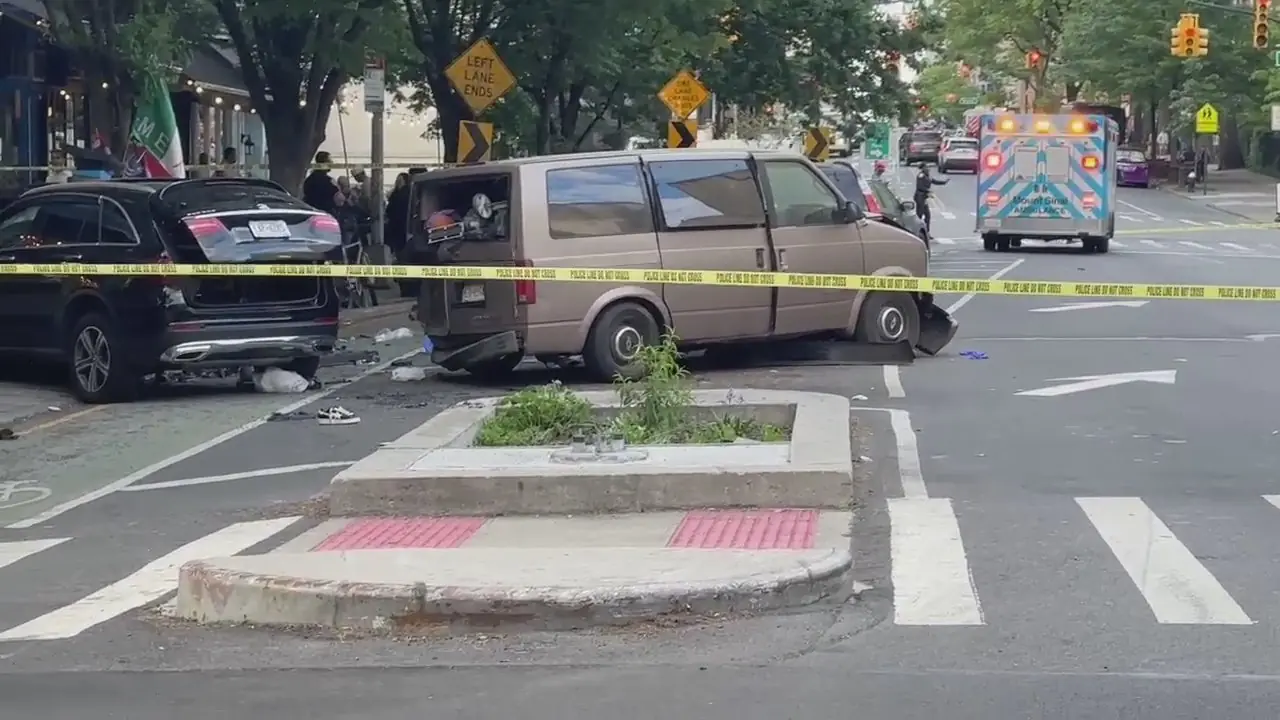
How Cities Can Make Streets Safer
The tragedy also raises broader questions about street design.
Cities can reduce pedestrian danger through a combination of engineering, enforcement, education, and emergency response.
Street design can encourage slower speeds and provide physical separation between vehicles and people.
Enforcement can address dangerous driving behaviors, including impaired driving, speeding, and failure to yield.
Public education can help drivers understand the risks of operating a vehicle while distracted or intoxicated.
Emergency response systems can help injured people receive treatment as quickly as possible.
These measures work best when they are considered together.
A street that encourages lower speeds, provides protected crossings, and has clear visibility may reduce the chance of a serious collision.
A street with poor visibility, wide lanes, and few protective features may leave pedestrians more exposed.
The specific changes needed at Amsterdam Avenue and West 109th Street would require a detailed review by transportation officials and engineers.
It would be inappropriate to claim that one particular design change would certainly have prevented this crash without examining the evidence.
But the event is a reminder that serious collisions should prompt careful evaluation of the surrounding street environment.
The Human Cost Behind Traffic Statistics
Traffic statistics are important because they help cities identify dangerous locations and measure whether safety programs are working.
But statistics alone cannot show the full impact of a fatal collision.
Two deaths represent two lives that ended unexpectedly.
Three serious injuries represent people whose health and daily routines were suddenly disrupted.
Families may lose a parent, partner, sibling, or friend. Children may grow up with memories of someone who is no longer there. Neighbors may lose a familiar presence they had seen for years.
The effects can extend into workplaces, schools, and community organizations.
A traffic collision may last only seconds, but its consequences can continue for generations.
This is why prevention matters.
Every effort to reduce impaired driving, lower dangerous speeds, improve street design, and protect pedestrians can help reduce the chance that another family will experience the same kind of loss.
What Happens After an Indictment?
The criminal investigation does not end when a driver is arrested or indicted.
A case may continue through court appearances, evidence review, motions, hearings, negotiations, and potentially a trial.
During that process, prosecutors must present evidence supporting the charges. The defense has the right to challenge the evidence and raise relevant legal arguments.
In a serious collision case, evidence may include witness statements, video recordings, vehicle examinations, toxicology results, medical records, and accident reconstruction findings.
The court must evaluate the evidence according to the applicable legal standards.
For the families of the victims, the process can be emotionally difficult because each new development may bring the tragedy back into focus.
Some families want to attend every hearing. Others may find it too painful to follow the case closely.
There is no single way to participate.
The most important point is that the legal process should be conducted carefully, fairly, and with respect for everyone affected.
The victims' families deserve to have their loss acknowledged. The injured survivors deserve support. The accused person must also receive the legal protections guaranteed by the justice system.
A fair process is essential to establishing accountability based on evidence rather than speculation.
A Reminder That Every Journey Matters
The crash on Amsterdam Avenue was a devastating reminder of how quickly ordinary life can change.
Two men lost their lives. Three others suffered serious injuries. Families and friends were left to face the consequences of a collision that occurred in a place they knew well.
The investigation and legal proceedings brought additional information to light, including prosecutors' allegations about the driver's condition and the sequence of impacts.
But the most important part of the story is not the damaged vehicle or the dramatic scene.
It is the people.
Jason Negron and Michael Saint-Hilaire were fathers, friends, and members of a community. The injured men were people with their own families, responsibilities, and futures. The witnesses who tried to help were neighbors who suddenly found themselves in the middle of a tragedy.
Their experiences remind us that road safety is not an abstract issue.
It concerns the people walking home, waiting outside a shop, standing beside a parked car, or crossing a familiar intersection.
Every driver has a responsibility to protect those people by remaining sober, attentive, and in control of their vehicle.
Every city has a responsibility to examine dangerous streets and improve safety where possible.
And every community has a responsibility to remember the people lost in traffic collisions as more than statistics.
The May 15 crash should not be presented as an accident that happened minutes ago. It should be remembered accurately as a real tragedy that occurred on Manhattan's Upper West Side, with consequences that continue for the families and survivors.
The lesson is clear: one dangerous moment behind the wheel can change many lives forever.