A Woman’s Chin Hair Could Be Linked to Several Surprising Factors… Here’s What You Should Know
Have you ever noticed a few dark or coarse hairs appearing on your chin and wondered, “Why is this happening?”
For many women, finding an occasional chin hair is completely normal. It may be easy to pluck and forget about.
But what if you suddenly notice more facial hair than before?
Or what if the hairs become darker, thicker, or start appearing on other areas of the face and body?
While chin hair is not automatically a sign of a health problem, changes in facial hair growth can sometimes be influenced by hormones, genetics, age, medications, or other factors.
Here’s what you should know.
👩 Why Do Women Get Chin Hair?
Hair follicles throughout the body respond to hormones called androgens. Women naturally produce small amounts of these hormones as part of normal body function.
As hormone levels change, some hair follicles can become more sensitive to androgens.
This may cause certain hairs—particularly around the chin, upper lip, or jawline—to become thicker, darker, or more noticeable.
So, seeing a few chin hairs doesn't necessarily mean something is wrong.
In fact, facial hair can become more noticeable as women get older.
🕰️ Age Can Play a Role
One of the most common reasons women notice more chin hair over time is simply aging.
As estrogen levels change during the years leading up to and following menopause, the balance between estrogen and androgen activity can shift.
As a result, some women may notice:
- More chin or upper-lip hair
- Thicker facial hairs
- Hair becoming darker or more noticeable
- Changes in the texture or distribution of body hair
At the same time, hair on the scalp may become thinner.
This combination can make facial hair seem especially noticeable compared with earlier years.
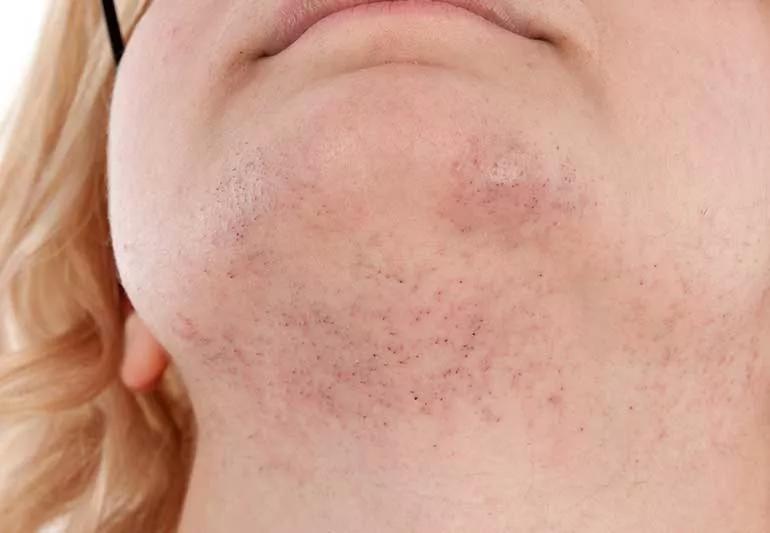
🧬 Genetics May Matter Too
Have your mother or sisters experienced noticeable facial hair?
Genetics can influence hair growth patterns.
Some women naturally have more body or facial hair than others, and this can run in families.
Your ethnicity and individual genetics can also influence how much facial hair you naturally develop.
Therefore, having chin hair by itself doesn't necessarily indicate a medical problem.
⚖️ Hormonal Changes Can Sometimes Be Involved
If facial hair suddenly becomes much thicker or more widespread, hormones may be one factor worth considering.
One condition commonly associated with increased facial hair growth is polycystic ovary syndrome (PCOS).
PCOS can be associated with increased androgen activity and may cause symptoms such as:
- Irregular menstrual periods
- Increased facial or body hair
- Acne
- Difficulty with weight management
- Thinning hair on the scalp
However, having chin hair does not mean that you have PCOS.
Many women without PCOS develop facial hair, especially as they age.
The important point is to look at the overall pattern of changes, rather than one isolated hair.
💊 Certain Medications May Affect Hair Growth
Some medications can influence hormone levels or hair growth.
Depending on the medication and individual circumstances, increased facial or body hair may occur as a side effect.
That's why sudden changes in hair growth are worth mentioning to a healthcare professional if they occur after starting a new medication.
Never stop a prescribed medication simply because you notice increased hair growth. Instead, discuss the change with your doctor or pharmacist.
🔍 When Should You Pay More Attention?
A couple of chin hairs are usually not a reason to panic.
However, it may be worth talking to a healthcare professional if facial hair becomes suddenly or rapidly more noticeable, particularly when other changes occur at the same time.
For example, pay attention if you experience:
- Rapidly increasing facial or body hair
- New or worsening acne
- Irregular or absent menstrual periods
- Unexplained changes in weight
- Thinning hair on the scalp
- A deeper voice
- Increased muscle development
- Other noticeable changes in your body
These symptoms don't automatically mean that something serious is happening. But when several changes appear together, a healthcare professional may want to evaluate possible hormonal causes.
✨ What About One Random Chin Hair?
Here's the reassuring part:
One or two chin hairs are extremely common.
Hair follicles don't all grow at exactly the same rate, and individual hairs can become thicker or darker over time.
Sometimes you may simply discover one surprisingly long hair that seems to have appeared overnight.
It didn't necessarily grow that quickly—you may simply not have noticed it before.
Plucking or trimming an occasional chin hair is generally a personal grooming choice.
And contrary to a common myth, removing a hair does not make the follicle produce a thicker hair. However, the new hair can sometimes appear more noticeable because of how it grows back.
🚨 Don't Let Social Media Scare You

You may have seen posts claiming that chin hair automatically means a woman has a specific hormone problem, vitamin deficiency, or serious disease.
That's an oversimplification.
Facial hair can have many explanations, including normal genetics and age-related hormonal changes.
The key is to consider how much hair is present, how quickly it appeared, whether it is changing, and whether other symptoms are occurring.
One symptom alone rarely tells the whole story.
🌿 What Can You Do About Chin Hair?
If the hair is simply a cosmetic concern, there are several common hair-removal options.
Depending on your preference, you might choose:
- Tweezing
- Trimming
- Shaving
- Waxing
- Threading
- Laser hair reduction
The best option depends on your skin type, hair color, sensitivity, budget, and personal preference.
If facial hair growth is related to an underlying hormonal issue, treating that underlying problem may also help reduce excessive hair growth over time.
The Bottom Line

A woman having chin hair is not necessarily a sign that something is wrong.
For many women, a few chin hairs are a normal part of genetics, aging, or changing hormone patterns.
However, if facial hair suddenly becomes much thicker, darker, or more widespread—especially when accompanied by irregular periods, acne, scalp hair loss, or other physical changes—it may be worth discussing with a healthcare professional.
So the next time you discover a chin hair, don't panic.
One little hair doesn't tell the whole story.
What matters most is noticing changes in your body and understanding the bigger picture.