For people unfamiliar with pansexuality, the line may have reinforced an inaccurate assumption that pansexual individuals are attracted to everyone.
That is not what the identity means.
A more accurate explanation is that pansexual people may experience attraction regardless of gender. It does not eliminate personal preferences or mean that attraction is automatic.
Morissette's playful phrasing should therefore be understood in the context of the podcast's humor rather than treated as a formal definition.
Her confirmation was the important part: she said she was pansexual.
Notaro's surprised response then made the exchange even more memorable.
"Wait, you're not really pansexual, are you?"
The question highlighted how unfamiliar the term can still be, even in conversations among people who are comfortable discussing LGBTQ+ identities.
Morissette's answer was direct.
"I am."
That simple confirmation was enough.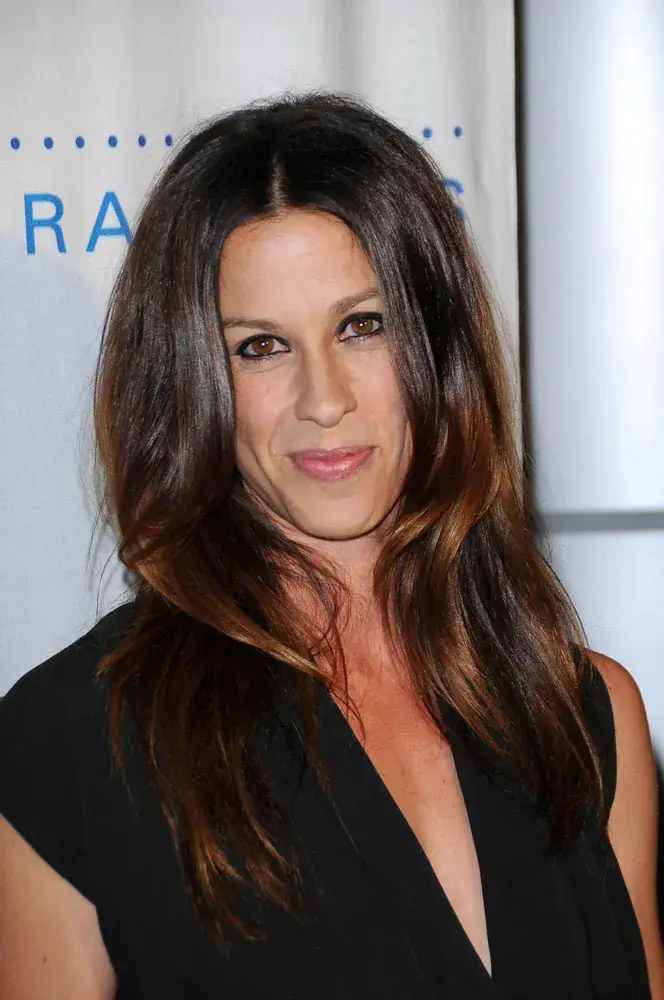
Why representation can matter
When public figures openly discuss aspects of their identity, the impact can extend beyond entertainment headlines.
For someone who is still trying to understand their own sexuality, hearing an established artist use a particular label may offer a sense of recognition.
It can remind people that identity does not have to fit a single expected pattern.
It can also encourage conversations among audiences who might otherwise never have explored the meaning of terms such as pansexuality.
However, representation should not become a demand placed on every public figure.
People have different relationships with privacy. Some choose to discuss their identity openly, while others prefer to keep it personal.
Both choices deserve respect.
Morissette's podcast appearance offered a glimpse into how she identifies, but it did not mean that she owed listeners a complete account of her relationships or personal history.
And she is not the only prominent artist who has helped bring pansexuality into wider public discussion.
Years earlier, another major pop star had spoken about why the label bisexual did not fully capture the way she understood her own sexuality.
Her comments would become an important reference point in conversations about the meaning of the letter "P" in LGBTQ+ discussions.
That artist was Miley Cyrus.
CHAPTER 4: MILEY CYRUS, THE MEANING OF LABELS, AND WHY THESE CONVERSATIONS STILL MATTER
Alanis Morissette's podcast revelation did not happen in a cultural vacuum.
Over the years, several public figures have discussed pansexuality, bisexuality, and the complicated relationship people can have with labels.
One of the most widely discussed examples came from Miley Cyrus.
In a 2016 interview with Variety, Cyrus spoke about her experiences with gender and sexuality and explained why she had struggled to identify with the word bisexual.
At the time, she described feeling uncomfortable with the limitations she associated with certain labels.
"My whole life, I didn't understand my own gender and my own sexuality. I always hated the word 'bisexual,' because that's even putting me in a box. I don't ever think about someone being a boy or someone being a girl," Cyrus said.
She also reflected on the way traditional expectations about gender had influenced how she understood herself.
"I never related to loving being a girl. And then, being a boy didn't sound fun to me. I think the LGBTQ alphabet could continue forever. But there's a 'P' that should happen, for 'pansexual.'"
Her comments were widely discussed because they illustrated a perspective that some people may share: the feeling that a familiar label does not fully describe their experience of attraction.
Cyrus was not suggesting that bisexuality was an invalid identity. Rather, she was explaining why she personally felt that another term better expressed her understanding of sexuality.
That distinction is important.
A label can be meaningful to one person and feel limiting to another. The fact that someone prefers pansexuality does not make bisexuality less valid, just as identifying as bisexual does not require someone to adopt another label.
Why Miley Cyrus's comments remain relevant
Cyrus's 2016 interview helped introduce the term pansexuality to a wider entertainment audience.
For many people, it was an opportunity to learn that attraction can be described in ways that do not rely on a strict division between men and women.
Her comments also reflected a broader shift in public conversations about identity.
As LGBTQ+ terminology became more visible in media and everyday discussions, people increasingly encountered words that may not have been part of their vocabulary while growing up.
This visibility created opportunities for education, but it also produced confusion.