This is why obtaining the correct diagnosis is important not only for treatment but also for deciding whether household precautions are necessary.
16. Protecting the Child's Confidence and Emotional Well-Being
Skin conditions can affect children emotionally, even when they are medically harmless.
An eight-year-old may not understand why their skin looks different or why treatment is necessary.
If the marks are visible, the child may become embarrassed or worry that classmates will notice.
Parents can help by explaining the situation in simple, reassuring language.
They might say that skin sometimes becomes irritated or develops infections, and doctors have ways to identify what is happening.
It is important not to make the child feel responsible for the condition.
Parents should also avoid repeatedly drawing attention to the affected area or expressing alarm in front of the child.
If treatment is needed, explaining each step can make the process less intimidating.
For example, children may feel more comfortable knowing why a doctor needs to examine their neck or collect a small skin sample.
Emotional reassurance does not replace medical care, but it can make an uncomfortable experience easier.
17. Questions Parents Should Ask During the Appointment
Preparing a few questions before visiting the doctor can make the consultation more productive.
Parents may want to ask:
-
What are the most likely causes of these circular marks?
-
Does the appearance suggest a fungal infection or an inflammatory skin condition?
-
Is a skin scraping or another diagnostic test necessary?
-
Could the child's shampoo, detergent, clothing, or other products be contributing to the problem?
-
What treatment is appropriate for an eight-year-old?
-
How long should it take before improvement becomes noticeable?
-
Can the condition spread to other family members?
-
What symptoms would indicate that the child needs further medical attention?
-
Should the child avoid any particular activities while treatment is underway?
-
When should we schedule a follow-up appointment?
Parents should also bring photographs showing how the marks looked when they first appeared, if available.
This can help the doctor understand whether the lesions are expanding, changing shape, or developing new features.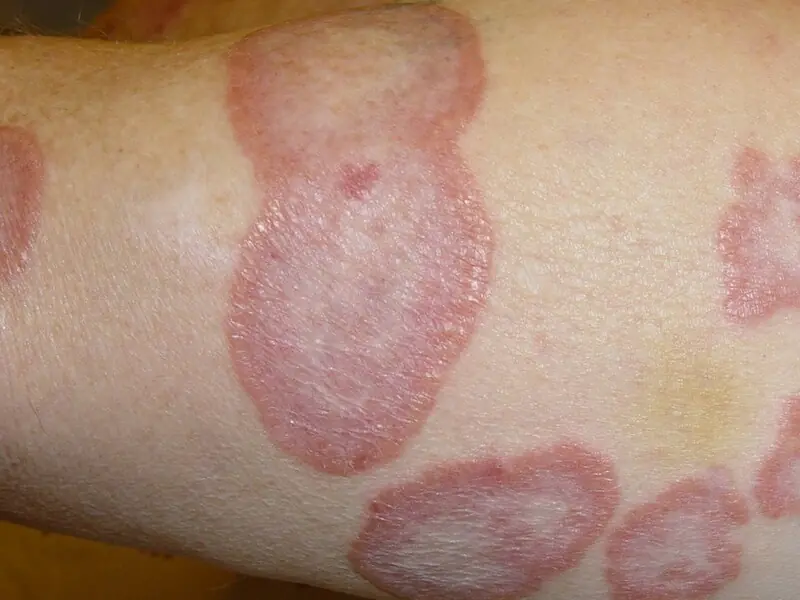
18. The Most Important Lesson: Don't Ignore a Persistent Skin Problem
One of the biggest challenges for parents is knowing when an ordinary-looking rash deserves medical attention.
Children frequently develop temporary skin problems. Many disappear without complications. But a rash that remains for two months, changes in appearance, or gradually spreads should be evaluated rather than dismissed.
The circular patterns visible in this photograph could have several explanations, including a fungal infection, granuloma annulare, or contact dermatitis. Other inflammatory or infectious conditions may also need to be considered.
There is no reliable way to distinguish all of these possibilities from a photograph alone.
The good news is that many childhood skin conditions can be treated effectively once the underlying cause is identified.
The key is getting the right diagnosis rather than repeatedly trying different creams without knowing what is being treated.
For this eight-year-old child, the next step should be a proper dermatological examination.
A two-month skin problem deserves attention, especially when it appears to be getting worse.
Final Thoughts: A Small Skin Change Can Deserve a Closer Look
Parents often notice the smallest changes in their children's health. A patch of unusual redness, a new mark, or an area of skin that refuses to heal can quickly become a source of concern.
In this case, the unusual ring-like patterns around the back of the neck deserve attention because they have reportedly persisted for approximately two months and are becoming more noticeable.
It is tempting to search online for photographs that look similar and try to identify the condition independently. However, even experienced clinicians sometimes need additional information or laboratory testing to distinguish between conditions with similar appearances.
The most useful thing parents can do is document the changes, avoid potentially irritating treatments, and arrange a medical examination.
Early evaluation can prevent unnecessary discomfort, reduce the risk of complications, and help the child receive appropriate treatment sooner.
Most importantly, parents should remember that a persistent rash does not automatically mean something serious is happening. Many possible causes are manageable, and an accurate diagnosis is the first step toward improvement.
Parents, have you ever noticed unusual circular marks or persistent rashes on your child's skin? What did the doctor eventually diagnose? Sharing experiences can help other families recognize when it is time to seek medical advice.