The problem becomes more noticeable when a large number of earwigs gather near young plants or flowers. They may feed on tender leaves, petals, seedlings, and soft fruit.
However, it is worth remembering that earwigs are omnivores. Some species and individuals also feed on aphids, insect eggs, and other small organisms. Their presence is not automatically a sign that every plant is being damaged.
The goal should be to manage excessive numbers in areas where they are causing a problem, rather than treating every earwig as an enemy.
Chapter 3: What Earwigs Are Really Doing in Your Garden
The insect in the supplied photograph has the characteristic long, flattened body and prominent pincers associated with earwigs. These pincers, located at the rear of the abdomen, are called cerci.
They are the feature most people notice first.
An earwig may look intimidating because of its forceps-like appendages, but its appearance is more frightening than its usual behavior toward people. The pincers are used in defense, interactions with other earwigs, and other species-specific activities. They are not designed to attack humans.
Are earwigs dangerous to people?
Generally, no. Earwigs are not considered a significant health threat to people in ordinary household settings.
They do not normally seek out humans, and they are not known for deliberately entering people's ears. The old story that earwigs crawl into sleeping people's ears is a persistent myth, not a normal feature of their behavior.
If handled or trapped against the skin, an earwig may use its pincers defensively. This can cause a minor pinch, but earwigs are not venomous and are not considered dangerous household pests in the way that some biting or disease-carrying insects can be.
The best response is to avoid handling them unnecessarily. If one appears indoors, it can usually be swept into a container or vacuumed up and removed.
Why are they called earwigs?
The English name has long been associated with the old belief that these insects enter human ears. The name has helped give them an undeserved reputation.
Their distinctive appearance has also encouraged exaggerated stories. The long antennae and curved pincers can make them seem more threatening than their actual behavior suggests.
Understanding what they are helps homeowners respond calmly. An earwig in the bathroom or kitchen may be unpleasant to discover, but its presence does not automatically mean the home is infested or unsafe.
What do earwigs eat?
Earwigs have varied diets. Depending on the species and available food, they may consume:
-
Decaying plant material.
-
Fallen fruit and other organic debris.
-
Tender leaves and flower petals.
-
Seedlings and soft plant growth.
-
Aphids and other small insects.
-
Insect eggs and other small invertebrates.
-
Fungi and other organic material.
This varied diet explains why earwigs can be both helpful and troublesome.
In one part of the garden, they may feed on small insects. In another, they may damage flowers or young vegetables. Their impact depends on their numbers, the plants available, and the surrounding environment.
A few earwigs in a mature garden may not cause meaningful damage. A large concentration around seedlings or soft fruit, however, can become a serious nuisance.
Chapter 4: How to Tell Whether Earwigs Are Damaging Your Plants
Finding an earwig on a leaf does not necessarily mean it has caused the damage. Several garden pests feed on similar plant tissues, and the marks they leave can look alike.
Before setting out traps or changing your garden routine, take a closer look at the plants.
Look for irregular holes
Earwig feeding can leave small, irregular holes in leaves. The edges may appear ragged rather than cleanly cut. Flowers can also show missing petals or damaged sections, especially when insects feed on soft tissue.
Young plants are particularly vulnerable because they have less foliage and may not recover as easily from repeated feeding.
Inspect flowers after dark
Earwigs are primarily nocturnal, which means they are often easier to find at night.
Take a flashlight outside after sunset and examine plants that show fresh damage. Check the undersides of leaves, flower centers, and the spaces between stems.
If you find several earwigs on a damaged plant, that is useful evidence. If you find none, consider other possible causes before deciding that earwigs are responsible.
Check for other pests
Slugs, caterpillars, beetles, and other insects can also create holes in leaves. Their feeding patterns may overlap with earwig damage.
Slugs and snails, for example, may leave a visible slime trail. Caterpillars can create larger missing sections or leave droppings around the plant. Some beetles make more regular holes.
The timing of damage can also help. If fresh feeding marks appear overnight and earwigs are present on the affected plants, they may be contributing to the problem.
Correct identification matters because the best treatment depends on the pest involved. A garden can contain several different insects at once, and treating the wrong one may waste time while the actual problem continues.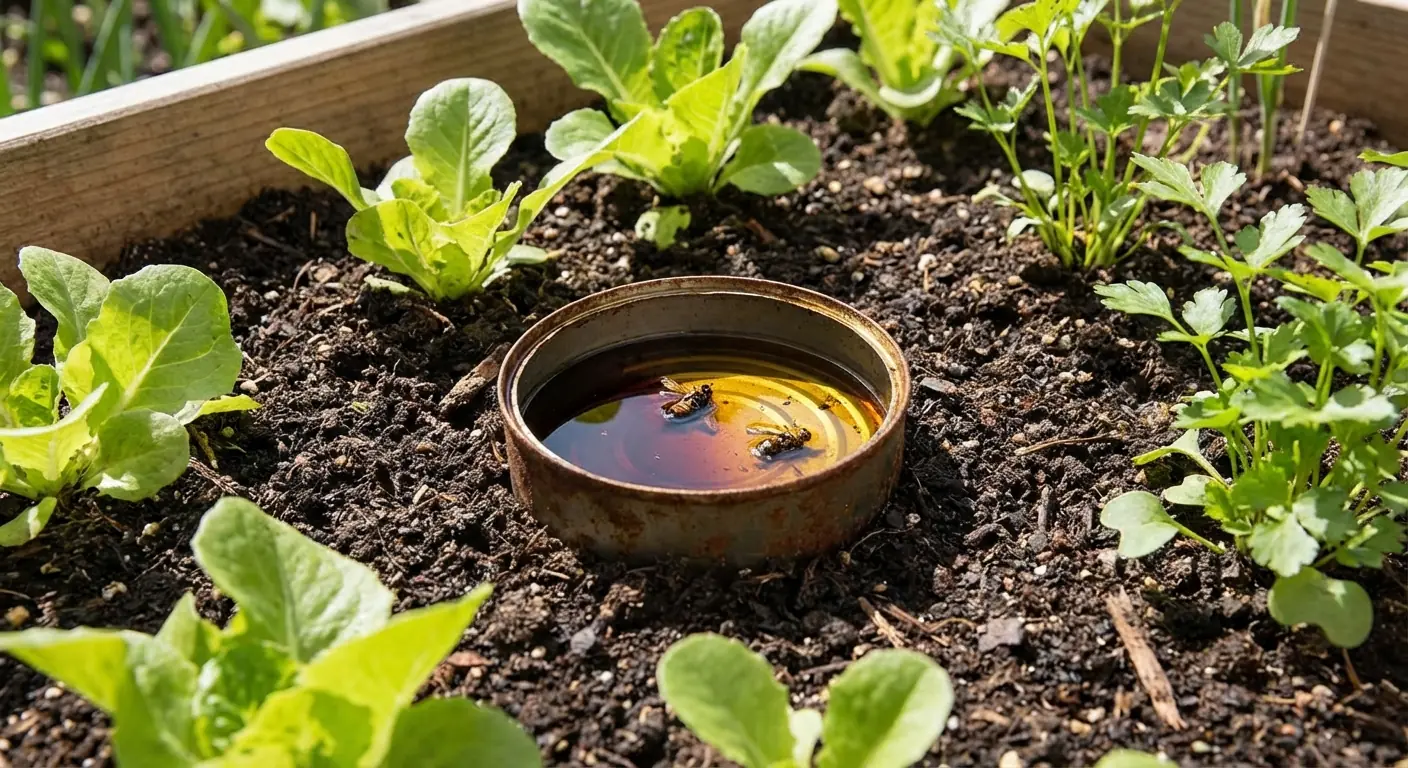
Which plants are most vulnerable?
Earwigs may feed on a wide variety of plants, but soft foliage, flowers, seedlings, and fruit can be especially attractive.
Gardeners sometimes notice damage on:
-
Dahlias.
-
Zinnias.
-
Marigolds.
-
Lettuce.
-
Strawberries.
-
Young beans and beets.
-
Other tender vegetables and ornamental plants.
The risk is not identical in every garden. Some plants may suffer only cosmetic damage, while young seedlings can be more seriously affected.
If your garden contains valuable seedlings or flowers that are repeatedly damaged, monitoring and trapping can help determine whether earwigs are responsible.
Chapter 5: The Newspaper Trick That Uses Their Hiding Instinct
Vegetable oil is not the only simple household method that can help manage earwigs. Another technique uses something many homes already have: old newspapers or corrugated cardboard.
This method takes advantage of the insects' preference for dark, narrow hiding places.
During daylight, earwigs avoid exposed areas and look for shelter. A rolled newspaper creates a narrow, protected space that resembles the kind of hiding place they naturally seek.
How to prepare a newspaper trap
-
Take several sheets of old newspaper.
-
Roll them into a loose tube.
-
Moisten the paper slightly so that it is damp, not dripping.
-
Place the roll near plants where earwigs have been seen.
-
Leave it in place overnight.
-
Check it early the following morning.
Earwigs may crawl inside the paper or gather in its folds. When you lift the roll, you can inspect it and remove the insects.
A similar trap can be made with corrugated cardboard, short sections of garden hose, or hollow bamboo tubes. These materials provide sheltered spaces that earwigs may use during the day.
What should you do with captured earwigs?
Check local guidance and choose a safe disposal method. Some university extension recommendations advise shaking captured earwigs into a bucket of soapy water.
If you use this approach, keep the bucket away from children, pets, and wildlife. Do not pour the water into a pond, storm drain, or area where it could affect other organisms.
Alternatively, place the captured insects in a sealed container or bag for disposal according to local waste guidance.
The important step is to check the traps regularly. A newspaper roll left outdoors for many days can become another damp hiding place rather than a useful control tool.
Why the newspaper method can work
The trap does not need a strong chemical smell or complicated bait. It simply provides the type of shelter earwigs naturally seek.