WHEN CANCER APPEARS, YOUR LIMBS MAY SHOW THESE 3 ALARMING SIGNS
4
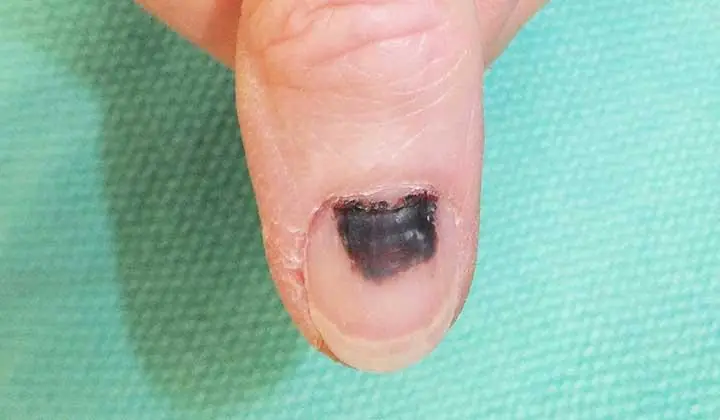
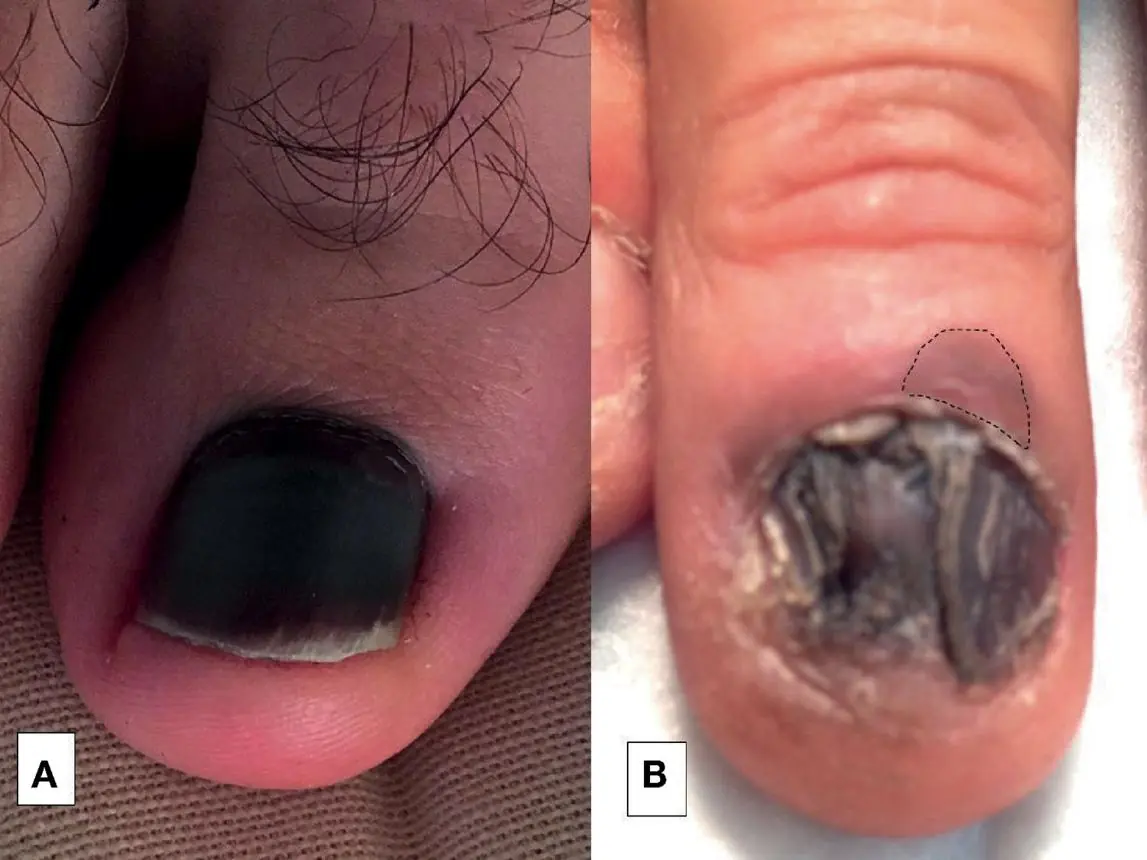
Let’s be real for a second—images like this hit hard because they trigger fear instantly. A dark spot under the nail? Looks scary. But here’s the deal: not every black mark means cancer. However, there are situations where your body is trying to signal something serious—and ignoring it is not the move.
This article breaks it down clearly, no drama, no misinformation—just facts you actually need.
1. DARK LINES OR SPOTS UNDER THE NAIL (SUBUNGUAL MELANOMA)
One of the most talked-about warning signs is a dark streak, patch, or discoloration under the nail—especially when it appears without injury.
This condition is linked to something called subungual melanoma, a rare type of skin cancer that develops under the nail.
Red flags to watch:
- A dark vertical line that keeps getting wider
- Pigmentation that spreads to the surrounding skin
- Nail becoming brittle, cracked, or lifting
- No history of trauma (you didn’t hit your finger/toe)
Now, compare that with a simple bruise:
- A bruise usually moves upward as the nail grows
- It fades over time
- It has a clear cause (like stubbing your toe)
If the mark stays in place or worsens, that’s when it’s time to take it seriously.
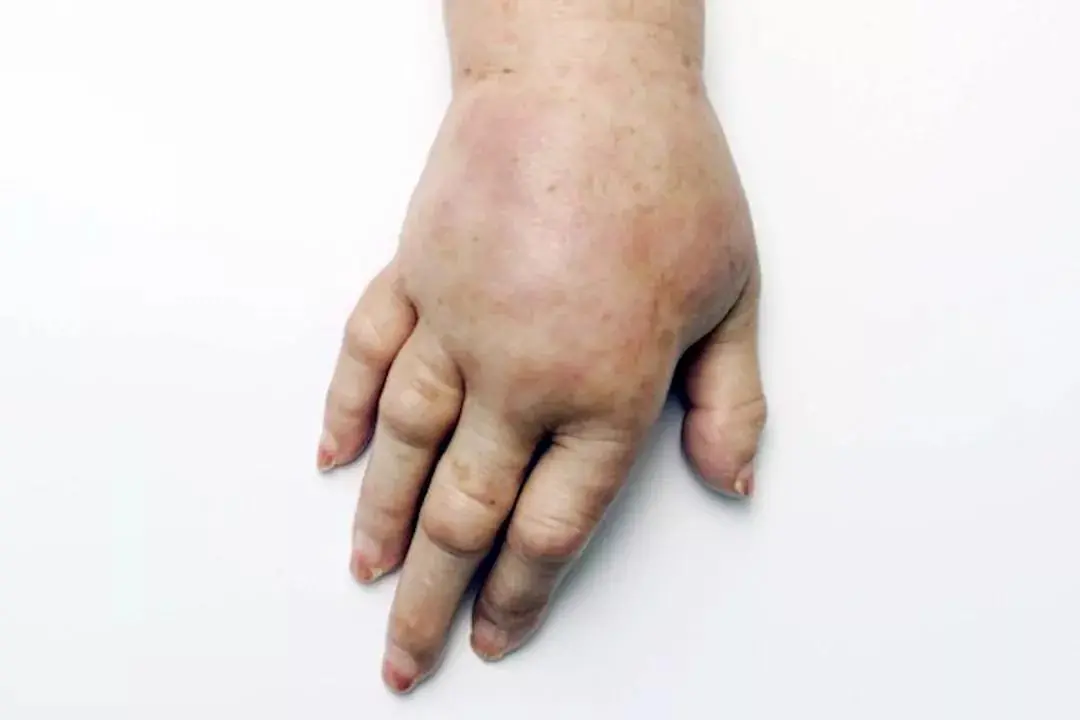
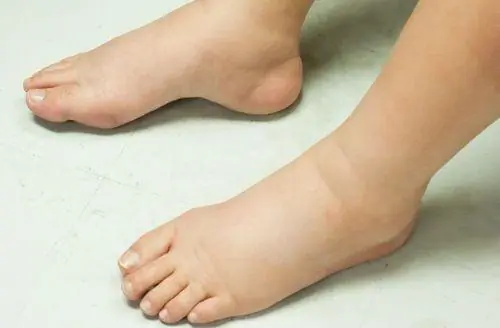
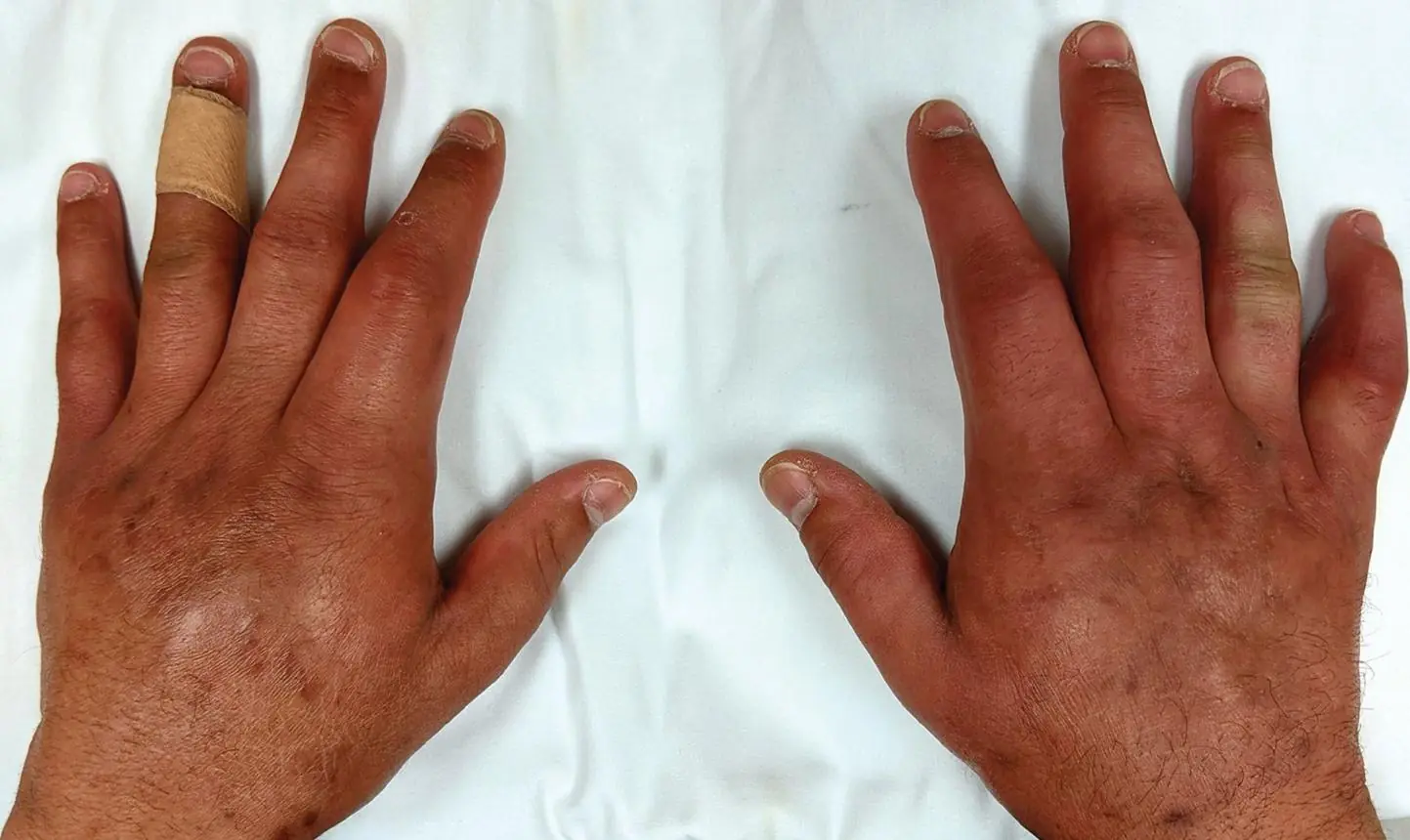
2. UNUSUAL SWELLING IN HANDS OR FEET
4
Swelling in the limbs can happen for many harmless reasons—heat, standing too long, salty food. But persistent or unexplained swelling? That’s different.
In some cancer-related cases, swelling may be linked to:
- Lymphatic system blockage
- Tumors pressing on blood vessels
- Fluid retention due to organ dysfunction
Watch for:
- One-sided swelling (only one hand or foot)
- Tight, shiny skin
- Pain or heaviness
- Swelling that doesn’t go away
This doesn’t automatically mean cancer—but it shouldn’t be ignored either.
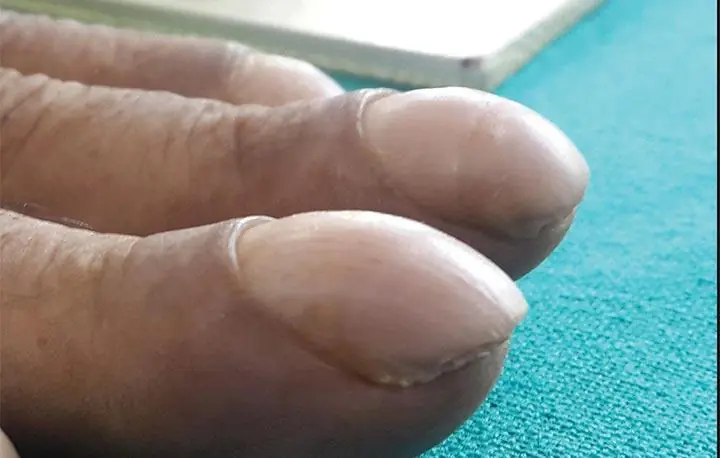
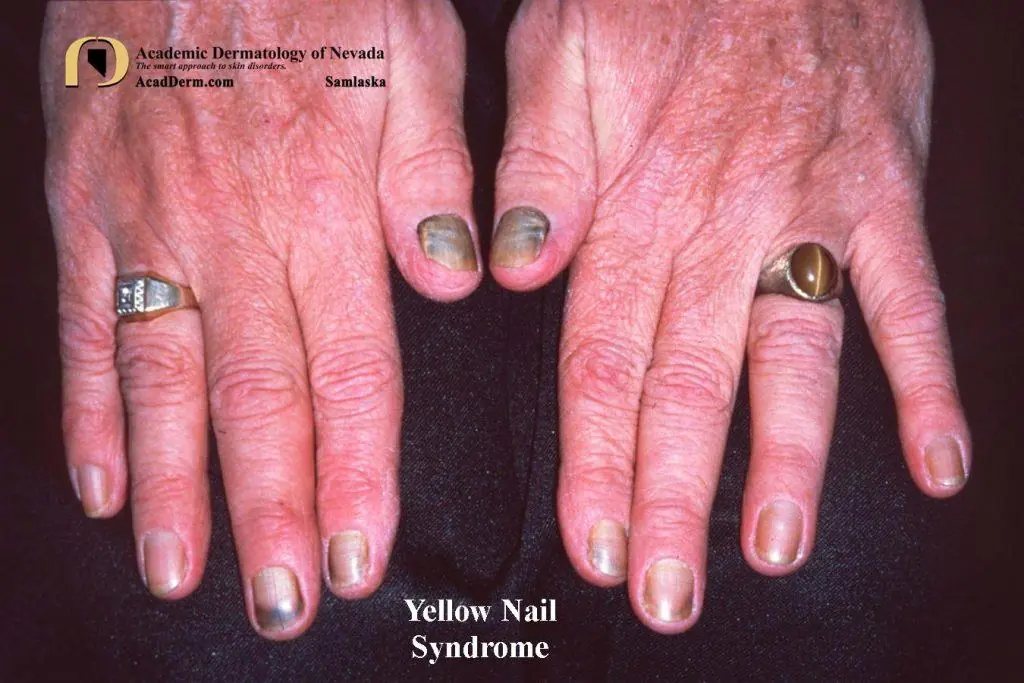
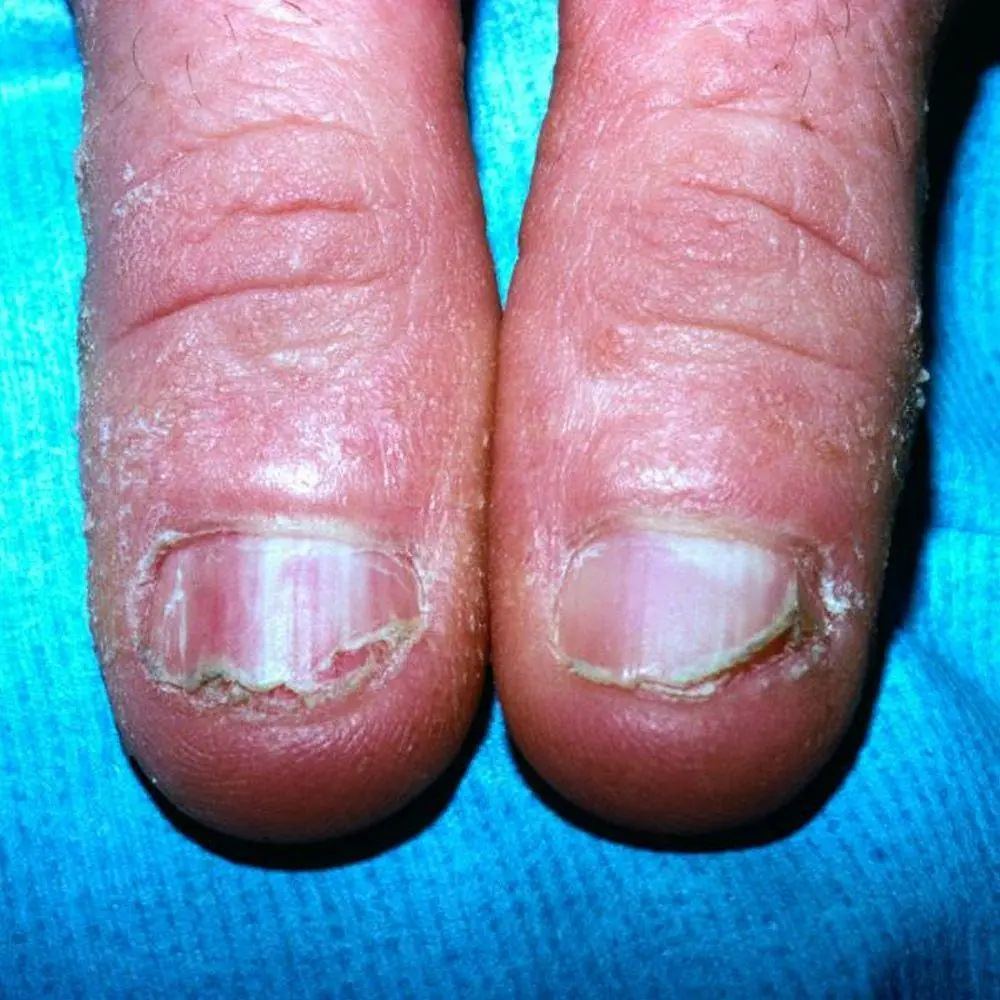
3. CHANGES IN NAIL SHAPE OR COLOR
4
Your nails can reveal a lot about your internal health.
Some nail changes that may raise concern include:
- Clubbing (rounded, bulb-like fingertips)
- Nails turning yellow, dark, or pale
- Thickened or distorted nail growth
Clubbing, in particular, has been associated with lung conditions, including lung cancer—but also other diseases like heart or liver disorders.
So again—this is a signal, not a diagnosis.
IMPORTANT: DON’T JUMP TO CONCLUSIONS
Here’s where most viral content goes wrong—they jump straight from “symptom” to “you have cancer.”
Reality check:
- Most nail discoloration = injury or fungus
- Most swelling = circulation or lifestyle factors
- Most nail changes = non-cancerous conditions
Cancer-related symptoms are usually persistent, progressive, and combined with other signs like fatigue, unexplained weight loss, or chronic pain.
WHEN SHOULD YOU ACTUALLY SEE A DOCTOR?
You don’t need to panic—but you do need to be smart.
Get checked if:
- A dark nail mark doesn’t grow out after weeks
- The discoloration spreads or changes shape
- You notice multiple symptoms together
- Something just feels off and doesn’t improve
Early detection matters. A quick check could either give peace of mind—or catch something early when it’s still treatable.
FINAL TAKE
That black mark under a nail?
It could be nothing… or it could be something worth checking.
The key isn’t fear—it’s awareness.
Your body talks. The real question is: are you paying attention, or scrolling past the warning signs?
BEYOND THE VISIBLE SIGNS: WHAT YOUR HANDS AND FEET MAY REVEAL ABOUT YOUR HEALTH
While changes in your nails, fingers, and feet can sometimes be associated with serious medical conditions, including certain cancers, there is a much bigger picture worth understanding.
Your hands and feet contain an intricate network of blood vessels, nerves, muscles, bones, and lymphatic channels. These structures depend on healthy circulation and proper communication between different organs and systems. When something disrupts these processes, visible changes may develop.
In some cases, those changes are harmless and temporary. In others, they may be among the first clues that something inside the body needs attention.
The important thing is learning how to recognize patterns rather than focusing on one isolated symptom.
Let's explore several additional changes that deserve attention.
4. PERSISTENT PAIN IN THE BONES OF YOUR ARMS OR LEGS
Not every ache in your arms or legs comes from exercise, aging, or muscle strain.
Occasionally, persistent bone pain can be associated with certain types of cancer, particularly when cancer begins in the bone or spreads there from another part of the body.
Bone metastasis occurs when cancer cells travel from their original location to the bones. Several cancers, including breast, prostate, lung, kidney, and thyroid cancers, can spread to the skeletal system.
The legs, pelvis, spine, and ribs are common locations for bone metastases.
However, experiencing leg pain does not automatically mean that cancer is present. In fact, most everyday bone and muscle discomfort has much more common explanations.
What makes the pain concerning?
There are certain characteristics that deserve medical attention:
-
Pain that continues for several weeks without an obvious explanation.
-
Discomfort that gradually becomes more intense.
-
Pain that repeatedly wakes you during the night.
-
A specific area of bone that feels tender when touched.
-
Pain accompanied by unexplained weight loss or persistent fatigue.
-
Discomfort that does not improve as expected with rest.
One particularly important distinction is the difference between ordinary muscle soreness and deeper, persistent bone pain.
Muscle soreness after physical activity often improves over several days. Bone-related pain may behave differently and can continue even when you are resting.
In some situations, cancer-related changes can weaken the affected bone. This increases the risk of a pathological fracture, meaning a bone breaks because it has become weakened by an underlying disease.
A fracture following relatively minor trauma, particularly in someone without known bone disease, should be evaluated promptly.
Other possible explanations
Persistent bone pain can also result from:
-
Osteoporosis.
-
Arthritis.
-
Vitamin D deficiency.
-
Bone infections.
-
Stress fractures.
-
Chronic inflammatory conditions.
-
Benign bone growths.
Doctors may recommend physical examinations, blood tests, X-rays, MRI scans, or other investigations depending on the symptoms.
The takeaway is simple: persistent, unexplained bone pain deserves attention, especially when it is getting progressively worse.
5. ONE LEG BECOMES NOTICEABLY MORE SWOLLEN THAN THE OTHER
One of the most important changes to recognize is swelling that affects only one leg.
Although swelling can result from minor injuries, prolonged sitting, or circulation problems, sudden swelling in one leg can sometimes indicate a condition called deep vein thrombosis (DVT).
DVT occurs when a blood clot forms in a deep vein, usually in the lower leg or thigh.
Certain cancers increase the risk of blood clots because cancer cells and the body's response to cancer can alter the normal clotting process. Some cancer treatments can increase this risk further.
In some people, an unexplained blood clot may even be one of the first medical problems that leads to the discovery of an underlying cancer.
However, it is important not to assume that every blood clot is caused by cancer. DVT has many possible risk factors, including surgery, hospitalization, prolonged immobility, pregnancy, hormonal medication, and inherited clotting disorders.
Warning signs of a possible blood clot
Pay attention if you notice: