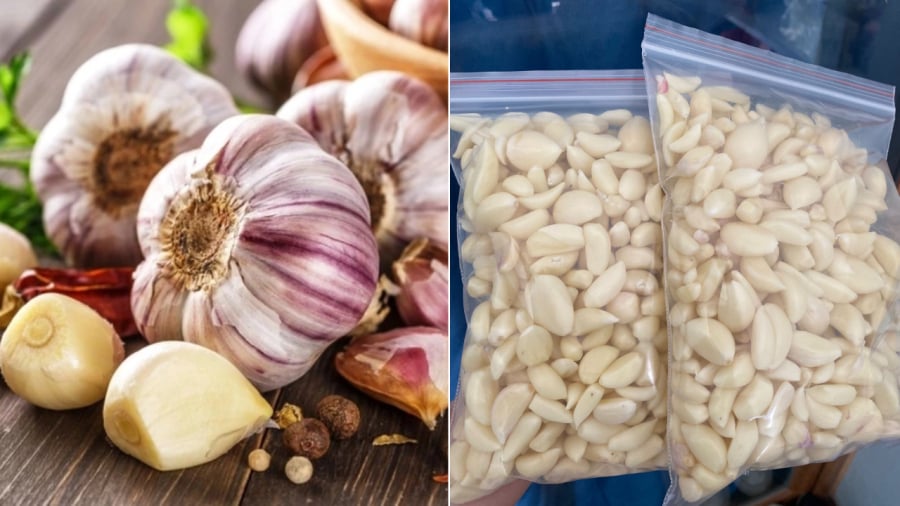
Garlic is one of the most popular ingredients in kitchens around the world. It adds bold flavor to countless dishes and contains beneficial nutrients such as vitamin C, vitamin B6, manganese, and antioxidant compounds like allicin. Whether you're roasting vegetables, making pasta sauce, or preparing a homemade soup, fresh garlic can elevate both the taste and nutritional value of your meals.
However, not every garlic bulb at the grocery store or farmers' market is worth buying. Garlic can lose its freshness over time, develop mold, or become damaged during storage and transportation. Choosing poor-quality garlic may result in unpleasant flavors, shorter shelf life, and unnecessary food waste.
Before placing garlic in your shopping cart, take a few moments to inspect it carefully. Here are four common warning signs that may indicate the garlic is no longer at its best.
1. Soft or Spongy Bulbs
Fresh garlic should feel firm, solid, and heavy for its size.
When you gently squeeze a healthy garlic bulb, it should offer resistance without feeling soft or hollow. A bulb that feels mushy, spongy, or unusually light may have started to deteriorate.
Soft garlic often indicates:
-
Excess moisture
-
Internal breakdown
-
Poor storage conditions
-
Early stages of rot
Sometimes only one clove inside the bulb is spoiled, but because it's difficult to know without breaking it open, it's generally best to choose a firmer bulb instead.
Firm garlic also tends to stay fresh much longer once you bring it home.
2. Visible Mold or Dark Spots
One of the easiest warning signs to recognize is the presence of mold.
Carefully inspect the outer skin and any exposed cloves. Watch for:
-
Black spots
-
Blue-green mold
-
White fuzzy patches
-
Brown areas that appear damp
Mold develops when garlic has been exposed to excessive moisture or stored in humid environments.
Even if mold appears to affect only a small area, it may have already spread internally where it cannot be seen.
Garlic with visible mold should be avoided, as consuming moldy food may pose health risks for some individuals, especially those with weakened immune systems.
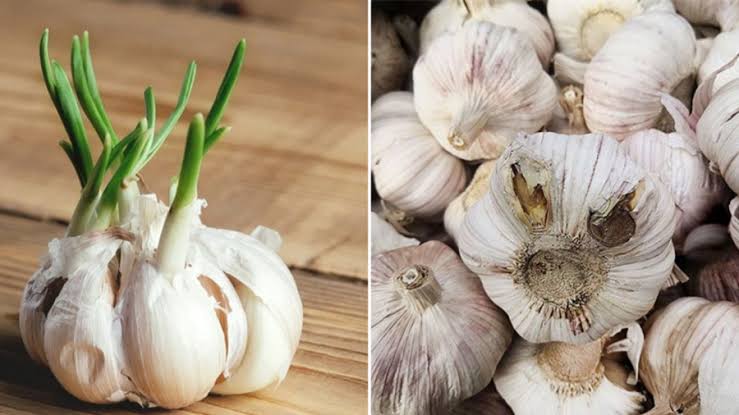
3. Sprouting Green Shoots
Have you ever noticed bright green shoots growing from the top of a garlic bulb?
Sprouting occurs naturally as garlic ages.
While sprouted garlic is generally still safe to eat, it often has:
-
A stronger flavor
-
A slightly bitter taste
-
Reduced freshness
The green shoot itself can also taste somewhat bitter, although some people simply remove it before cooking.
If you're looking for garlic with the freshest flavor and longest storage life, choose bulbs that have not yet started sprouting.
4. Damaged or Broken Outer Skin
The papery outer skin serves an important purpose.
It protects the cloves from:
-
Moisture
-
Dirt
-
Bacteria
-
Physical damage
Avoid bulbs that have:
-
Torn wrappers
-
Missing outer layers
-
Cracked cloves
-
Large cuts or bruises
Damaged bulbs are more vulnerable to spoilage because microorganisms can enter more easily.
Choose garlic with dry, intact skin that tightly covers the entire bulb.
What Fresh Garlic Should Look Like
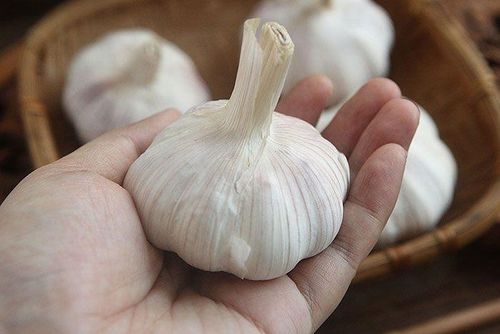
High-quality garlic usually has several characteristics in common.
Look for bulbs that are:
-
Firm and compact
-
Dry to the touch
-
Heavy for their size
-
Covered with intact papery skin
-
Free of mold and discoloration
-
Unsprouted
-
Pleasantly aromatic without a sour smell
These signs usually indicate that the garlic has been stored properly and is still fresh.
Does Garlic Size Matter?
Many shoppers assume bigger garlic bulbs are always better.
In reality, size has little to do with quality.
Both small and large bulbs can be excellent choices as long as they are:
-
Firm
-
Dry
-
Undamaged
-
Fresh-smelling
Some garlic varieties naturally produce smaller bulbs with excellent flavor.
How to Store Garlic at Home
Buying fresh garlic is only the first step.
Proper storage helps preserve its flavor and extend its shelf life.
For best results:
-
Store garlic in a cool, dry place.
-
Keep it in a well-ventilated basket or mesh bag.
-
Avoid sealed plastic bags that trap moisture.
-
Protect it from direct sunlight.
-
Do not refrigerate whole bulbs unless necessary, as refrigeration may encourage sprouting once removed.
Whole bulbs stored correctly can often remain fresh for several weeks or even months.
What About Peeled Garlic?
Pre-peeled garlic offers convenience but generally has a much shorter shelf life.
If purchasing peeled cloves:
-
Make sure they appear firm.
-
Avoid slimy or discolored cloves.
-
Check the expiration date.
-
Keep them refrigerated according to package instructions.
Use peeled garlic promptly after opening.
Can You Eat Slightly Sprouted Garlic?
Yes.
Sprouted garlic is usually safe to eat if it remains:
-
Firm
-
Free of mold
-
Free of unpleasant odors
Many cooks simply remove the green shoot before using the clove, especially in recipes where a milder garlic flavor is preferred.
However, heavily shriveled or soft sprouted bulbs are better discarded.
Additional Shopping Tips
To maximize freshness, consider these simple habits:
-
Buy only the amount you'll use within a few weeks.
-
Shop from stores with high product turnover.
-
Avoid bulbs stored in damp containers.
-
Compare several bulbs before selecting one.
-
Choose locally grown garlic when it's in season if available.
Taking an extra minute to inspect garlic can help reduce food waste and improve the flavor of your meals.
The Bottom Line
Fresh garlic is a versatile ingredient that adds both flavor and nutritional value to countless dishes. Fortunately, choosing high-quality garlic is simple once you know what to look for.
Before buying, check for four common warning signs: soft or spongy bulbs, visible mold or dark spots, green sprouts, and damaged outer skin. While sprouted garlic is generally safe to eat, firm, dry, and intact bulbs will usually provide the best flavor and longest shelf life.
By selecting fresh garlic and storing it properly at home, you'll enjoy better-tasting meals, reduce food waste, and make the most of one of the kitchen's most beloved ingredients.